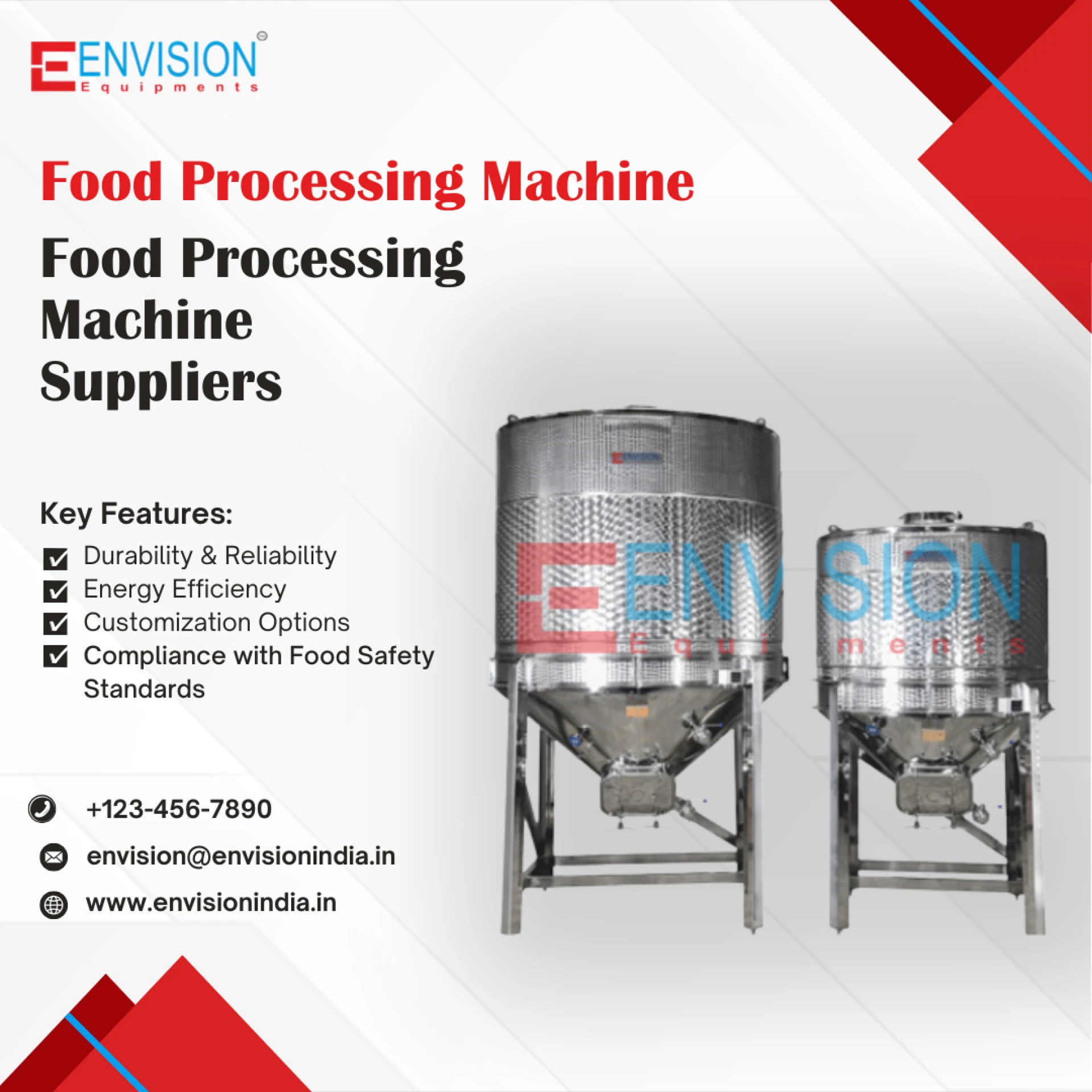

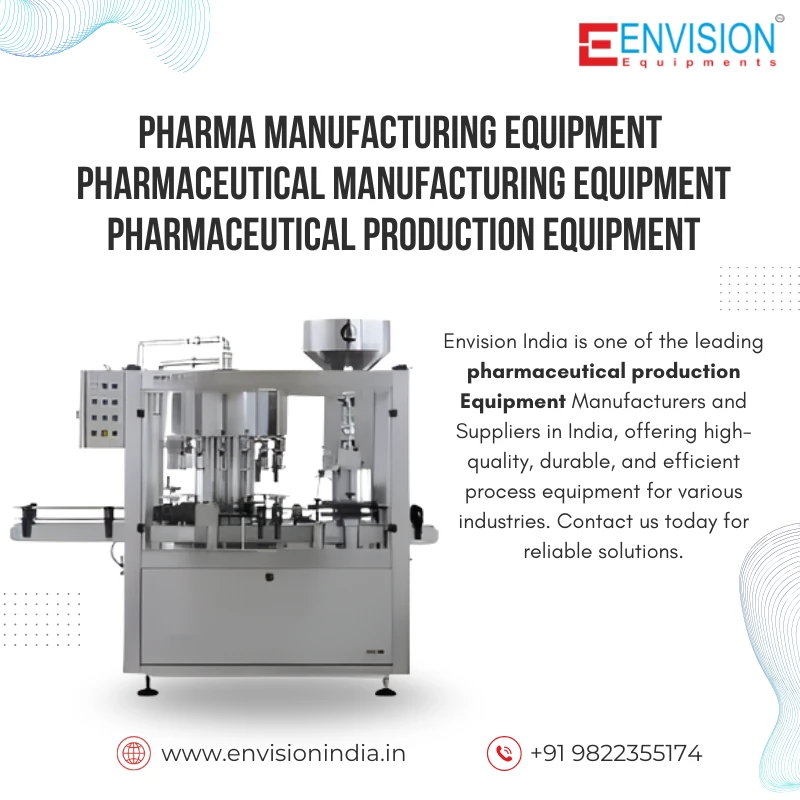
Envision’s Leading food processing machine suppliers provide reliable food processing machines for grinding, mixing, slicing, and packaging needs.
The global food industry is evolving rapidly, with increasing demand for efficiency, hygiene, and automation. Food processing machines have become indispensable in meeting these demands, enabling manufacturers to produce consistent, high-quality products while adhering to strict safety regulations.
Choosing the right food processing machine suppliers is equally critical, as they provide not only equipment but also expertise, customization, and long-term support. This guide explores the different types of food processing machinery, their benefits, key considerations when purchasing, and how to select the best suppliers.
Understanding Food Processing Machines
What Are Food Processing Machines?
Food processing machines are specialized equipment designed to automate various stages of food production, including:
- Preparation (washing, peeling, cutting)
- Mixing and blending
- Cooking and heat treatment
- Packaging and labeling
These machines enhance productivity, reduce labor costs, and ensure uniformity in food products.
Why Are They Essential?
- Consistency & Quality Control – Machines eliminate human error, ensuring every batch meets the same standards.
- Increased Efficiency – Automation speeds up production, allowing businesses to scale operations.
- Compliance with Safety Standards – Advanced machinery follows FDA, HACCP, and ISO regulations.
- Waste Reduction – Precision processing minimizes ingredient loss.
Types of Food Processing Machines
1. Mixing & Blending Machines
- Planetary Mixers – Ideal for dough, batter, and creams (used in bakeries and confectioneries).
- Ribbon Blenders – Perfect for powders and dry ingredients.
- High-Shear Mixers – Used for emulsions and liquid-based products.
2. Cutting & Slicing Machines
- Vegetable Dicers – For uniform cuts in salads and ready-to-eat meals.
- Meat Slicers – Precision cutting for deli meats and sausages.
- Guillotine Cutters – Used in cheese and frozen food processing.
3. Grinding & Milling Machines
- Meat Grinders – For sausages, burgers, and minced meat.
- Spice Grinders – Ensure fine, consistent textures.
- Colloid Mills – Used in nut butter and sauce production.
4. Cooking & Heat Processing Machines
- Industrial Ovens – For baking, roasting, and dehydration.
- Pasteurizers – Essential in dairy and juice processing.
- Fryers – Used in snack and fast-food manufacturing.
5. Packaging Machines
- Vacuum Sealers – Extend shelf life by removing oxygen.
- Flow Wrappers – For candies, biscuits, and snacks.
- Labeling Machines – Ensure compliance with food safety laws.
6. Sorting & Conveying Systems
- Optical Sorters – Detect and remove defective products.
- Belt Conveyors – Transport food items between processing stages.
Key Benefits of Modern Food Processing Machines
1. Higher Production Capacity
Automated machines can run 24/7, significantly increasing output compared to manual labor.
2. Improved Hygiene & Safety
Stainless steel construction, CIP (Clean-in-Place) systems, and automated handling reduce contamination risks.
3. Energy Efficiency
Newer models are designed to minimize power consumption, lowering operational costs.
4. Customization & Flexibility
Many food processing machine suppliers offer modular designs that can be adapted for different products.
5. Reduced Labor Dependency
Automation decreases reliance on manual workers, cutting costs and minimizing human error.
How to Choose the Right Food Processing Machine
Step 1: Assess Your Production Needs
- What is your daily/weekly output requirement?
- What types of food products are you processing?
Step 2: Consider Space & Layout
- Will the machine fit in your facility?
- Does it require additional utilities (water, gas, electrical upgrades)?
Step 3: Evaluate Machine Features
- Durability – Stainless steel vs. carbon steel.
- Automation Level – Semi-automatic vs. fully automatic.
- Ease of Maintenance – Are spare parts readily available?
Step 4: Budget & ROI Analysis
- Initial cost vs. long-term savings (labor, energy efficiency).
- Does the supplier offer financing or leasing options?
Step 5: Compliance & Certifications
- Ensure the machine meets FDA, CE, or ISO standards.
The Importance of Choosing Reliable Food Processing Machine Suppliers
Not all suppliers are equal. Partnering with the right food processing machine suppliers ensures:
1. Quality Assurance
Reputable suppliers provide machines built with high-grade materials and advanced engineering.
2. Custom Solutions
Experienced suppliers can modify machines to fit unique production lines.
3. After-Sales Support
- Installation & training
- Maintenance & spare parts availability
- Technical troubleshooting
4. Industry Expertise
Top suppliers understand food safety regulations and can recommend compliant machinery.
5. Future-Proofing
Leading suppliers offer upgrades to keep your operations competitive.
Trends in Food Processing Machinery
1. Smart & IoT-Enabled Machines
- Remote monitoring via sensors.
- Predictive maintenance to reduce downtime.
2. Sustainable Manufacturing
- Energy-efficient motors.
- Water-saving cleaning systems.
3. Robotics & AI Integration
- Automated sorting and packaging.
- Machine learning for quality control.
4. Hygienic Design Innovations
- Easier-to-clean surfaces.
- Antimicrobial coatings.
Case Studies – Success Stories with the Right Machines & Suppliers
Case Study 1: Bakery Increases Output by 40%
A mid-sized bakery invested in an automated planetary mixer and dough divider from a leading food processing machine supplier, reducing labor costs and doubling production capacity.
Case Study 2: Meat Processor Enhances Safety Compliance
A meat processing plant upgraded to an automated slicer and vacuum packaging system, improving shelf life and meeting FDA standards.
Invest in Envision Enterprises
Investing in the right food processing machines is a game-changer for food manufacturers, improving efficiency, safety, and profitability. Equally important is selecting trusted food processing machine suppliers who offer quality equipment, customization, and ongoing support.
By understanding your production needs, evaluating machine features, and partnering with reputable suppliers, you can future-proof your business and stay ahead in the competitive food industry.
Ready to upgrade your food processing setup? Contact leading suppliers today to explore the best solutions for your business!


























Sign in to leave a comment.