
Implementing an Integrated Terminal Operating System (ITOS) can significantly improve logistics efficiency but success depends on the right approach. Without proper planning and execution, even the best systems can fail to deliver results.
Here are some key best practices to ensure a smooth and successful ITOS implementation:
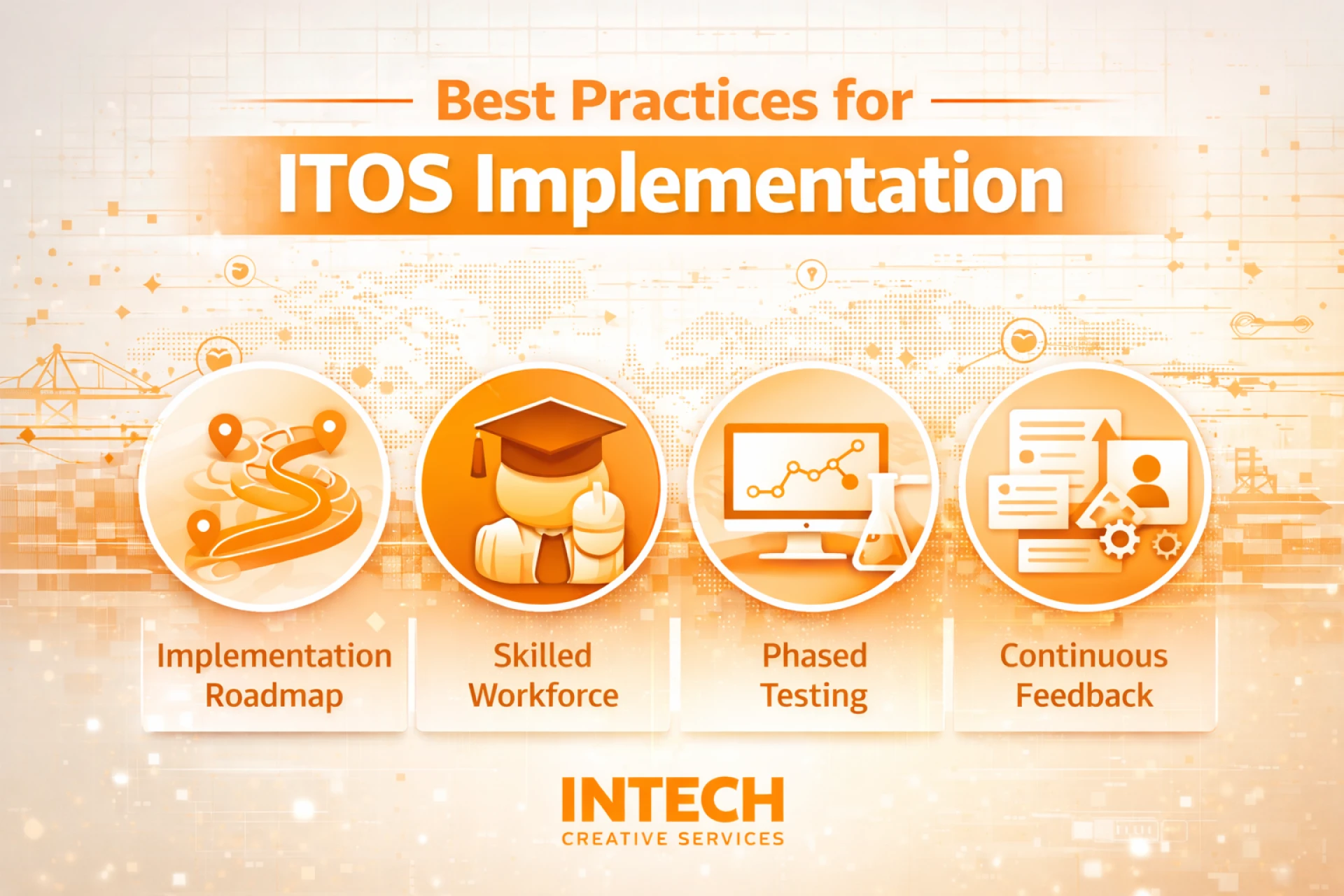
Clear Implementation Roadmap
Start with a well-defined plan that outlines goals, timelines, and key milestones. A clear roadmap helps align teams and ensures the project stays on track.
Skilled Workforce
Having trained and knowledgeable staff is critical. Invest in employee training so your team can effectively use the system and adapt to new workflows.
Phased Testing
Instead of a full-scale rollout, implement ITOS in phases. This allows you to identify and fix issues early, reducing risks during deployment.
Performance Monitoring
Track system performance using real-time data and KPIs. Monitoring helps identify bottlenecks and ensures the system is delivering expected results.
Continuous Feedback & Improvement
Collect feedback from users and continuously refine processes. ITOS implementation is an ongoing journey, not a one-time setup.
A successful ITOS implementation is not just about technology, it’s about strategy, people, and continuous improvement. At INTECH Creative Services, we help businesses plan, implement, and optimize ITOS solutions to build smarter, more efficient, and future-ready logistics operations.























Sign in to leave a comment.