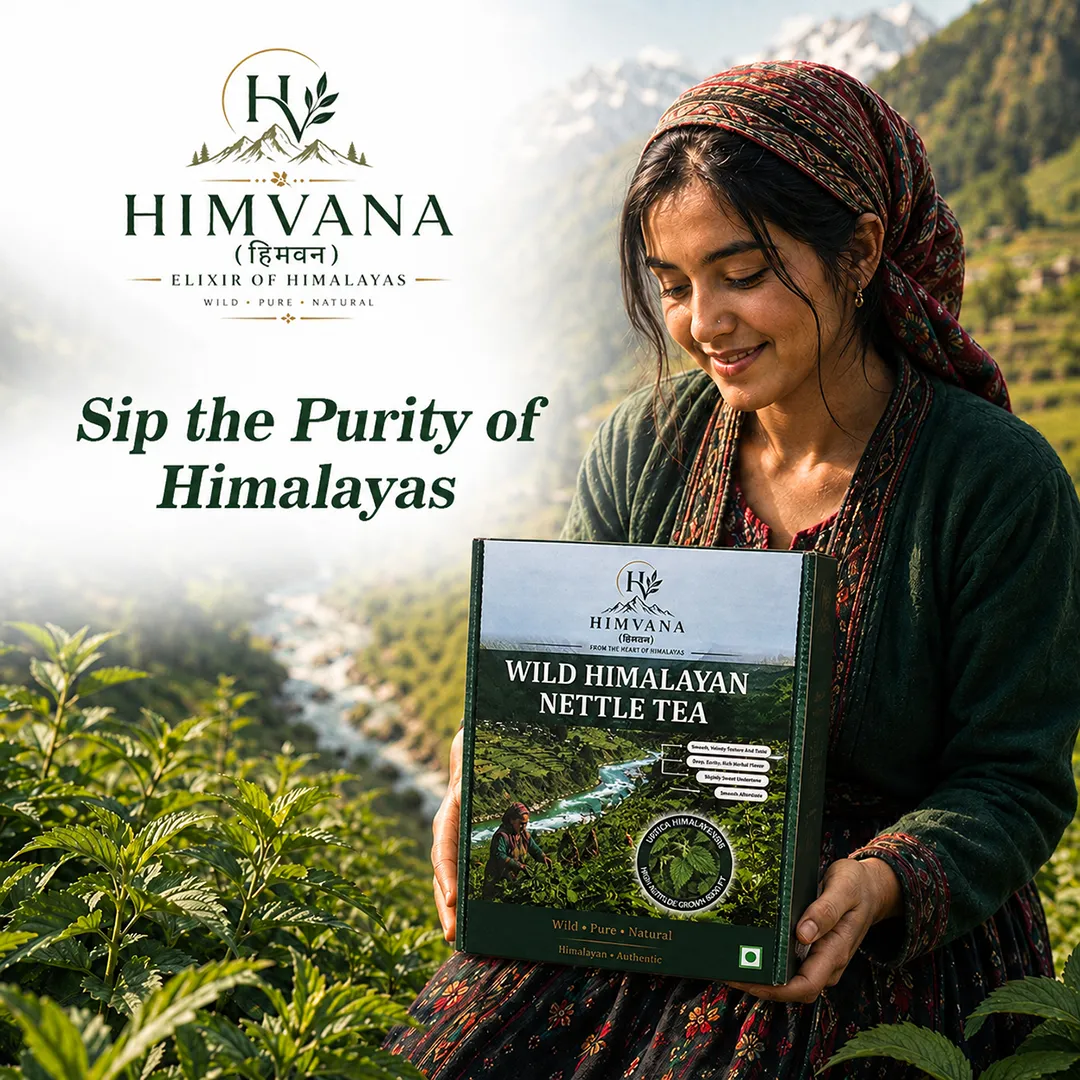

When most people hear the term stinging nettle, they immediately think of Urtica dioica, the species commonly found across Europe, North America, and many temperate regions. Yet the Urtica genus contains several fascinating species, including Urtica Himalayensis, a plant that has quietly grown in the Himalayan mountains for generations.
Although both belong to the same botanical family, they have evolved in different environments and hold unique places in regional traditions. As interest in herbal teas and plant-based wellness continues to grow, understanding these differences becomes increasingly important.
A Plant Shaped by the Himalayas
Urtica Himalayensis is native to the Himalayan mountain range, where it grows naturally in cool climates, mineral-rich soils, and higher elevations. These conditions are very different from the broader habitats where Urtica dioica is commonly found.
For generations, Himalayan communities have gathered the leaves seasonally and incorporated them into traditional food and herbal preparations. The plant is deeply connected to the local environment and reflects the rich botanical diversity of the region.
Comparing Urtica Himalayensis and Urtica dioica
Although the two species share serrated leaves and characteristic stinging hairs, there are several noteworthy distinctions.
Urtica Himalayensis
- Native to the Himalayan region
- Adapted to high-altitude environments
- Traditionally used by Himalayan communities
- Increasingly recognized for its authentic regional heritage
Urtica dioica
- Found across Europe, Asia, and North America
- Thrives in a wide range of temperate climates
- Extensively documented in botanical research
- Commonly sold as "stinging nettle" in international markets
Neither species should automatically be considered superior. Instead, each represents the ecological conditions and cultural traditions of its native region.
Why Consumers Are Becoming Interested
Modern consumers increasingly want to know more than just a product's name. They want to understand where it comes from, how it is harvested, and whether it reflects sustainable practices.
For many tea enthusiasts, Urtica Himalayensis offers several appealing qualities:
- Naturally caffeine-free
- Pleasant earthy flavor suitable for daily enjoyment
- Represents an authentic Himalayan botanical
- Traditionally associated with Himalayan communities
- Encourages appreciation of regional biodiversity
Rather than following short-term wellness trends, many people are choosing herbal teas because they value natural ingredients, transparency, and traditional knowledge.
The Importance of Responsible Sourcing
As awareness of Himalayan botanicals grows, sustainable harvesting becomes increasingly important. Responsible collection helps preserve wild plant populations while supporting local communities that have long understood the seasonal rhythms of these native plants.
Choosing products from companies that clearly identify the botanical species and emphasize responsible sourcing contributes to both environmental conservation and consumer confidence.
A Growing Appreciation for Himalayan Botanicals
The Himalayas are home to an extraordinary variety of native plants, many of which remain unfamiliar outside the region. Urtica Himalayensis is one example of how traditional botanical knowledge can inspire greater appreciation for biodiversity.
Whether you are exploring herbal teas for the first time or already enjoy natural infusions, learning about the origin of the plants in your cup adds another layer of appreciation to the experience.
For readers interested in learning more about Himalayan nettle, botanical comparisons, and responsibly sourced herbal teas, additional educational resources are available at https://himvana.com.





























Sign in to leave a comment.