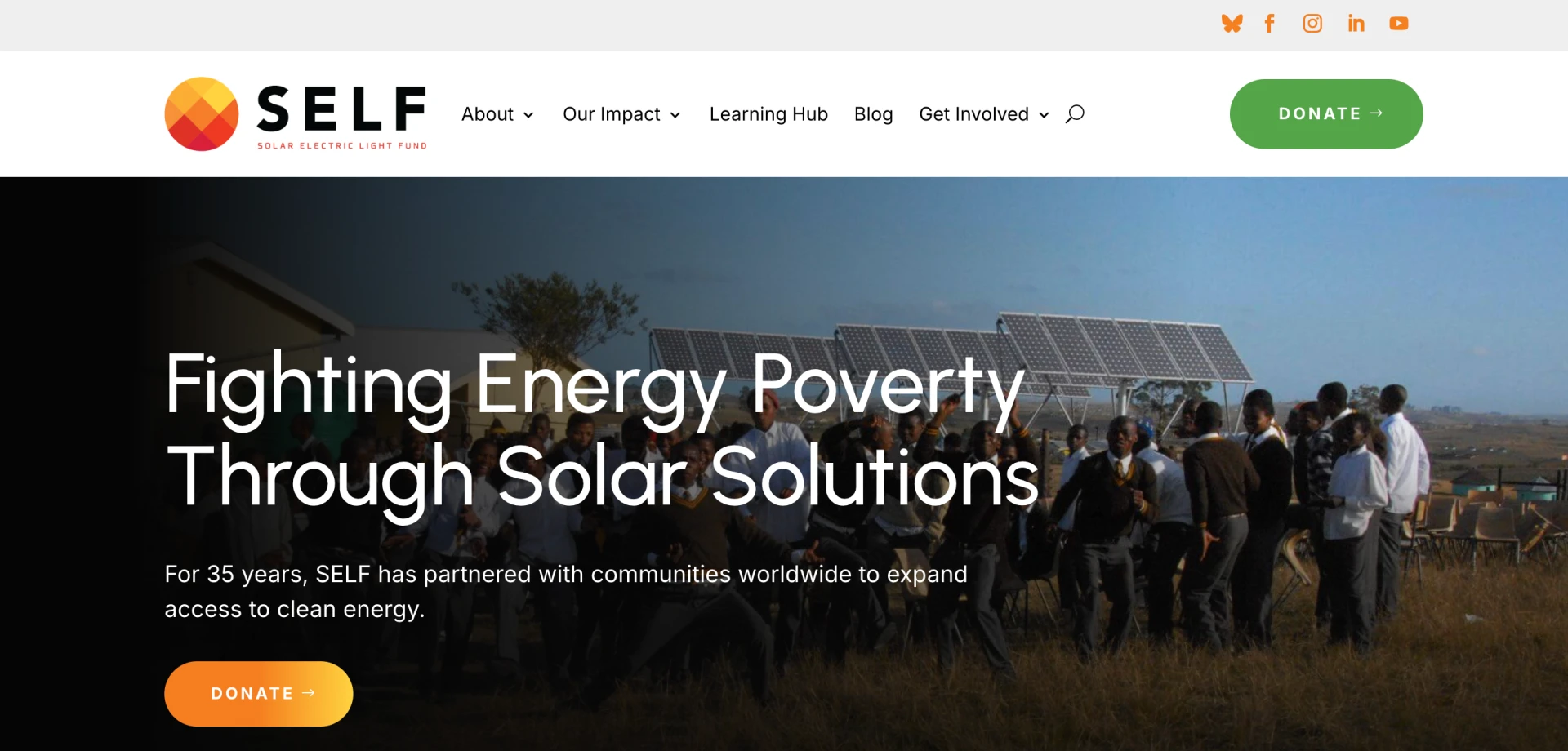

For over three decades, the global conversation around poverty has shifted. We no longer just talk about a lack of income; we talk about a lack of access. Without reliable power, a clinic cannot store life-saving vaccines. Without light, a student’s day ends at sunset. Without energy, a community’s potential remains dormant.
At SELF (Solar Electric Light Fund), we have spent 35 years proving that energy is not just a commodity—it is the foundation for human rights. By pioneering solar solutions, we are bridging the gap in access to education, access to energy, and access to healthcare for the world’s most underserved populations.
1. Access to Energy: The Seed of Opportunity
The journey began in 1990 with a simple but radical idea from our founder, Neville Williams: solar energy could transform lives in rural Asia. From Nepal to Sri Lanka, SELF pioneered Solar Home Systems (SHS), providing off-grid families with their first taste of modern energy.
This wasn't just about lightbulbs; it was about economic autonomy. By financing these systems, we helped create SELCO India, which continues to empower thousands today. We learned early on that when you provide a family with energy, you aren't just giving them a product—you are planting a seed for new opportunities.
2. Access to Education: Lighting the Path to Literacy
In many parts of the world, the "digital divide" is actually an "energy divide." Under the leadership of Robert Freling, SELF introduced the Whole Village Development Model in 2000. This model recognizes that a child's ability to learn is tied to the community's infrastructure.
- Extended Study Hours: Solar lighting allows students to study long after the sun sets, a critical factor in improving literacy rates.
- Digital Learning: In places like rural Bhutan, our solar installations power computers and internet access, ensuring that a child’s zip code doesn't determine their level of connectivity to the world.
- Teacher Retention: Schools with reliable power and modern facilities are better equipped to attract and retain qualified educators in remote regions.
3. Access to Healthcare: Powering Life-Saving Care
Perhaps the most urgent impact of energy access is seen in the medical field. In the Amazon and sub-Saharan Africa, the lack of a traditional power grid often meant that healthcare was "daylight only."
SELF has changed that narrative by:
- Telemedicine in the Amazon: We build solar arrays that power satellite communications, allowing local health workers to consult with specialists miles away.
- The Vaccine Cold Chain: Solar-powered refrigeration is essential for vaccine storage. Without it, life-saving doses for diseases like COVID-19 or polio would spoil in the heat.
- Safe Deliveries: Reliable lighting and powered medical equipment ensure that mothers can give birth safely at any hour of the night.
Scaling Proven Models for a Greener Future
Today, SELF operates in over 25 countries, from powering commerce in Northern Nigeria to preserving the environment in Bhutan. Our approach remains strictly community-driven. We don’t just drop off equipment; we work with local leaders to ensure that the energy we provide meets their specific needs for clean water, business growth, and safety.
Energy is the "Golden Thread" that connects all UN Sustainable Development Goals. As we look toward the next 35 years, our mission remains the same: ensuring that everyone, everywhere, has the power to thrive.


















Sign in to leave a comment.