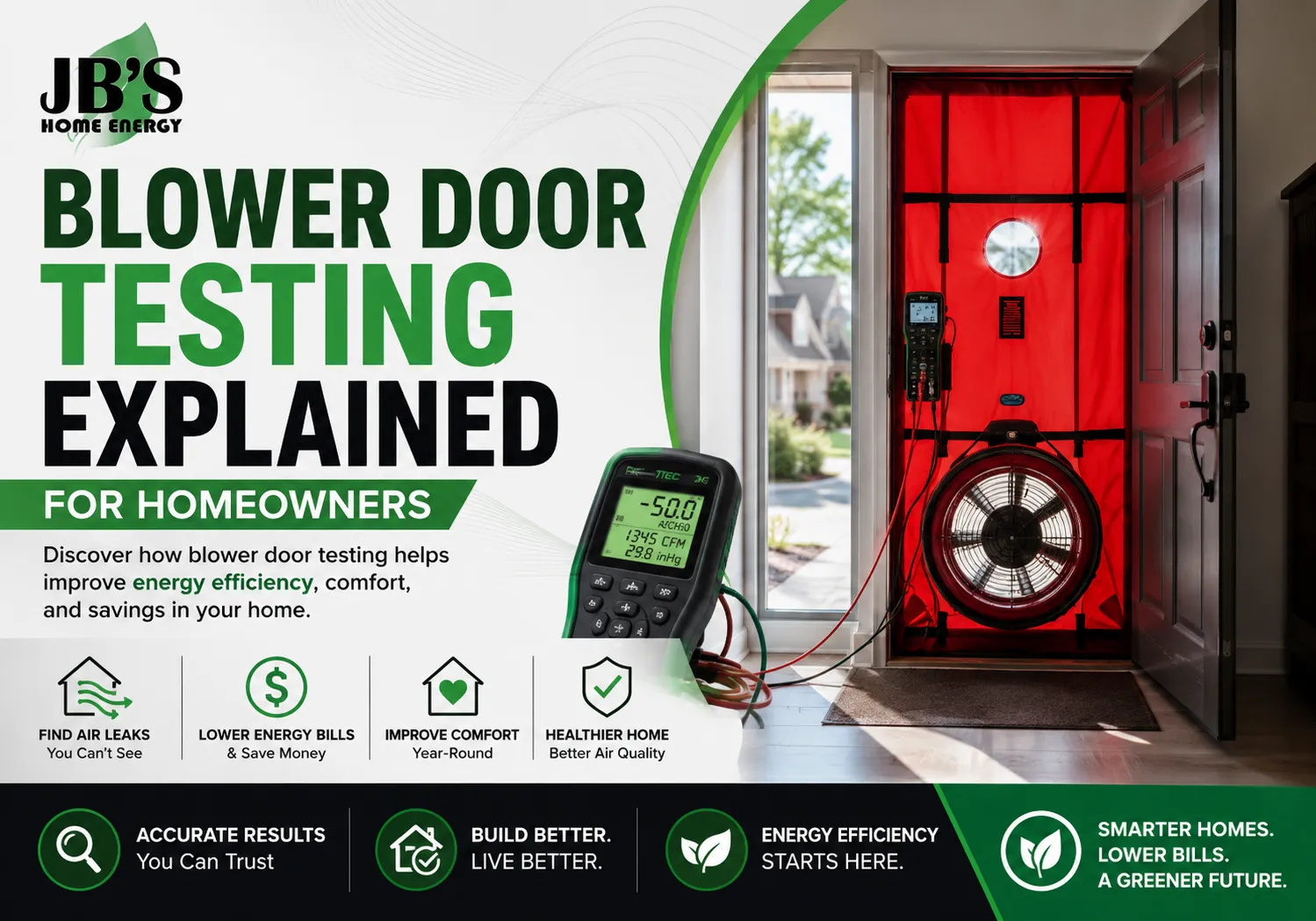

Heating and cooling account for the largest share of energy use in most American homes. When outside air slips through hidden gaps around doors, windows, attics, or ductwork, the HVAC system works harder than necessary. A blower door test measures how much air leaks from a building, making it one of the most effective ways to identify energy loss before it leads to higher utility bills or comfort problems.
Homeowners planning a new build, remodeling project, or energy upgrade often ask, "What is a blower door test?" The answer can help prevent costly problems by revealing how airtight a home is and identifying areas where energy efficiency can be improved.
What Is a Blower Door Test and How Does It Work?
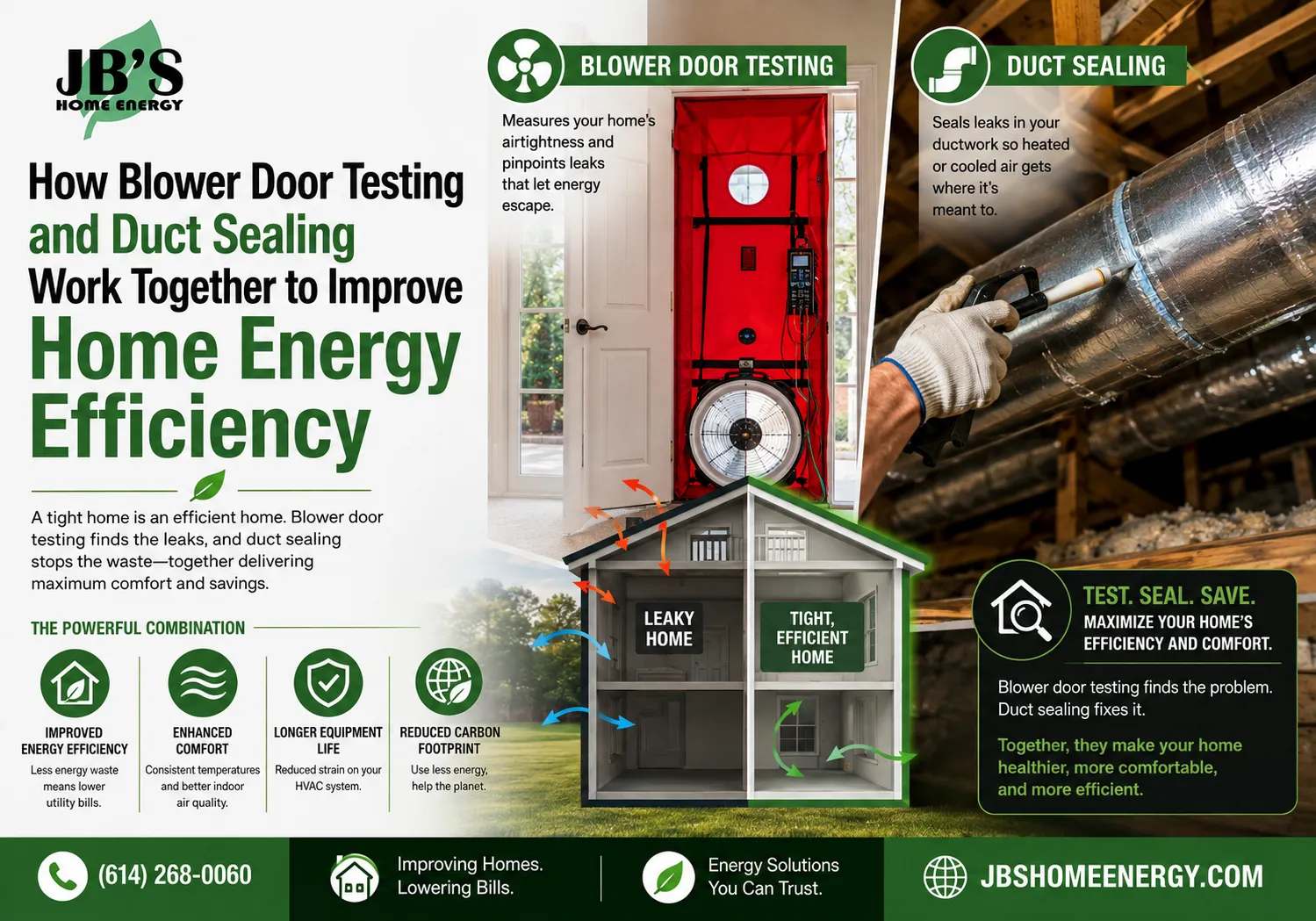
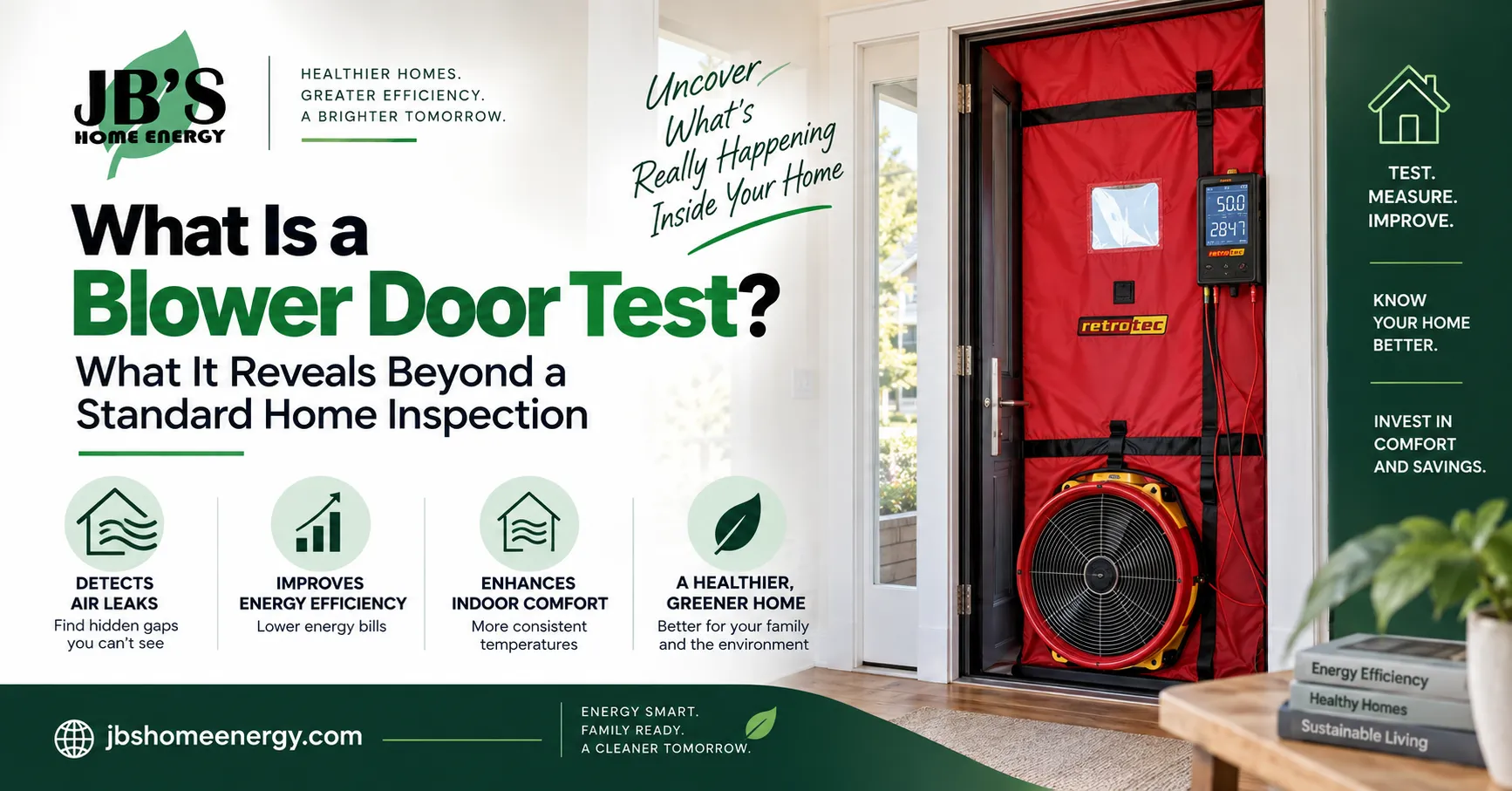
A blower door test uses a powerful fan installed in an exterior doorway to create a pressure difference inside the home. This makes hidden air leaks easier to find and measure. Technicians record the home's air leakage rate, often reported as ACH or CFM, and may use smoke pencils or infrared cameras to locate problem areas. The results provide accurate data that helps homeowners and builders decide where air sealing improvements will have the greatest impact.
Why Does Air Leakage Matter in a Home?
Many homeowners notice uneven temperatures or persistent drafts without realizing that uncontrolled air leakage is often the cause. Small gaps throughout a building can add up to the equivalent of leaving a window partially open all year.
Beyond comfort, excessive air leakage affects several aspects of a home's performance:
- Higher heating and cooling costs
- Rooms that are difficult to keep comfortable
- Increased dust, allergens, and outdoor pollutants entering the home
- Added strain on HVAC equipment
- Moisture movement that may contribute to mold or structural damage
These issues often remain hidden because leaks occur inside wall cavities, attic penetrations, plumbing openings, recessed lighting, and around mechanical systems.
For homeowners considering blower door testing Michigan, the test provides a clear picture of where conditioned air escapes, allowing targeted improvements instead of costly guesswork.
Many property owners scheduling blower door testing Massachusetts use the results to verify that newly constructed homes meet local energy code requirements or to identify opportunities for improving efficiency in existing buildings.
Why Are More Homeowners Scheduling Blower Door Testing?
Stricter energy codes have made blower door testing a standard step for many new homes. Homeowners also use it before renovations or HVAC upgrades to find hidden air leaks that drive up energy costs. For those searching for blower door testing Ohio, the test helps identify problem areas and confirms whether previous insulation or air sealing improvements are working as intended. Hidden leaks can occur around attics, crawl spaces, plumbing, electrical outlets, and ductwork, making early detection a smart investment.
Expert Insight: Why Blower Door Testing Matters
According to the U.S. Department of Energy, air leakage is one of the largest sources of residential energy waste. Testing helps identify exactly where conditioned air escapes so homeowners can make targeted improvements rather than replacing equipment unnecessarily.
| Industry Finding | Why It Matters |
| The U.S. Department of Energy estimates that air leaks can account for up to 30% of a home's heating and cooling energy use. | Identifying and sealing leaks can reduce energy waste and improve comfort. |
| According to ENERGY STAR, sealing air leaks and adding insulation can reduce heating and cooling costs by an average of 15%, or about 11% on total energy costs. | Air sealing can lower utility bills while improving indoor comfort. |
| The 2021 International Energy Conservation Code (IECC) requires blower door testing for many newly constructed homes in jurisdictions that have adopted the code. | Testing helps verify compliance with modern energy efficiency standards. |
How Can Homeowners Improve Their Blower Door Test Results?
The best blower door test results come from reducing uncontrolled air movement before testing takes place. Professional energy assessors typically recommend addressing the largest leakage points first, since these improvements have the greatest impact.
Common improvements include:
- Seal gaps around doors and windows.
- Caulk openings around plumbing and electrical penetrations.
- Improve attic air sealing before adding insulation.
- Replace damaged weatherstripping.
- Seal attic access panels and pull-down stairs.
- Repair disconnected or leaking ductwork.
Many homes also benefit from services like duct sealing in New Hampshire or duct sealing in Rhode Island, particularly when conditioned air is escaping through joints or connections inside attics, crawl spaces, or basements. Sealing duct leaks helps the HVAC system deliver conditioned air where it is needed instead of losing it before it reaches occupied spaces.
For older homes, combining blower door testing with services such as duct sealing in Maine often produces greater efficiency improvements than performing either service independently.
Practical Recommendations before Scheduling a Test
A blower door test provides the most accurate results when the home is prepared according to the testing professional's instructions.
A few simple steps include:
- Close and latch all exterior doors and windows.
- Open all interior doors.
- Turn off fireplaces and wood-burning stoves.
- Shut fireplace dampers unless instructed otherwise.
- Turn off exhaust fans.
- Follow any additional guidance provided by the testing company.
These steps help create consistent testing conditions and improve measurement accuracy.
Final Thoughts
A blower door test provides more than a single measurement. It identifies where energy is being lost and helps homeowners make informed improvements that enhance comfort, reduce utility costs, and support long-term building performance. When combined with targeted air sealing and duct improvements, the results can benefit both new construction and existing properties.
If your project requires blower door testing or you're looking for ways to improve energy efficiency, JB's Home Energy LLC has been helping residential and commercial property owners since 2015. Schedule an assessment today to identify hidden energy loss and make informed improvements with confidence.
Frequently Asked Questions
Q: What is Retrotec used for?
Retrotec manufactures blower door testing equipment used to measure air leakage in homes and commercial buildings. Energy professionals use it to evaluate building airtightness and identify areas where air is escaping.
Q: What is ACH50?
ACH50 stands for Air Changes per Hour at 50 Pascals. It measures how many times the air inside a building is replaced in one hour when a blower door test creates a 50-pascal pressure difference. Lower ACH50 values indicate a tighter, more energy-efficient building.
Q: Is it hard to pass a blower door test?
Not if the home is properly sealed. Addressing common air leaks around doors, windows, attics, plumbing penetrations, and ductwork before testing can help meet the required air leakage standard.
























Sign in to leave a comment.