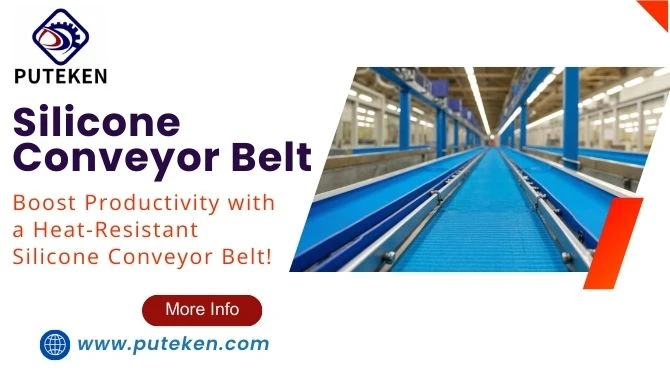
In mass production and industrial automation environments, every component of a conveyor system influences not only the quality of the finished product but also the speed, safety, and consistency with which it is produced. Among the various components, the type of conveyor belt used can significantly influence a production line’s overall efficiency and downtime. One standout solution for industries operating under high thermal conditions is the Silicone Conveyor Belt—especially the heat-resistant kind designed to endure extreme temperatures while maintaining strength, flexibility, and precision.
At Shanghai Puteken Transmission System Co., Ltd., we manufacture high-performance conveyor belt solutions tailored to diverse applications, including those requiring extreme durability under continuous thermal stress. Our heat-resistant silicone conveyor belts are designed to enhance productivity, reduce maintenance intervals, and boost ROI—even in the most challenging operational conditions such as baking ovens, curing chambers, drying tunnels, or food processing lines involving hot items.
What is a Silicone Conveyor Belt?
A Silicone Conveyor Belt is a specialized type of conveyor belt made with a silicone-coated surface, typically mounted on a high-strength fabric base made from fiberglass, polyester, or aramid fibers. These belts are known for their exceptional thermal resistance, anti-adhesive properties, food safety compliance, and chemical resistance.
Ideal for conveying materials that are hot, sticky, or require delicate handling, silicone belts maintain stability, flexibility, and surface integrity at high temperatures—often reaching up to +250°C (482°F). In special applications, upgraded formulations can endure even higher temperatures for short durations without deformation or loss of performance.
Why Choose a Heat-Resistant Silicone Conveyor Belt?
When standard conveyor belts are exposed to high or fluctuating temperatures, they tend to degrade over time. Materials may warp, crack, or melt under stress, causing unplanned downtime, safety hazards, or damage to transported products.
Here’s why silicone is the superior choice:
1. High Thermal Stability
Silicone-based belts can endure extreme environments without losing tensile strength or dimensional stability. Many silicone belts function continuously between -60°C to +250°C, with short-term resistance even higher—perfect for baking, drying, or soldering procedures.
2. Non-stick Surface
The naturally non-adhesive surface of silicone prevents melted materials, food residues, or adhesives from sticking, which not only minimizes product loss but also reduces cleaning time and effort, increasing throughput.
3. Food-grade Compliance
Most silicone conveyor belts are FDA and EU certified, making them suitable for direct contact with food items like dough, snacks, meat, chocolate, and bakery products. This makes compliance simpler for food and pharmaceutical industries alike.
4. Chemical and Moisture Resistance
Silicone resists acids, alkalis, ozone, UV rays, and humidity, making it a multi-environment belt solution with low degradation even under continuous exposure.
5. Flexible and Soft Material Handling
Despite being durable, silicone offers a soft surface that helps in handling delicate or sensitive products such as glass, printed electronics, textiles, blister packs, or finished baked goods without causing surface damage.
Key Industries Benefitting from Silicone Conveyor Belts:
Understanding how a Silicone Conveyor Belt boosts productivity is clearer when viewed through industry-specific use cases. Below are a few sectors where silicone belts lead:
1. Food Processing and Baking Industry
- Applications: Bakery ovens, chocolate cooling lines, meat processing, tortilla transport, grilling, and dough handling
- Challenges Solved: Stickiness, hygiene compliance, heat degradation
- Heat Resistance Required: 180°C to 250°C
- Benefit: The belt’s non-stick surface prevents product deformation, remaining stable and easy to clean even after continuous baking cycles.
2. Textile Industry
- Applications: Heat press units, drying machines, laminating, calendaring, finishing lines
- Challenges Solved: Fiber adhesion, belt shrinkage, curl formation
- Benefit: Silicone belts maintain flatness and alignment even under intense heat and tension conditions, ensuring fabric quality.
3. Electronics and PCB Manufacturing
- Applications: Soldering conveyor systems, curing processes, SMT lines
- Challenges Solved: Electrostatic buildup, temperature sensitivity, dimensional inconsistency
- Benefit: Silicone belts can be developed with antistatic properties and offer high precision, even when moving ultra-thin or fragile circuit boards.
4. Pharmaceutical and Medical Devices
- Applications: Tablet drying ovens, sterile transfer lines
- Challenges Solved: Contamination risk, belt flaking, and high cleanroom demands
- Benefit: FDA-compliant silicone surfaces ensure regulatory adherence and withstand autoclave-level temperatures.
5. Packaging Industry
- Applications: Heat sealing conveyors, wrapping tunnels, induction sealing
- Challenges Solved: Melting package residues, plastic sticking, and low heat tolerance of other belts
- Benefit: Maintains packaging uniformity even during rapid production cycles involving high-temperature sealing tools.
Technical Features of Heat-Resistant Silicone Belts from Shanghai Puteken
As a trusted leader in conveyor solutions, Shanghai Puteken Transmission System Co., Ltd. offers tailor-engineered silicone belts with advanced performance features:
- Temperature Range: -60°C to +250°C (Up to 280°C short-term)
- Standard Thickness: 0.8 mm to 5 mm available
- Coating Options: One-side or double-side silicone
- Surface Finishes: Smooth, textured, anti-slip versions
- Reinforcements: Fiberglass, polyester, aramid (Kevlar)
- Edge Reinforcements: Welded or stitched options for long service life
- Anti-static coatings: Available for sensitive electronics applications
FDA & EU Certification: For food and pharma applications
Our belts are rigorously tested for tensile strength, thermal shrinkage, and elongation under load—ensuring durability and compliance throughout their operational life.
How to Choose the Right Silicone Conveyor Belt for Your Needs?
Selecting the most suitable Silicone Conveyor Belt requires evaluating your production environment, material parameters, and operational needs. Here’s a simplified selection guide:
1. Determine Thermal Requirements
What’s your operating and peak temperature?
Is the heat indirect (oven ambient) or direct (product contact)?
2. Check Regulatory Needs
Is food-grade compliance (FDA/EU) required?
Are anti-static properties needed?
3. Evaluate Product Characteristics
Sticky, viscous, or delicate items benefit from soft, smooth finishes
Heavy or abrasive products may require stronger reinforcement or thicker belts
4. Establish Dimensions and Speed
Measure correct width, pitch, and tension requirements
Speed and incline must be matched with belt surface finish and grip strength
5. Clarify Maintenance Expectations
Do you need belts to be easy to clean or replace?
How long should the belt operate before expected wear?
With Shanghai Puteken’s engineering support, you can receive a custom-fit solution based on detailed technical needs and operational constraints.
Real-World Case Study: Enhancing Throughput in a Commercial Bakery
Challenge: A bakery in Europe experienced frequent production pauses due to the melting and sticking of confectionery to its standard PVC conveyor belts. Additionally, belts wore out every 5–6 weeks due to oven heat.
Solution from Shanghai Puteken:
- Supplied heat-resistant silicone conveyor belts with food-grade certification
- Introduced textured surface for minimal product contact friction
- Provided edge reinforcements and chemical-resistant coatings
Results:
- Belt life improved by 450%
- Cleaning time reduced by 80%
- Product rejection rate dropped to virtually zero
- Return on investment recovered within 3 months
Maintenance & Safety Tips for Silicone Conveyor Belts
To maximize the life and efficiency of your Silicone Conveyor Belt, implement the following:
- Regular Inspection: Check for edge fraying, cracking, or excessive wear
- Proper Tensioning: Maintain manufacturer-recommended tensioning to avoid stretch or slippage
- Avoid Overloading: Excess weight can deform the belt and alter tracking
- Scheduled Cleaning: Use approved cleaning agents to avoid chemical corrosion
- Alignment Checks: Periodically inspect for tracking misalignments, especially in long conveyors
With these measures, your conveyor system can operate at peak productivity round-the-clock.
Your Next Step Towards Productivity and Precision
Upgrading to a heat-resistant Silicone Conveyor Belt is not just a technical improvement—it’s a strategic move that drives productivity, reduces downtime, supports regulatory compliance, and enhances product handling. At Shanghai Puteken Transmission System Co., Ltd., we are committed to delivering belt systems that exceed expectations in performance, durability, and value.
Our expert engineering teams are always ready to help you select, design, and implement silicone conveyor solutions tailored to your exact industrial needs.
Frequently Asked Questions (FAQ)
Q1. Can silicone conveyor belts be used in ovens?
Yes, heat-resistant Silicone Conveyor Belts are ideal for continuous use in industrial ovens, maintaining integrity and shape at up to 250°C.
Q2. Are silicone belts safe for food contact?
Absolutely. We offer FDA-approved and EU-compliant belts for direct food contact, suitable for baking, meat processing, and packaging.
Q3. How long does a silicone conveyor belt last?
Lifespan depends on the application, but with proper maintenance, a high-quality belt from Shanghai Puteken can last anywhere from 6 months to 2 years, even under high stress.
Q4. What reinforces the belt to enhance strength?
Our belts use fiberglass, polyester, or Kevlar (aramid) fabric reinforcements to provide both flexibility and tensile strength without sacrificing heat resistance.
Q5. Can I request custom properties, such as anti-slip or static control?
Yes! Shanghai Puteken offers full customization options, including anti-slip surface textures, static control, edge sealing, and color coding to suit your line requirements.
















Sign in to leave a comment.