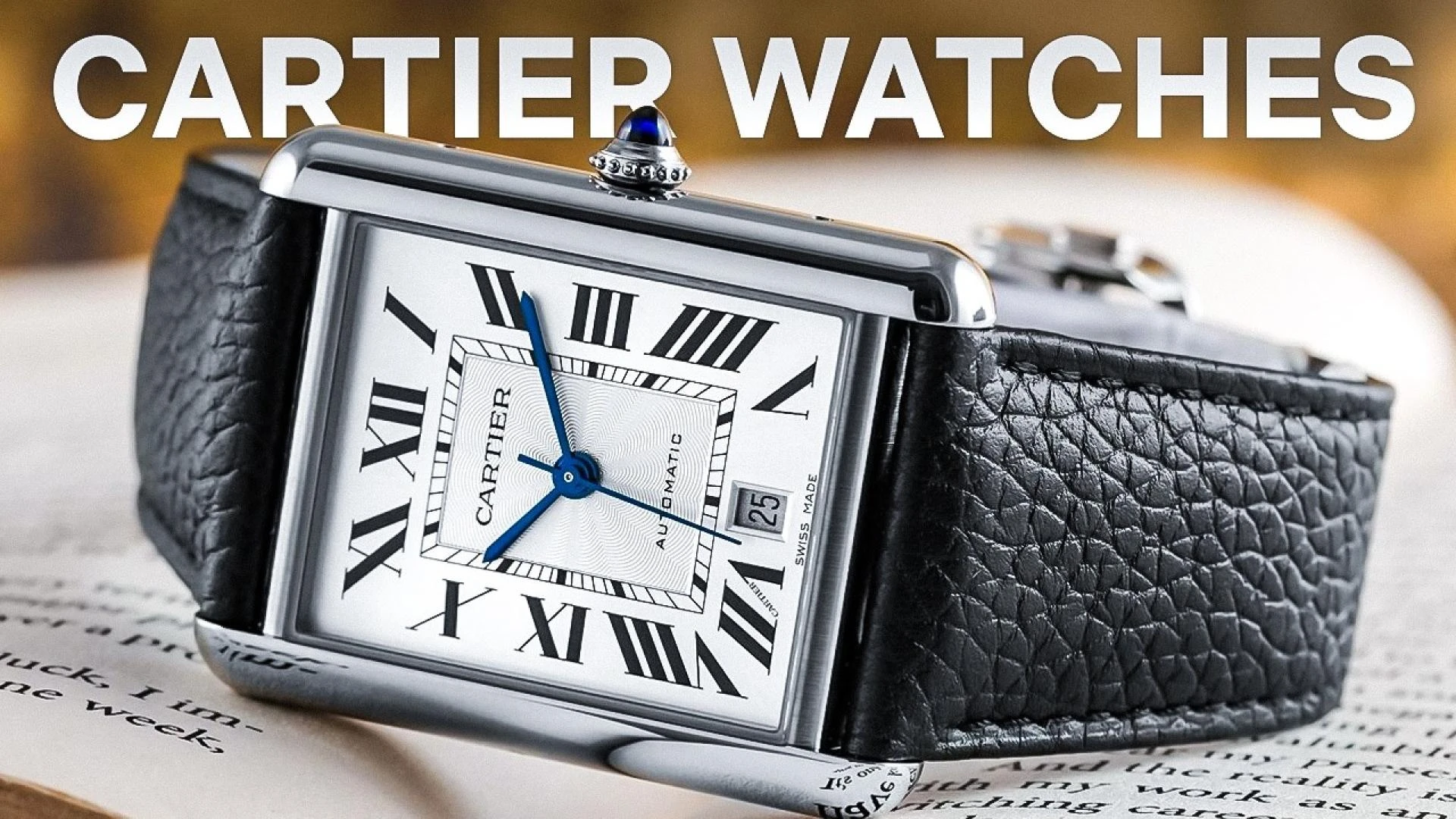

In the universe of fine watchmaking, most brands compete on the battlefield of technical specs—depth ratings, power reserves, and magnetic resistance. Cartier, however, has always occupied a different plane. For over 175 years, the Maison has famously acted as a jeweler that makes watches, rather than a watchmaker that adds jewels. This "design-first" philosophy has allowed a Cartier watch to transcend the labels of "tool" or "accessory," becoming instead a piece of kinetic art.
As we move through 2026, the brand's influence is reaching a new zenith. In an era where digital saturation has led many to crave tangible, historical craftsmanship, the bold geometries of a Cartier—the rectangle of the Tank, the square of the Santos, and the circle of the Ballon Bleu—feel more relevant than ever.
The 2026 Landscape: A Return to "Considered Luxury"
The watch market of 2026 is undergoing a profound shift. Collectors are moving away from short-term "hype" models and toward what experts call "considered purchases"—timepieces with deep historical roots and timeless aesthetics. Cartier sits at the very heart of this movement.
While many luxury brands have faced volatility, Cartier has remained remarkably stable. This is partly due to the brand’s unique ability to appeal to both men and women with equal gravity. From the 27mm "diminutive" Santos models that are trending this year to the oversized, masculine presence of the Tank MC, Cartier offers a versatility that few other maisons can match.
The Pillars of the Collection
To understand the appeal of a Cartier watch in 2026 is to understand its most iconic silhouettes. Each model tells a story of innovation that changed the course of horological history.
1. The Santos de Cartier: The World’s First Pilot’s Watch
The story of the Santos is the story of modern watchmaking itself. In 1904, Brazilian aviator Alberto Santos-Dumont complained to his friend Louis Cartier about the difficulty of checking a pocket watch while flying. The solution was the Santos—the first purpose-built wristwatch for men.
In 2026, the Santos remains a bestseller, particularly the Santos de Cartier Large Model with its "SmartLink" adjustment system. The exposed screws on the bezel and the industrial-yet-elegant case shape make it a perfect "everyday" watch that transitions seamlessly from a t-shirt to a tuxedo. For those seeking something truly modern, the 2026 Santos in Titanium offers a stealthy, lightweight alternative to the traditional steel and gold versions.
2. The Cartier Tank: A Century of Refinement
Inspired by the overhead view of a Renault tank during World War I, the Tank broke the mold of the traditional round watch in 1917. Its vertical sidebars (called brancards) serve as the lugs, creating a perfectly integrated rectangular form.
Today, the Tank Must has become the gateway for many new collectors, especially with the 2026 iterations of the SolarBeat movement—a photovoltaic system that uses light to power the watch for up to 16 years without a battery change. It is the perfect marriage of 1920s Art Deco design and 21st-century sustainability.
3. The Ballon Bleu: The Modern Classic
Launched in 2007, the Ballon Bleu is a relative newcomer, yet it has already achieved "icon" status. Its defining feature is the sapphire cabochon crown, nestled safely inside a protective metal hoop. This gives the watch its distinctive pebble-like roundness. In 2026, we are seeing a surge in demand for the 36mm two-tone versions, which balance the warmth of rose gold with the durability of steel.
The "Jeweler of Kings" and the King of Designers
King Edward VII famously called Cartier "the jeweler of kings and the king of jewelers." This royal pedigree is still evident in the craftsmanship of 2026. Every Cartier watch features signatures that act as a "secret handshake" among enthusiasts:
- The Roman Numerals: Often featuring a secret "Cartier" signature hidden within the 'V' of the VII or X.
- The Railway Track: The "chemin de fer" minute track that frames the dial.
- The Blue Steel Hands: Sword-shaped hands that are heat-treated to achieve a perfect cornflower blue.
- The Cabochon Crown: A faceted sapphire or synthetic spinel set into the winding crown.
Investing in a Legend: Market Trends for 2026
From an investment perspective, Cartier has become a "safe haven" asset. While the prices of some sport-luxury watches have fluctuated wildly, the value of classic Cartier references has seen a steady, upward trajectory. In early 2026, the brand implemented a strategic price adjustment across the Santos and Tank lines, reflecting the rising costs of precious metals like 18k gold and the brand’s increased focus on in-house mechanical movements.
For collectors in Asia, particularly in the horological hub of Hong Kong, the secondary market for Cartier is exceptionally vibrant. Because Cartier designs are so consistent, a vintage Tank from the 1970s looks just as "current" as a brand-new model. This makes them excellent heirloom pieces.
Navigating this market requires a partner who understands both the history and the current economics of the brand. Many savvy collectors work with established specialists like Aristo Watch & Jewellery to source rare, "pre-loved" pieces or to find specific 2026 releases that are difficult to obtain at retail. Whether you are looking for a rare Tank Cintrée or the latest Panthère de Cartier in rose gold, having an expert eye to verify provenance is essential.
The 2026 "Must-Haves": Panthère and Baignoire
While the Santos and Tank often dominate the conversation for men, the women's market in 2026 is being led by the Panthère de Cartier and the Baignoire.
The Panthère, with its ultra-flexible "brick-link" bracelet, is essentially a piece of jewelry that tells time. It is the definitive "it-girl" watch of the decade, favored for its effortless Parisian chic. Meanwhile, the Baignoire (French for "bathtub") is seeing a massive revival. Its elliptical, single-line form is a masterclass in minimalist geometry. In 2026, the small-model Baignoire on a gold bangle has become one of the most sought-after "jewelry watches" on the market.
Sustainability and Innovation
Cartier is also leading the way in ethical luxury. By 2026, the brand has committed to ensuring that 100% of its gold and diamonds are responsibly sourced. This commitment to "slow luxury" resonates with a younger generation of buyers who want their investments to reflect their values. The move toward more mechanical, in-house calibers—like the 1847 MC automatic movement—also ensures that these watches can be serviced and passed down for generations, reducing the "disposable" nature of modern technology.
Conclusion: The Final Word on Cartier
A Cartier watch is not just a tool for tracking minutes and hours; it is a tool for expressing a certain worldview. It suggests that you value form as much as function, and that you respect the past while moving confidently into the future.
Whether you are drawn to the aviation history of the Santos, the Art Deco elegance of the Tank, or the playful curves of the Ballon Bleu, owning a Cartier is an entry into a legacy of style that has remained unbroken for nearly two centuries. In the fluctuating world of 2026, that kind of permanence is the ultimate luxury.





























Sign in to leave a comment.