
Selecting the right backup power system depends heavily on how, where, and how often the generator will be used. The choice between portable vs fixed installation generators becomes especially important when businesses and property owners are balancing mobility, power capacity, installation requirements, maintenance, and long-term operating costs.
A generator may appear to be a straightforward piece of equipment, but the installation approach can significantly influence its usefulness. A portable unit can be moved between locations as power needs change, while a fixed generator is designed to remain permanently installed and ready to supply power when required. Understanding the practical differences can help buyers avoid choosing equipment that does not match their actual operating conditions.

When Portability Makes Sense
Portable generators are designed around flexibility. Their relatively compact construction and mobility allow users to move the equipment to different locations when temporary power is needed. This makes them useful for construction projects, outdoor events, agricultural operations, temporary worksites, emergency situations, and small commercial applications. Imagine a contractor working on several projects across different locations. Purchasing a separate generator for every site may not be economical. A suitably sized portable generator can instead be transported to whichever project currently requires power. Portability can also be valuable during unexpected power interruptions. A small business may use a portable generator to operate essential equipment during an outage without investing in a permanent power-generation installation.
However, portability comes with limitations. Smaller portable generators generally have lower power capacities than larger stationary systems. Moving heavy equipment can also require suitable vehicles, lifting arrangements, and trained personnel. Electrical connections must be handled correctly, and the generator needs to be positioned in a safe, appropriately ventilated location during operation.
Why Fixed Generators Are Built for Reliability
Fixed or stationary generators are intended to remain at one location for long-term operation. They are commonly installed at commercial buildings, factories, hospitals, data centers, telecommunications facilities, residential properties, and other sites where dependable standby or prime power is important. Because these systems are permanently positioned, they can be integrated into the site's electrical infrastructure. Depending on the installation, automatic transfer equipment can allow the generator to start and provide backup power when the primary electricity supply fails.
Stationary generators also tend to be available in much larger capacities. This makes them appropriate when the power requirement extends beyond lighting and small appliances to elevators, pumps, HVAC systems, production machinery, servers, medical equipment, or other substantial electrical loads. The trade-off is that fixed installation requires more planning. The site may need a dedicated foundation, electrical connection, fuel-storage arrangement, exhaust system, ventilation, acoustic treatment, and appropriate access for maintenance. Installation should be carried out according to applicable electrical, safety, environmental, and local requirements.
Comparing Capacity and Runtime
Generator capacity is one of the most important factors in the decision. Portable generators are often selected for relatively modest loads, while fixed systems can support significantly larger electrical demands. But capacity alone does not determine the correct generator. Buyers should calculate the actual connected load and consider starting currents from motors and other equipment. Running a generator consistently at an unsuitable load can affect fuel efficiency, engine performance, and maintenance requirements.
Runtime is equally important. A portable generator with a smaller fuel tank may be perfectly adequate for a short emergency, whereas a stationary generator can be configured for longer operation with a suitable fuel-storage strategy. For a business that cannot tolerate lengthy interruptions, a fixed generator may therefore provide greater operational security. For occasional or location-specific requirements, portability may be more valuable than maximum runtime.
Installation and Site Requirements
One of the clearest differences between the two options is the infrastructure surrounding the generator. A portable unit generally requires temporary positioning, appropriate electrical connections, adequate ventilation, and safe fuel handling each time it is operated. The installation can be relatively simple, but it still must be done correctly.
A fixed generator involves a more substantial initial setup. The installation location should provide sufficient space for maintenance and airflow while considering exhaust discharge, noise, vibration, fuel access, and proximity to the electrical distribution system. The generator enclosure can also affect the installation. Outdoor units may use weather-resistant acoustic canopies, while indoor systems require carefully designed ventilation and exhaust arrangements.
Fuel, Maintenance and Long-Term Economics
The initial purchase price should not be the only consideration. Fuel consumption, maintenance, spare parts, servicing, downtime, installation expenses, and expected operating hours all contribute to the generator's total cost of ownership. Portable generators may have lower installation costs because they do not necessarily require permanent civil and electrical infrastructure. However, repeated transportation and setup can become inconvenient when the generator is used frequently.
A fixed generator generally involves a greater upfront investment, but its permanent installation can make regular operation and maintenance more systematic. For organizations that depend on backup power throughout the year, this convenience can be worth the additional investment. Maintenance should also be planned according to operating hours rather than simply waiting until a fault occurs. Engine oil, filters, batteries, cooling systems, fuel systems, electrical connections, and exhaust components should be inspected according to the manufacturer's recommendations.
Noise and Emissions Should Not Be Overlooked
Generator selection is not solely about electricity production. Noise and exhaust emissions can have a significant impact on the suitability of a particular system, especially in urban areas, residential neighborhoods, commercial buildings, and environmentally sensitive locations. A fixed generator can be equipped with a purpose-designed enclosure, exhaust silencer, vibration-control arrangement, and ventilation system. Portable units may have fewer opportunities for extensive acoustic treatment, although specific models can incorporate noise-reduction features.
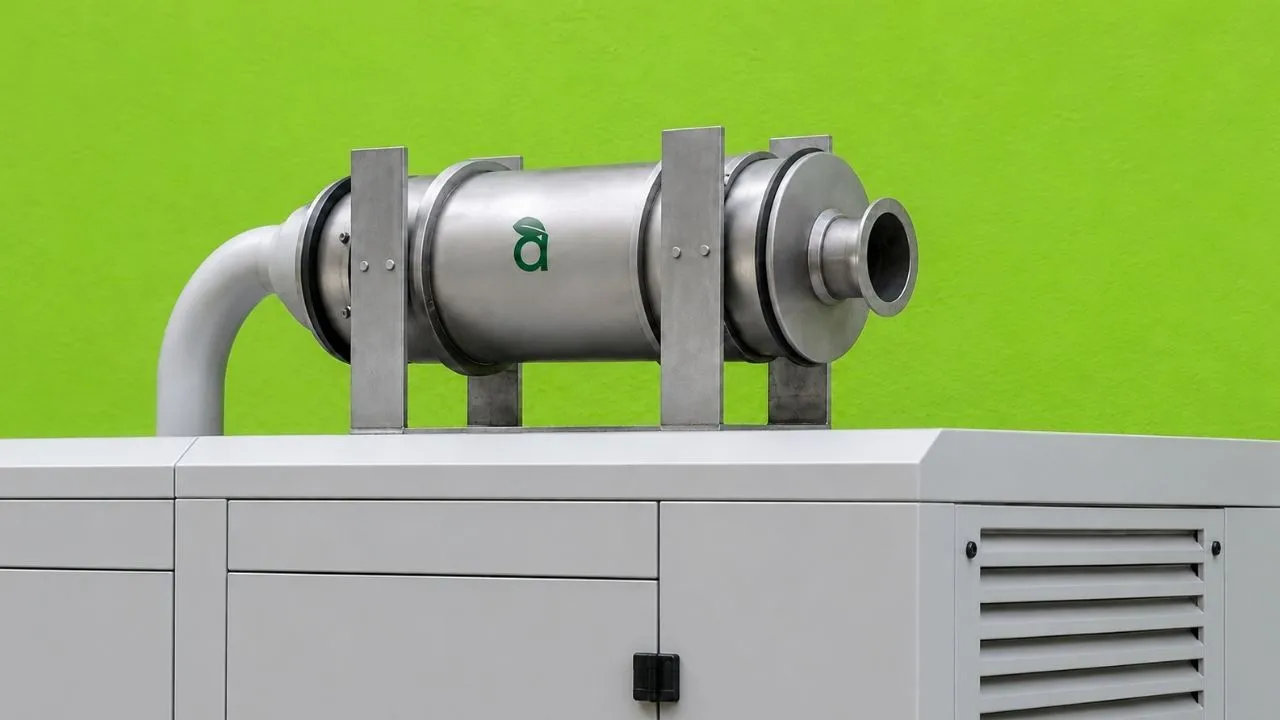
Exhaust emissions require a separate consideration. Diesel generators can produce particulate matter, carbon monoxide, hydrocarbons, and nitrogen oxides, with actual emission levels influenced by engine design, load, fuel quality, maintenance, and other factors. For an existing diesel generator, an appropriate retrofit emission-control solution may be worth evaluating where technically suitable. A CPCB approved RECD should not be selected solely on the basis of a marketing description; the owner should verify the relevant technical documentation, applicability, and current regulatory requirements for the specific DG set.
CPCB requirements and environmental directions can depend on factors such as generator specifications, location, operating conditions, and the rules applicable at the time. Before installing or modifying an emission-control system, generator owners should verify current requirements directly with the Central Pollution Control Board, relevant State Pollution Control Board, CAQM where applicable, or another competent authority.
Which Generator Is Right for Your Application?
The right choice ultimately comes down to the nature of the power requirement. A contractor needing electricity at changing worksites may gain considerably from a portable generator. A commercial facility that requires dependable backup power throughout the year will usually benefit more from a properly engineered fixed installation. The frequency of use should also influence the decision. Occasional emergency use favors flexibility, while frequent or critical operation makes installation quality, automation, service access, and long-term reliability increasingly important.
Environmental conditions matter too. A generator operating in a dusty construction environment may require different maintenance and protection compared with equipment installed in a clean commercial facility. Similarly, generators located close to occupied buildings may require greater attention to noise and exhaust management.
Think Beyond the Generator Purchase
The smartest generator decision considers the complete power system rather than the engine alone. Electrical load, starting requirements, expected runtime, fuel availability, installation space, ventilation, noise, maintenance support, emissions, and future expansion should all be considered before purchasing equipment. For some users, the flexibility of a portable generator will outweigh its limitations. For others, the reliability and integration possibilities of a fixed system will provide much greater value over several years.
Existing generator owners should also consider whether their current equipment can continue meeting operational needs through proper maintenance or technically suitable upgrades. Where emissions management is a concern, retrofit solutions can sometimes be evaluated alongside replacement options, subject to the equipment's condition and applicable requirements.
Conclusion
Portable and fixed generators serve different purposes, and neither is automatically the better choice. Portable systems offer mobility and flexibility, while fixed installations provide greater integration, capacity, automation, and long-term operational convenience.Before making a purchase, look beyond the generator's advertised capacity and price. Consider how frequently it will operate, where it will be installed, what loads it must support, how fuel will be supplied, what maintenance resources are available, and what environmental requirements apply. A carefully matched generator can provide dependable power without creating unnecessary operating or installation costs. Whether the requirement is temporary power for a worksite or permanent backup for a critical facility, choosing the appropriate installation type is an important step toward reliable and efficient power generation.
Frequently Asked Questions
What is the main difference between portable and fixed generators?
A portable generator is designed to be moved between locations, while a fixed generator is permanently installed at a specific site and can often be integrated with the building's electrical system.
Are portable generators suitable for businesses?
Yes. Portable generators can be useful for small businesses, temporary worksites, construction projects, events, and emergency power requirements, provided their capacity matches the electrical load.
Are fixed generators better for long-term backup power?
Fixed generators are generally more suitable for long-term or critical backup applications because they can provide higher capacity and may be integrated with automatic transfer and permanent fuel and electrical systems.
Does a fixed generator require more installation planning?
Yes. A permanent installation may require consideration of foundations, electrical connections, ventilation, exhaust discharge, fuel storage, noise, vibration, maintenance access, and applicable local requirements.
Can an existing diesel generator use an RECD system?
Depending on the DG set's engine specifications, condition, exhaust characteristics, operating conditions, and applicable requirements, a retrofit emission-control system may be technically feasible. The suitability should be professionally assessed and current regulatory requirements verified before installation.
























Sign in to leave a comment.