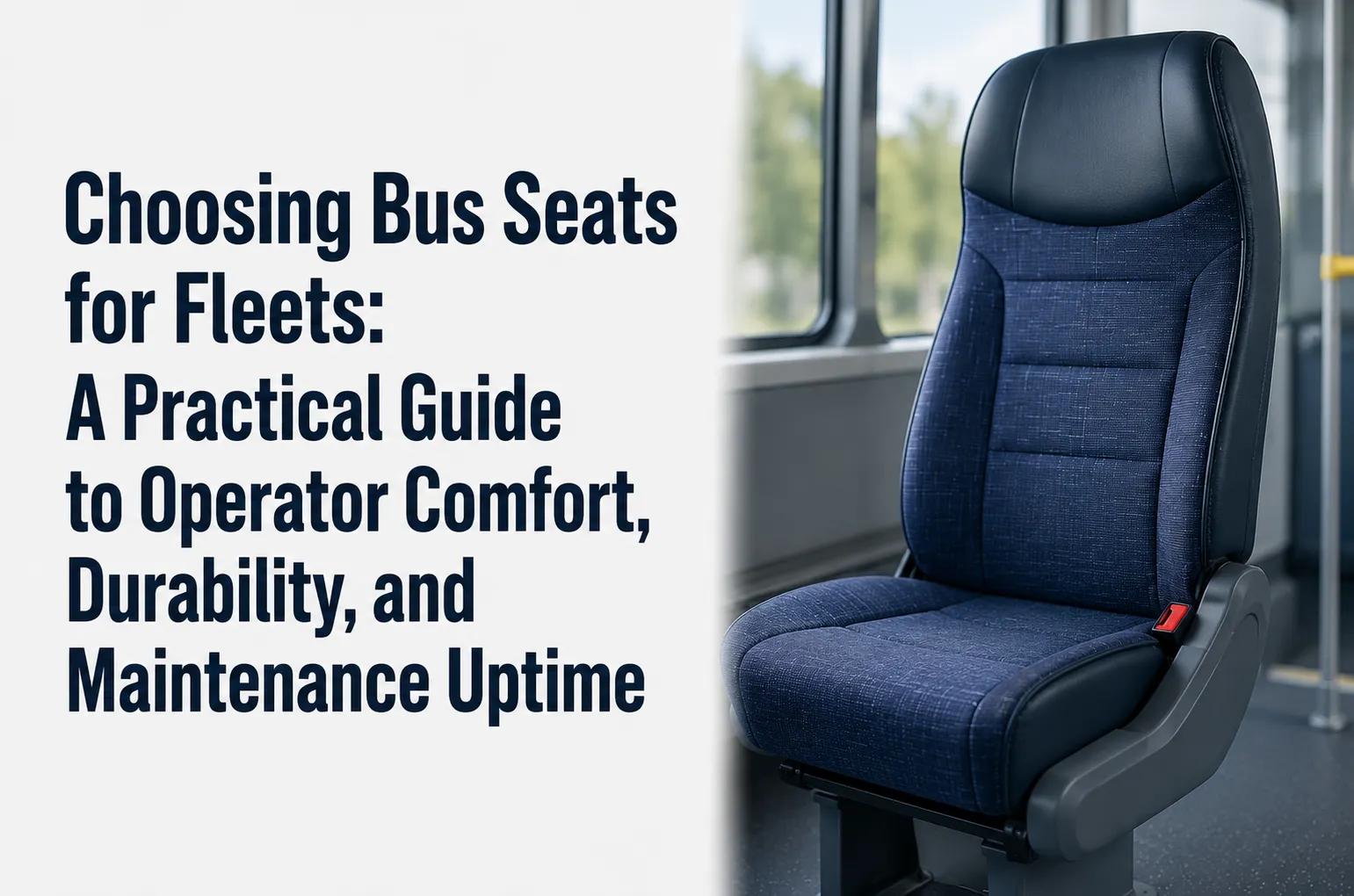

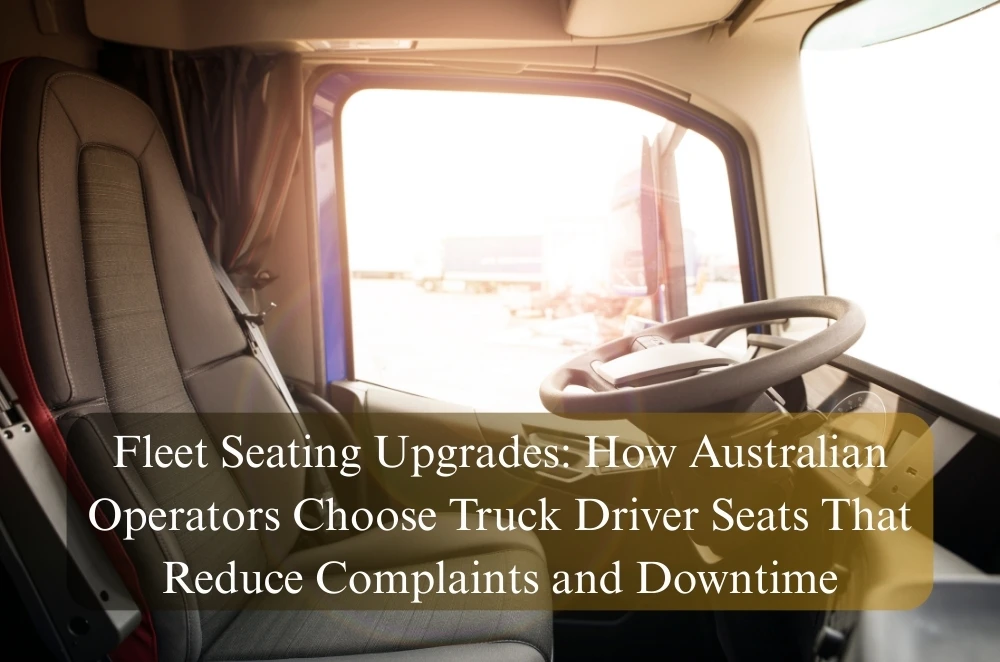
Bus seating is one of the few fleet decisions that your drivers and passengers touch all day, every day.
That’s why ergonomic bus seating built for operators is best treated as an uptime and retention tool, not a cosmetic upgrade.
When seats fit the work, complaints drop, cleaning gets easier, and depots stop firefighting small failures.
Why seating decisions show up in downtime and driver turnover
A seat is a wearable part of the vehicle.
If it doesn’t support the driver’s posture and reach, small discomfort turns into constant micro-adjustments, which can increase fatigue over a long shift.
For passenger seats, the business impact tends to appear as wear, vandalism, cleaning time, and a cabin that looks “tired” sooner than expected.
The hidden cost is inconsistency: different seats across the same fleet create different driver setups, different maintenance parts, and different “known issues” that get passed around by word of mouth.
Common mistakes
Most seat problems start as small annoyances and end as roster headaches.
A common mistake is buying a brochure feature list instead of a route reality, then discovering the seat that felt fine in a showroom becomes uncomfortable after repeated stop-start driving and frequent door cycles.
Another is under-specifying adjustability for the driver cohort, so taller/shorter drivers can’t find a stable position without compromising pedals, steering reach, or mirror scanning.
Many fleets also underestimate vibration and “bounce” on rough routes, which can make a seat feel harsh even if the cushion looks thick.
On the cabin side, it’s easy to pick trim that looks great on day one but doesn’t handle sweat, sunscreen, rain gear, spills, and high-frequency cleaning.
Finally, seats often get procured as one-offs per vehicle build, which creates a parts and repair puzzle when you actually need fast swaps.
Decision factors that matter for operator-focused ergonomics
The right spec is the one that survives your harshest route, not your quietest one.
Adjustability that supports real drivers
Driver comfort is usually less about a “soft seat” and more about repeatable positioning.
Look for practical adjustability: height range, fore/aft travel, back angle, lumbar support, and armrest options that match how operators actually drive and how often drivers rotate vehicles.
If the seat forces drivers to perch forward or lean, the shift gets harder even when the vehicle is otherwise easy to drive.
Suspension and long-shift smoothness
If routes include uneven road surfaces, speed humps, or depot yard vibration, the suspension and damping behaviour matters.
Overly “floaty” seats can feel unstable; overly firm seats can feel punishing.
This is also where trade-offs appear: comfort needs to align with safe, controlled driving posture, not encourage slouching or excessive movement.
Materials, cleaning, and cabin appearance
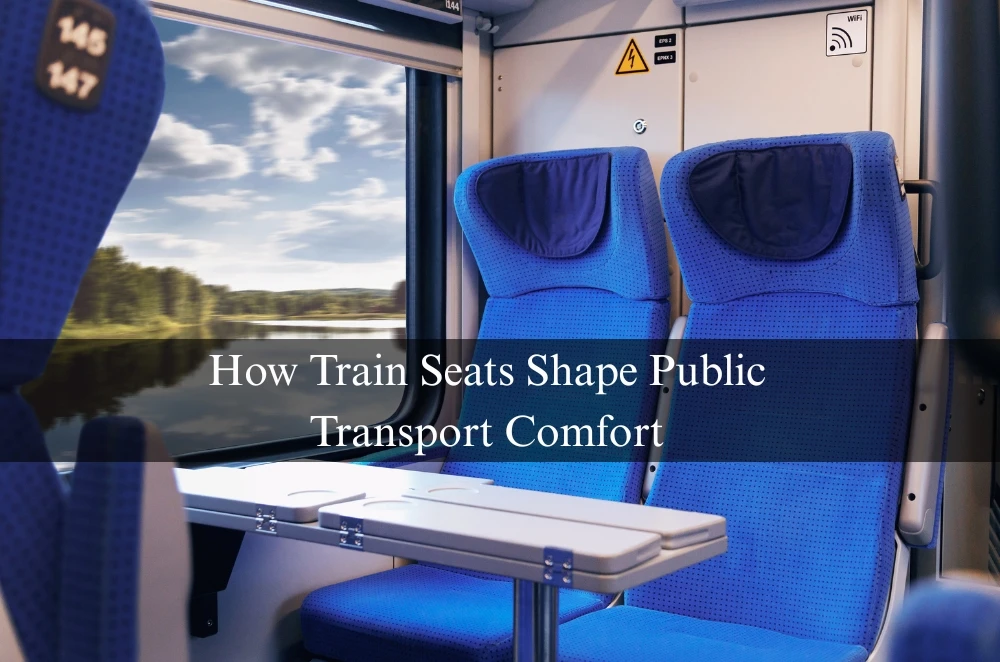
For passenger seating, trim selection is a maintenance decision.
Choose materials that tolerate regular wipe-downs, resist staining, and don’t show every scuff as a permanent mark.
In humid and high-sun environments, heat retention and surface feel can matter for passenger perception and cleaning outcomes.
Serviceability and parts support
Ask a simple question: how fast can a depot return a seat to service when something breaks?
If the answer requires special tools, hard-to-source parts, or long vehicle downtime, that cost will show up quickly during peak service periods.
Designs that support modular replacement (components you can swap without rebuilding the whole seat) tend to reduce downtime and reduce “we’ll deal with it later” deferrals.
Standardisation across depots and routes
Seats become easier to maintain when the fleet spec is consistent.
If you operate across Australia and the Asia Pacific region, consistency also protects training and spares, even when the operating environment changes from coastal humidity to dry heat.
How to standardise a seat spec without overcommitting
Standardising one seat spec across a fleet is how you stop buying exceptions.
Start by writing a short “operator seat brief” for your business: driver height range, typical shift length, route roughness, stop-start intensity, and whether drivers rotate vehicles frequently.
Then build a passenger seat brief: cleaning frequency, vandalism exposure, typical passenger load, and the cabin areas that wear fastest.
Run a controlled pilot on a small set of vehicles that represent your toughest conditions, not just your newest bus.
For procurement teams building a consistent spec, Sege Seats Asia Pacific bus seating overview can help you sanity-check options and configurations before you roll a standard across depots.
Document what “pass” looks like in plain language: fewer driver complaints, stable adjustability, predictable cleaning outcomes, and quick turnarounds for minor fixes.
A simple first-actions plan for the next 7–14 days
A two-week pilot beats a six-month debate.
Days 1–2: Identify your “hardest” routes and vehicles (rough surfaces, longest shifts, highest passenger turnover) and select 2–3 buses that represent that reality.
Days 2–3: Write a one-page seat brief for drivers and passengers: required adjustability, cleaning constraints, and the top 3 failure modes you want to eliminate (loose armrests, torn trim, broken mechanisms, etc.).
Days 3–5: Run a short operator feedback loop: what adjustments are actually used, what still feels awkward, and what parts feel fragile or drift out of position.
Days 5–7: Map your maintenance workflow: what fails, how it’s reported, who fixes it, what parts are needed, and how long the vehicle is impacted.
Days 7–10: Pilot a standardisation approach: same driver seat spec on the test vehicles, and a passenger trim choice that matches your cleaning and wear reality.
Days 10–14: Lock a simple evaluation checklist and decide next steps: expand, adjust spec, or stage changes by depot/route type.
Operator Experience Moment
The biggest seating wins I see are rarely “wow, this is luxurious,” they’re “I didn’t think about my seat all shift.”
When adjustability stays stable and the seat holds its set position, drivers conserve energy for the road instead of constantly re-setting.
Depots also get calmer when repairs become predictable swaps rather than custom fixes.
Local SMB mini-walkthrough
A mid-size operator running school and commuter services across northern Queensland starts with a pilot on two high-mileage vehicles.
They choose one driver seat spec and train drivers to set it the same way at shift start, then collect short, structured feedback.
They select passenger trim based on cleanability and real wear zones rather than showroom appearance.
They keep a small spare-parts kit on site for the pilot vehicles so minor issues don’t become delayed jobs.
They roll the final spec into the next refurbishment cycle and standardise one repair workflow across the depot.
They only expand to a second depot once the first has consistent parts, reporting, and turnaround times.
Practical opinions
Comfort that can’t be maintained becomes a complaint.
Standardisation is a safety and uptime strategy, not an admin preference.
If it’s hard to repair, it will be ignored until it’s expensive.
Key Takeaways
- Build your seat spec around real routes, real shift length, and real cleaning conditions
- Prioritise driver adjustability and stability so positioning stays consistent across rotating operators
- Choose passenger trim and design for cleanability, wear zones, and quick refurbishment
- Standardise parts and maintenance workflows to reduce downtime and procurement complexity
Common questions we hear from businesses in Australia and the Asia Pacific region
Q1: How do we choose between “comfort features” and “durability features” when budgeting?
Usually the best approach is to prioritise features that reduce drift and downtime: stable adjustability, serviceable components, and materials that tolerate your cleaning routine. Next step: list your top three recurring seat issues from the last year and select features that directly reduce those failures. In many APAC climates (humidity, heat, heavy cleaning), material performance and serviceability often matter more than cosmetic upgrades.
Q2: What’s the simplest way to capture driver feedback without it becoming subjective?
In most cases, a short checklist beats open-ended comments: reach comfort, posture stability, adjustment range, vibration feel, and whether settings hold all shift. Next step: run a two-week pilot and require drivers to tick the same five questions at shift end. For fleets with rotating drivers (common across Australia’s metro and regional work), structured feedback reduces “depends who drove it” noise.
Q3: How do we avoid ending up with five different seat types across the fleet?
Usually it starts with a clear standard plus a controlled exception rule, so one-off choices don’t creep in through urgent replacements. Next step: define one default driver seat spec and one passenger seat spec, then require sign-off for any deviation. In multi-depot operations across Australia and APAC, standardisation reduces spares burden and makes training and maintenance more consistent.
Q4: When should we refurbish seats versus replace them?
It depends on the failure mode and whether the structure and mechanisms are still sound, but in most cases the decision should be based on uptime impact and repeat faults. Next step: track how many hours each “seat issue” takes to resolve and how often it recurs, then compare that to the disruption cost of replacement during peak periods. In many operators’ busy seasons (school terms, tourism peaks), planned changeovers typically cost less than repeated reactive fixes.

























Sign in to leave a comment.