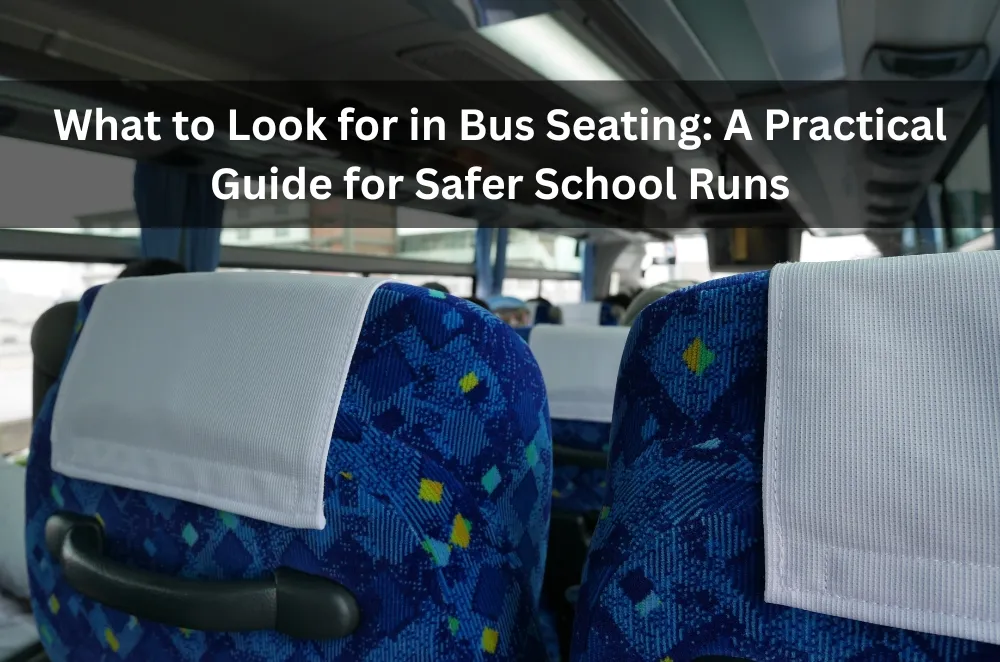

When people think about school bus safety, they often picture the driver, the route, and student behaviour. Seating tends to get noticed only when something goes wrong: a torn cushion, a loose frame, a buckle that won’t latch, or an aisle that feels too tight during peak loads.
But bus seating is doing several jobs at once. It has to support predictable movement (kids fidget, bags swing, buses brake), help manage impact forces in a crash, withstand daily wear, and remain serviceable for years with realistic maintenance windows. In Australia, it also sits within a broader framework of vehicle standards and operator obligations that shape what “good” looks like in practice.
Below is a grounded checklist of what to look for in bus seating—especially in school applications—so procurement teams, operators, and school communities can ask better questions and compare options with confidence.
Start with the job the seat must do
“Bus seat” is a broad label. A seat used on an urban route service, a long-distance coach, and a dedicated school run can be built to very different assumptions.
Before comparing upholstery patterns or extras, define:
- Passenger profile: primary school, secondary school, mixed ages, special needs transport
- Trip profile: short suburban loops vs longer highway stretches
- Loading patterns: full loads twice daily, excursion peaks, seasonal variation
- Behaviour realities: heavy backpack use, frequent seat-swapping, higher chance of spills and vandalism
This context shapes everything else—seat height, spacing, grab points, belt choices, material spec, and how rugged the assemblies need to be.
Safety fundamentals: structure, anchorage, and energy management
A school bus seat isn’t just a “chair bolted to the floor.” In a crash or sudden braking event, the seat structure and its anchorages become part of the occupant protection system. Australia’s bus occupant protection standards focus on seat strength, anchorages, and protection from impacts with seat backs and accessories.
When evaluating seating, look for clear information on:
Seat frame strength and robustness
Ask what the frame is designed to withstand and how it’s tested. Even without getting deep into engineering documentation, reputable suppliers should be able to explain how their seats manage the stresses of:
- repeated loading/unloading
- vibration over time
- harsh braking and lateral forces
- long-term fatigue (the “years of school runs” problem)
Seat and seatbelt anchorage integrity
If seatbelts are fitted (or may be retrofitted), anchorage design matters. You’re looking for systems engineered as a whole—seat, belt, and anchorage working together—rather than ad-hoc additions that complicate certification and maintenance.
A practical procurement question: Is the belt integrated into the seat design, and how is that integration maintained through installation and servicing?
Seat-back protection and hard-point minimisation
In buses, seat backs can act as the “next surface” a passenger meets in a collision. Evaluate what’s in front of a seated student: exposed hardware, sharp edges, accessory mounts, and rigid elements can all raise injury risk. Standards explicitly consider protection from impacts with seat backs and accessories.
Seatbelts: fit, usability, and the reality of compliance
Seatbelts are one of those topics where the best technical solution can fail if it’s uncomfortable, confusing, or poorly matched to the passenger group.
Two practical truths help frame the discussion:
- If a bus has seatbelts, passengers are generally required to wear them (rules and enforcement vary by jurisdiction and vehicle type, but the expectation is clear in official safety guidance).
- Getting kids to actually wear belts depends on comfort, fit, and ease of use—especially on short trips where students may not bother unless it’s effortless.
What to look for:
- Adjustability: belts that accommodate smaller and larger students without awkward routing
- Buckle accessibility: easy to find and click without twisting in the seat
- Wear resistance: buckles and webbing that cope with grit, food, and rough handling
- Serviceability: the ability to inspect and replace components without taking a vehicle offline for excessive time
If your fleet includes mixed routes (school and general charter), consider how belt systems will be used across contexts—and what driver procedures or student education may be needed to support compliance.
Fit and layout: capacity is a safety and operations issue
Seating choices can affect the safe and practical capacity of a bus: aisle clearance, entry/exit flow, and how quickly students can load and unload. Overcrowding, bag congestion, and tight spacing can increase trip time and elevate incident risk even in non-crash scenarios.
When comparing seating layouts, review:
- seat width and pitch (spacing)
- aisle width and pinch points (especially near wheel arches or rear rows)
- grab handles and entry ergonomics
- how bags are managed (under-seat clearance, hooks, or designated stowage strategies)
It’s also worth cross-checking state-level operator requirements and guidance on carrying school students and standing passengers, where applicable.
Comfort that supports safer behaviour
Comfort isn’t a luxury in school transport—it’s behaviour management. Seats that are painful, slippery, or awkwardly shaped make it harder for students to stay seated, and that can create distractions for drivers and risk for other passengers.
Comfort features to assess (without getting lost in marketing terms):
- contouring that supports upright posture
- adequate cushioning that doesn’t bottom out
- breathable, non-irritating fabrics
- armrest and side-support decisions that suit your age group and route profile
A useful lens: comfort should reduce movement, not encourage lounging or seat-sharing.
Materials and durability: the “every day for years” test
School buses are among the toughest environments for interiors. Look for seating materials that are selected for cleaning, resistance, and longevity.
Key considerations:
- cleanability: surfaces that tolerate frequent wipe-downs without degrading
- tear and abrasion resistance: especially on aisle-side edges
- stain resistance: for food/drink and muddy uniforms
- heat and UV tolerance: relevant for Australian conditions and parked vehicles
- repair strategy: ability to patch, re-trim, or replace covers efficiently
If you’re comparing suppliers, ask what common wear points look like after several years in service, and what the recommended maintenance cycle is for upholstery and fittings.
Maintenance and downtime: design for inspection
Even the best seats degrade if inspections are difficult or spare parts are slow to access.
Look for:
- simple visual inspection points (fasteners, belt mounts, frame junctions)
- standardised parts across models (to reduce inventory complexity)
- clear installation and assembly instructions that reduce variability between vehicles and installers
- documented maintenance guidance and service intervals
This isn’t just about cost—it’s about ensuring safety-critical components are checked consistently.
Accessibility and inclusivity
Depending on the cohort served, seating may need to support:
- students with mobility challenges
- assisted transfers
- carers or support staff travelling with students
- compatibility with wheelchair positions and restraint systems (where relevant)
Even if your current routes don’t require it, it’s worth asking how flexible a seating system is to reconfigure as needs change over the life of the vehicle.
How to compare suppliers without getting “spec-sheet blind”
When several seating options appear similar, comparisons get stuck on surface-level features. A better approach is to align the evaluation with real operational outcomes:
- Does this design make it easier for students to sit properly and use belts correctly?
- Is the seat built and anchored to perform as part of an occupant protection system?
- How does the seating layout affect loading, unloading, and supervision?
- What happens after three years of daily runs—what wears first, and how is it fixed?
- How quickly can the fleet be returned to service after repairs or re-trims?
For a straightforward example of how a manufacturer describes school-bus-focused seating priorities—covering safety emphasis, student fit, and belt options—see this overview of what to look for in bus seating.
Key Takeaways
- Good bus seating balances safety performance, day-to-day durability, and practical student behaviour.
- Prioritise structure and anchorage integrity—especially where seatbelts are fitted or planned.
- Belt fit and usability matter as much as belt presence for real-world compliance.
- Layout decisions affect safe capacity, aisle flow, and supervision—not just comfort.
- Maintenance-friendly design reduces downtime and improves the consistency of safety checks over time.




















Sign in to leave a comment.