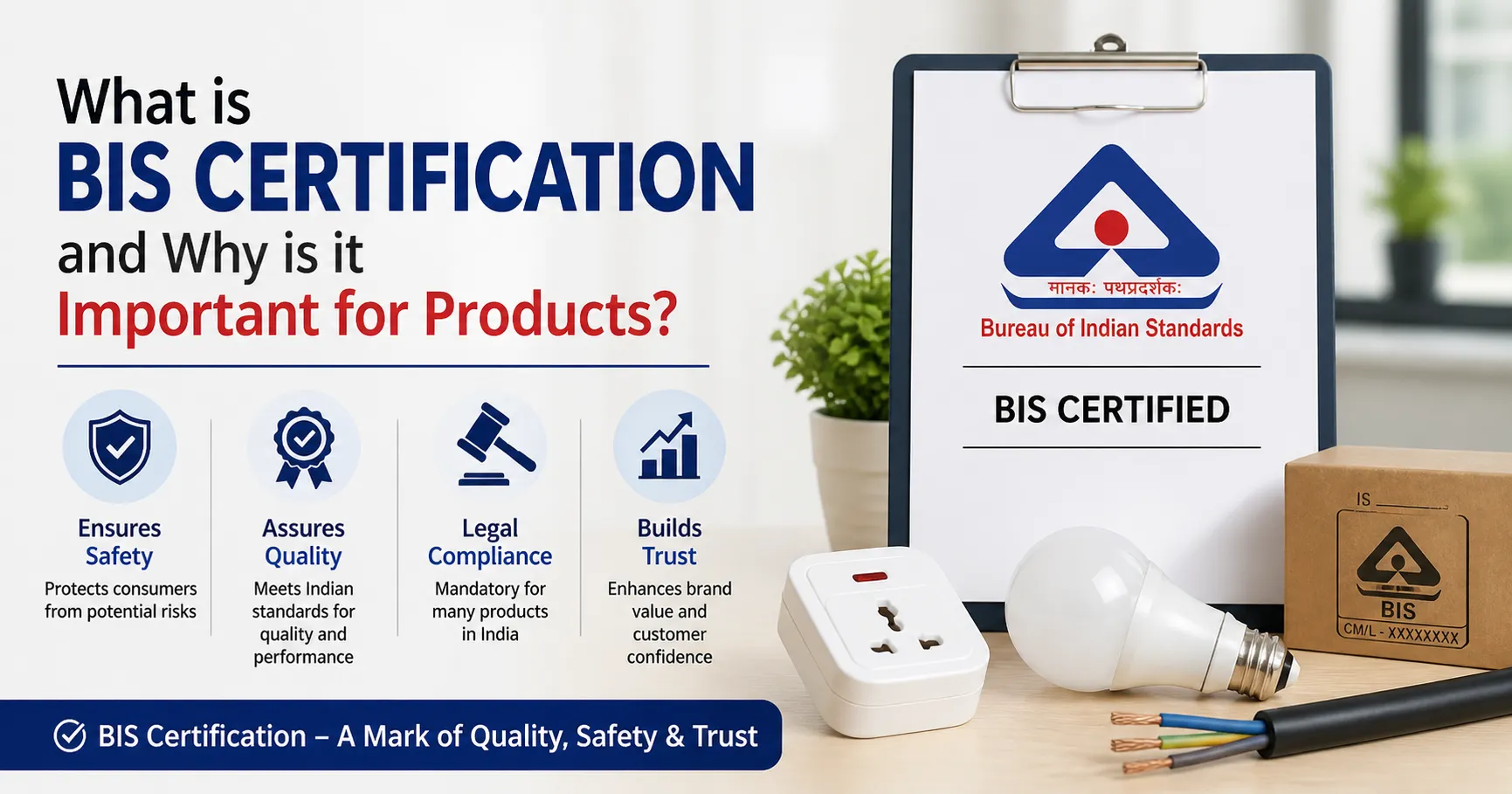

Introduction
If you’ve ever checked the packaging of an electrical appliance or a consumer product in India, you might have noticed a small mark indicating BIS certification. While many people see it as just another symbol, it actually plays a crucial role in ensuring product safety and quality.
For manufacturers, importers, and even consumers, understanding BIS certification is important—not just from a compliance perspective, but also for trust and long-term reliability. So, what exactly is BIS certification, and why does it matter so much in today’s market?
What is BIS Certification?
BIS certification is issued by the Bureau of Indian Standards, the national body responsible for setting quality and safety standards for products in India.
In simple terms, it means that a product has been tested and verified to meet specific Indian standards. These standards cover various aspects such as:
- Product safety
- Quality of materials
- Performance requirements
- Reliability under usage conditions
Depending on the product category, BIS certification can either be mandatory or voluntary. However, for many items like electrical equipment, electronics, and certain industrial and medical-related products, certification is required before they can be sold in the Indian market.
Why is BIS Certification Important?
1. Ensures Product Safety
One of the primary reasons BIS certification exists is to protect consumers.
Products that are not properly tested can pose serious risks—especially in categories like electronics or medical devices. Faulty wiring, poor materials, or lack of compliance can lead to accidents or health hazards.
BIS certification ensures that the product has undergone proper testing and meets safety requirements, reducing risks for end users.
2. Builds Consumer Trust
Today’s buyers are more aware than ever. People actively look for quality marks and certifications before making a purchase.
When a product carries the BIS mark, it sends a clear message:
- The product meets national standards
- It has been verified for safety and quality
- It is reliable for use
This builds confidence and makes customers more likely to choose your product over uncertified alternatives.
3. Mandatory Compliance for Many Products
For several product categories in India, BIS certification is not optional—it is legally required.
Selling products without required certification can lead to:
- Legal penalties
- Product bans
- Seizure of goods
- Damage to business reputation
By obtaining certification, businesses ensure they are operating within regulatory requirements and avoiding unnecessary risks.
4. Improves Product Quality
The certification process involves testing and evaluation, which naturally pushes manufacturers to maintain higher quality standards.
This leads to:
- Better manufacturing practices
- Fewer defects
- Consistent product performance
Over time, this not only improves customer satisfaction but also reduces returns and complaints.
5. Helps in Market Expansion
BIS certification can make it easier for products to enter and perform well in the Indian market.
Distributors, retailers, and even government buyers often prefer certified products. In some cases, certification is a requirement to participate in tenders or large-scale supply contracts.
For businesses looking to grow, this becomes a key advantage.
6. Strengthens Brand Reputation
Trust is one of the most valuable assets for any business.
When your products consistently meet BIS standards, it reflects your commitment to quality and safety. Over time, this strengthens your brand image and builds long-term credibility in the market.
Common Misconception About BIS Certification
A common misunderstanding is that BIS certification is just a one-time formality.
In reality, it’s an ongoing process. Manufacturers must maintain quality standards consistently, and periodic checks or surveillance may be conducted to ensure continued compliance.
Ignoring this aspect can lead to certification being suspended or cancelled.
How Businesses Can Approach BIS Certification
While the process may seem technical—especially for first-time applicants—it becomes much easier with proper planning.
Businesses should:
- Identify applicable standards early
- Ensure product testing is done correctly
- Prepare accurate documentation
- Maintain consistent manufacturing quality
Many companies also prefer working with professionals offering BIS certification services in India to simplify the process and avoid delays.
Final Thoughts
BIS certification is more than just a regulatory requirement—it is a foundation for product quality, consumer safety, and business credibility.
In a competitive and quality-conscious market like India, certified products naturally stand out. They inspire trust, meet legal standards, and create better opportunities for growth.
Whether you are a manufacturer, importer, or business owner, understanding and implementing BIS certification can play a key role in long-term success


























Sign in to leave a comment.