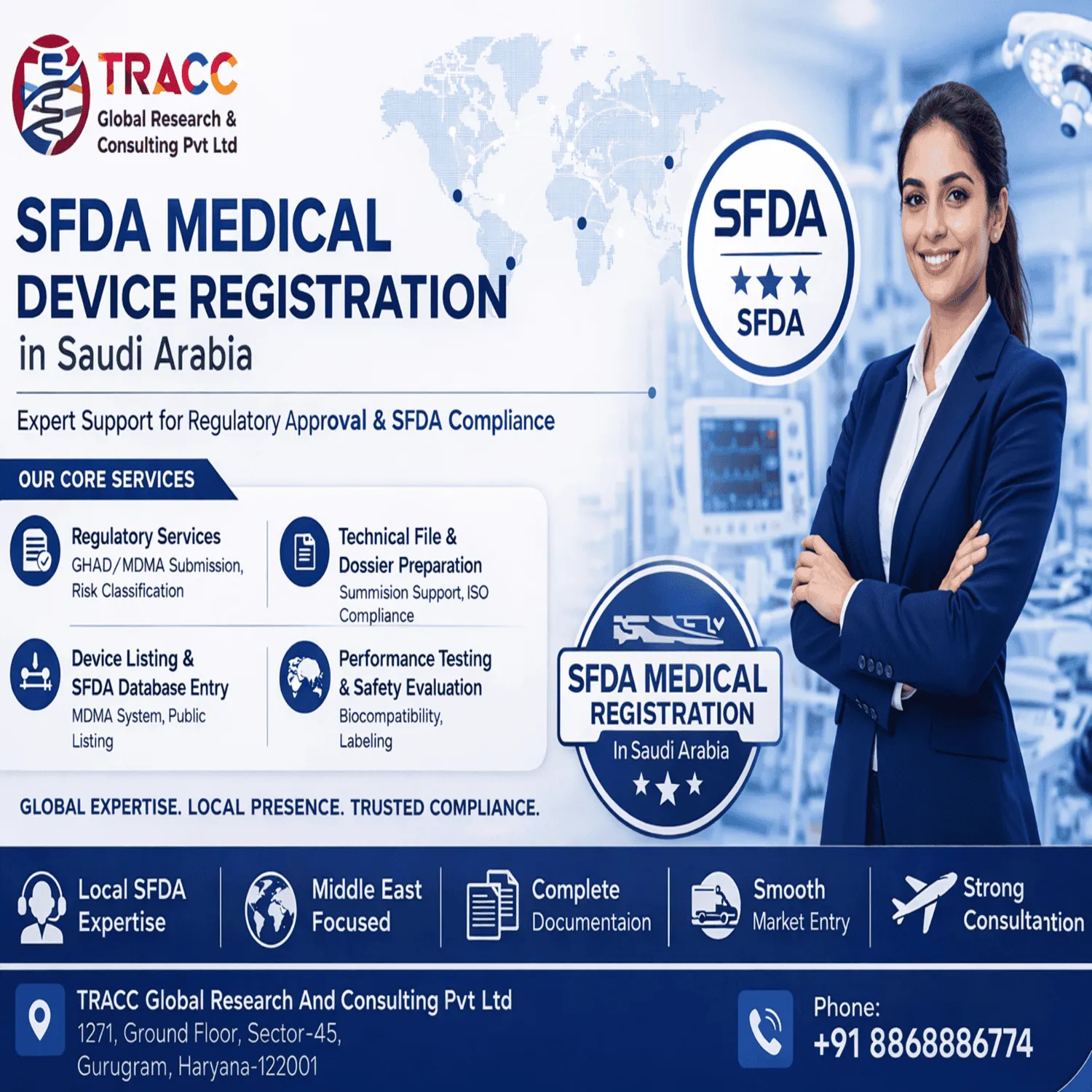

Saudi Arabia has become a key destination for medical device manufacturers aiming to expand into the Middle East. However, accessing this market requires strict compliance with the regulatory framework established by the Saudi Food and Drug Authority (SFDA).
Understanding SFDA Medical Device Regulations
The SFDA regulates medical devices under a structured system aligned with international standards. Devices are categorized into risk-based classes (A, B, C, and D), which determine the level of regulatory scrutiny required.
Lower-risk devices typically undergo a simplified pathway, while higher-risk devices must pass detailed technical evaluations and clinical assessments. This classification directly impacts documentation, timelines, and approval strategy.
Core Requirements for SFDA Registration
To obtain approval in Saudi Arabia, manufacturers must prepare and submit a comprehensive regulatory dossier. Key requirements include:
- Local Authorized Representative (AR): Mandatory for foreign companies to interact with SFDA
- Technical Documentation File: Including device description, intended use, risk analysis, and clinical data
- Quality Management System: Compliance with ISO 13485 or equivalent standards
- Product Labeling Compliance: Arabic and English labeling requirements
- Electronic Submission via GHAD: The official SFDA submission platform
Meeting these requirements accurately is critical to avoiding delays or rejections.
Step-by-Step SFDA Registration Process
The SFDA registration pathway involves multiple stages that require careful planning:
- Device classification and regulatory strategy
- Appointment of an Authorized Representative
- Preparation of the Technical File
- Submission through the GHAD system
- SFDA review and response to queries
- Granting of Medical Device Marketing Authorization (MDMA)
- Ongoing post-market surveillance compliance
Each stage requires detailed documentation and proactive communication with regulatory authorities.
Common Challenges Faced by Manufacturers
Many companies encounter delays due to:
- Incorrect device classification
- Incomplete or non-compliant technical documentation
- Lack of local regulatory expertise
- Delayed responses to SFDA queries
These challenges highlight the importance of working with experienced regulatory consultants who understand the Saudi framework.
Importance of Expert Regulatory Support
Professional regulatory support can significantly improve approval timelines and success rates. Expert consultants assist with:
- Regulatory strategy development
- Technical documentation preparation
- SFDA communication and query handling
- Compliance with evolving regulations
This ensures faster market entry while minimizing regulatory risks.
Expanding Opportunities in Saudi Arabia
Saudi Arabia’s healthcare sector is rapidly growing under Vision 2030, creating strong demand for innovative medical technologies. Securing SFDA approval not only enables entry into Saudi Arabia but also strengthens credibility across GCC markets.
For manufacturers looking to scale globally, SFDA registration is a strategic milestone.
Conclusion
SFDA medical device registration is a vital requirement for entering Saudi Arabia’s healthcare market. With a structured regulatory approach, detailed documentation, and expert guidance, manufacturers can navigate the process efficiently and achieve successful market access.

























Sign in to leave a comment.