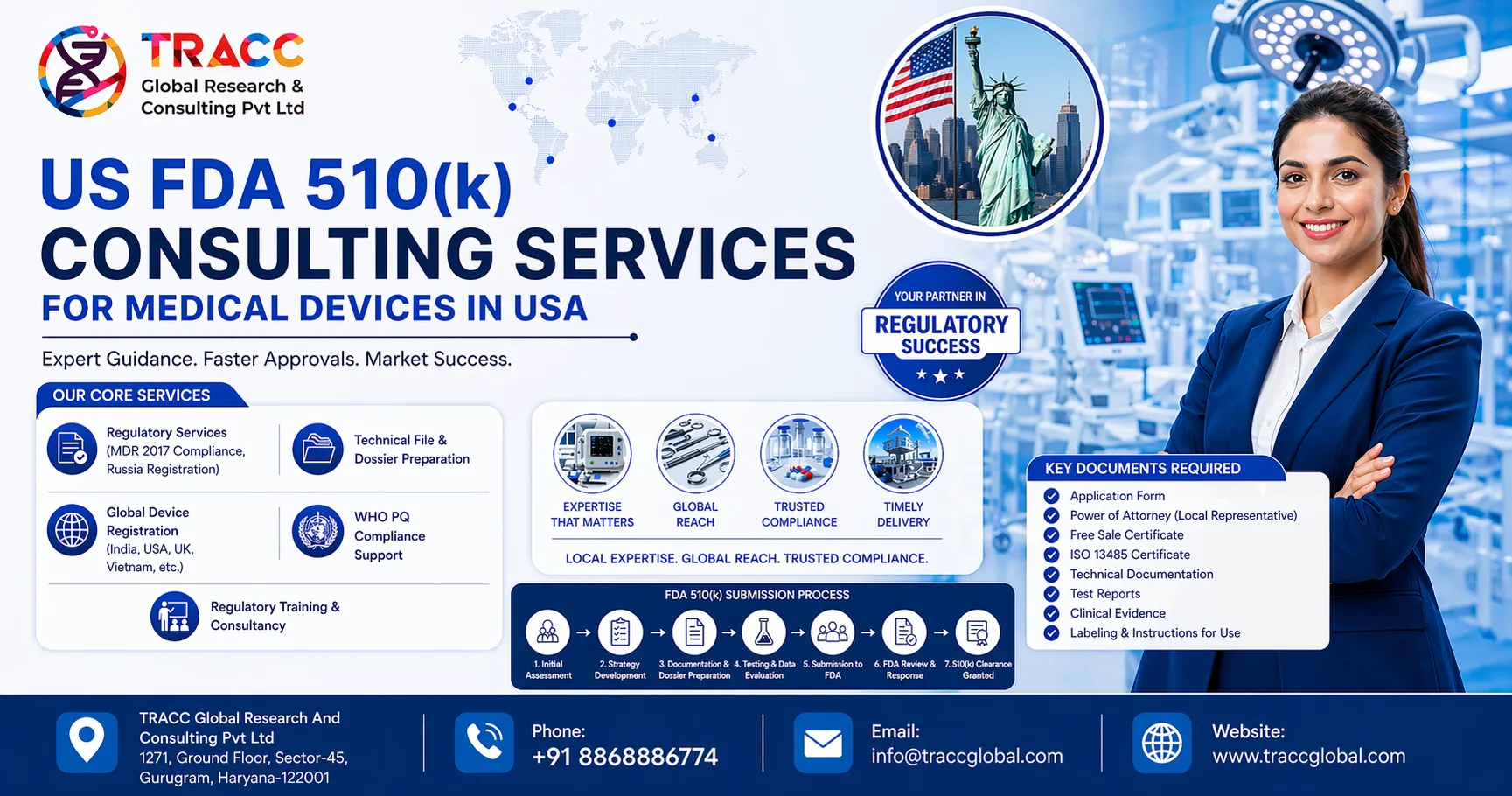

For many medical device companies, entering the U.S. market is a key goal. It offers access to a large and well-established healthcare system, but it also comes with strict regulatory requirements. One of the most common pathways for approval is the FDA 510(k) process.
At first, the process may seem manageable. However, as companies begin preparing their submissions, they often realize that it requires careful planning, clear documentation, and a strong understanding of regulatory expectations.
This is where the concept of FDA 510(k) consulting becomes relevant—not as a shortcut, but as a way to bring structure and clarity to the process.
What is the FDA 510(k) Process?
The FDA 510(k) is a premarket submission required for many medical devices before they can be sold in the United States. The main objective is to demonstrate that a device is substantially equivalent to a legally marketed device, known as a predicate device.
This pathway is generally applicable to:
- Class II medical devices
- Certain Class I devices
- Devices that do not require Premarket Approval (PMA)
Instead of proving safety and effectiveness independently, companies must show that their device performs in a similar way to an existing one.
Why the Process Requires Careful Attention
While the concept of substantial equivalence sounds simple, the process involves multiple layers that need to align correctly.
One of the key aspects is clarity in documentation. The FDA expects submissions to be structured, consistent, and easy to understand. Even small inconsistencies can lead to additional questions.
Another important factor is alignment across teams. Inputs from engineering, testing, quality, and regulatory teams must come together in a unified way.
There is also a strong need for accurate interpretation of requirements. Misunderstanding what the FDA expects can result in unnecessary delays.
Role of FDA 510(k) Consulting in Practice
FDA 510(k) consulting is often misunderstood as simply outsourcing documentation. In reality, it focuses more on guiding the overall approach.
It begins with regulatory planning, where the appropriate pathway and device classification are confirmed. This step helps avoid choosing an incorrect route.
Another important area is predicate device identification. A suitable predicate provides a solid foundation for demonstrating equivalence.
Consulting also supports documentation development, ensuring that all required sections are complete and aligned.
In addition, it may involve review and feedback, helping identify gaps before submission.
The level of support can vary depending on the company’s internal capabilities.
Predicate Device: The Core of the Submission
The predicate device plays a central role in the 510(k) process. It is not just a reference—it defines how your device will be evaluated.
A good predicate should have:
- A similar intended use
- Comparable technological characteristics
- Clear and accessible information for comparison
If the predicate is not chosen carefully, it can create complications later in the process.
Common Challenges in FDA 510(k) Submissions
Many companies face similar challenges during the submission process.
One of the most common issues is incomplete or inconsistent documentation. When different sections do not align, it creates confusion during review.
Another challenge is data gaps. Missing or insufficient testing data can weaken the submission.
There is also the issue of version control, especially when multiple teams are involved. Managing updates and ensuring consistency can become difficult.
Additionally, unclear explanations can lead to delays. Even if the data is correct, it must be presented clearly.
Manual Effort in the Submission Process
Despite the availability of digital tools, much of the 510(k) process still involves manual work.
Tasks such as formatting, compiling documents, and tracking changes often require significant time and effort. These tasks may not be complex, but they are essential for submission quality.
While tools can assist with organization, they cannot replace the need for human understanding and decision-making.
How to Approach the Process More Effectively
A structured approach can make a significant difference in how smoothly the process goes.
One important step is to start regulatory planning early. Waiting until the product is fully developed can lead to rushed decisions.
It is also helpful to maintain clear documentation throughout development. This reduces the effort required during submission preparation.
Choosing the right predicate device early on can prevent complications later.
Regular reviews can help identify and address issues before submission.
These steps can improve both efficiency and submission quality.
Balancing Tools and Expertise
There is increasing interest in tools designed to simplify regulatory submissions. While these tools can be useful, they should be used carefully.
FDA submissions require more than just filling templates. They involve interpretation, context, and judgment.
Relying entirely on automated solutions may not address the complexity of real-world submissions.
A balanced approach—combining structured tools with experienced guidance—tends to be more effective.
Importance of Early Planning
One of the most valuable insights in the 510(k) process is the importance of early planning.
Many challenges arise because regulatory considerations are addressed too late. When planning starts early, it becomes easier to align development, testing, and documentation.
This not only reduces delays but also improves overall efficiency.
Final Thoughts
The FDA 510(k) process is an essential step for many medical devices entering the U.S. market. While it can seem complex, much of the difficulty comes from how the process is managed.
With proper planning, clear documentation, and a structured approach, the process becomes more manageable.
FDA 510(k) consulting can support this journey by providing guidance and helping companies stay aligned with regulatory expectations.
Ultimately, success in the 510(k) process comes down to preparation, consistency, and a clear understanding of what needs to be demonstrated.

























Sign in to leave a comment.