
Walk into any manufacturing floor and you’ll notice something odd—everyone obsesses over bolts, bearings, shafts… but the tiny retaining components quietly doing the real work? Ignored.
Until they fail.
I’ve seen production lines halt because of a single poorly chosen circlip. Not a complex assembly issue. Not a machine breakdown. Just… the wrong ring in the wrong groove. And that’s where most businesses get it wrong.
So let’s talk about circlips—properly.
What Circlips Actually Do (Beyond “Holding Things Together”)
Look, if you think circlips just “keep parts in place,” you’re only seeing half the story.
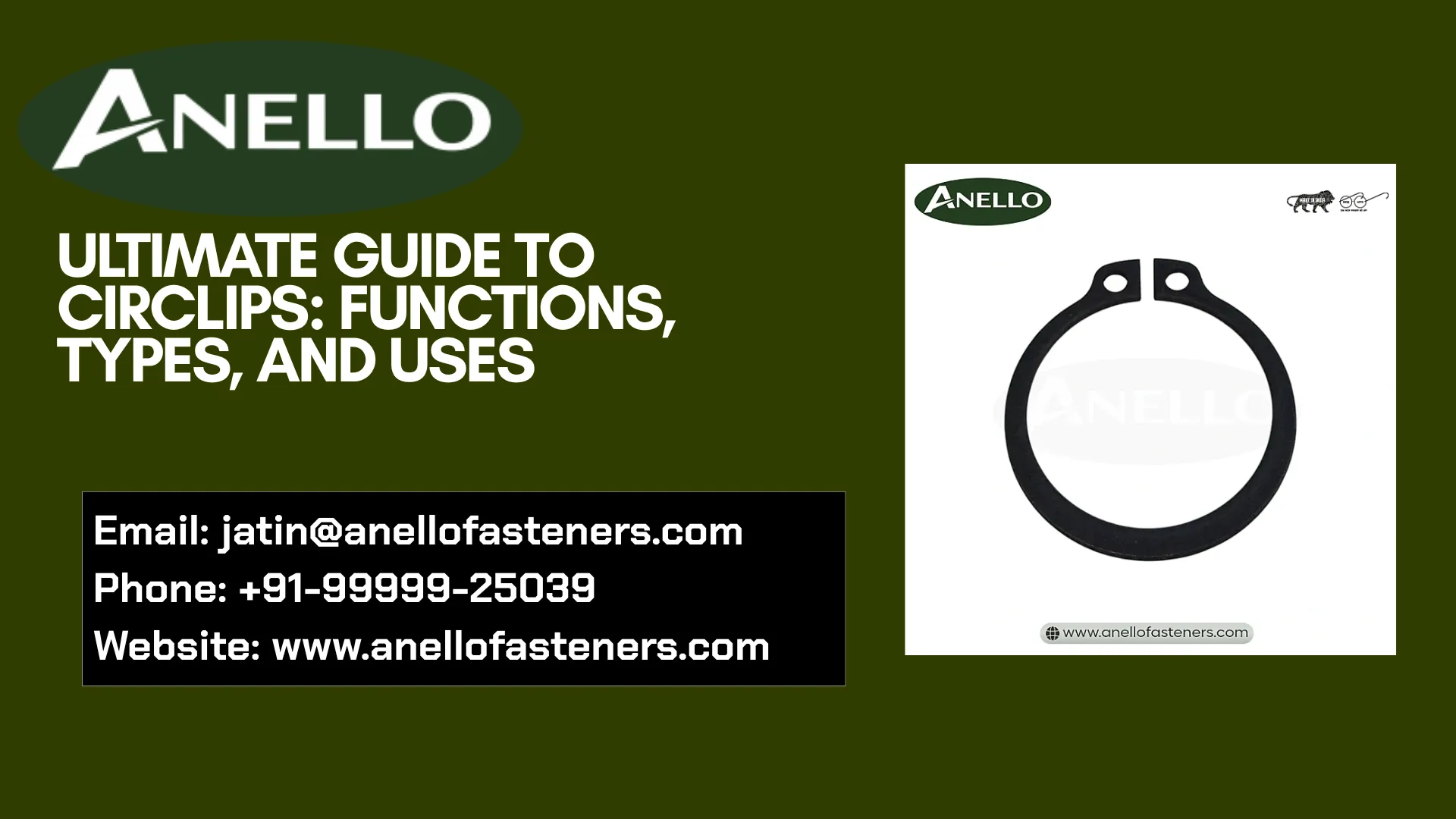
At their core, circlips are retaining rings designed to sit in a machined groove on a shaft or inside a bore. But in real-world applications, they’re doing much more:
- Managing axial loads
- Preventing component drift under vibration
- Reducing assembly complexity
- Acting as safety stops in dynamic systems
And honestly? When selected correctly, they eliminate the need for more expensive fastening systems.
That’s why experienced engineers don’t treat them as afterthoughts.
Why Businesses Undervalue Circlips (And Pay for It Later)
Here’s the thing—circlips are cheap.
Too cheap, sometimes.
Procurement teams often source them from generic circlip suppliers without digging into material specs, tolerances, or load ratings. It feels like a low-risk decision… until performance issues show up.
I’ve worked with clients in automotive and heavy machinery sectors who switched to lower-cost options and ended up facing:
- Premature wear due to poor circlip material
- Deformation under stress
- Improper groove fit leading to dislodgement
And then comes downtime. Rework. Reputation damage.
All because of a ₹5 component.
Circlip Types You Should Actually Care About
Not all circlips are created equal. And no—you can’t just “make one work everywhere.”
Internal Circlip vs External Circlip
This is where most decisions begin.
Internal circlip
Fits inside a bore or housing. Compress it, insert it into the groove, and it expands to lock in place.
Used in:
- Gearboxes
- Hydraulic cylinders
- Bearing housings
External circlip
Fits around a shaft. Expand it, place it over the shaft, and it contracts into the groove.
Common in:
- Motor assemblies
- Axle systems
- Rotating shafts
Simple difference. Massive impact.
Pick the wrong one? It won’t just fail—it won’t fit in the first place.
Heavy Duty vs Light Duty Circlips
Now this is where experience matters.
Heavy-duty circlips are designed for high-load environments. Think construction equipment, industrial gear assemblies, or mining machinery.
Light-duty ones? Perfect for electronics, appliances, or applications where load isn’t aggressive.
And honestly… using a light-duty ring in a high-load setup is like using a paperclip to hold a suspension bridge.
It won’t end well.
Specialty Circlip Types
You’ll also come across:
- E-clips (easy installation, open design)
- Snap rings (versatile, widely used)
- Spiral rings (no ears, smoother load distribution)
Each has its place. But choosing between them isn’t about preference—it’s about application stress, installation constraints, and space availability.
Circlip Material — The Part Everyone Rushes Past
Let’s slow down here.
Because this matters more than most people realize.
The performance of a circlip is heavily influenced by its material composition. Typical options include:
- Carbon spring steel
- Stainless steel
- Phosphated or zinc-plated finishes
But here’s the nuance—material selection isn’t just about strength.
It’s about environment.
Humidity? Go stainless.
High stress? Spring steel.
Corrosion exposure? Coated variants.
I’ve seen manufacturers ignore this and end up replacing parts every few months.
And honestly? That’s not a cost-saving strategy—it’s a recurring expense trap.
Real-World Applications: Where Circlips Make or Break
Systems
Let me give you a clearer picture.
Automotive Sector
Circlips are everywhere—gear assemblies, piston systems, transmission units.
One faulty external circlip in a gearbox? You’re looking at serious mechanical failure.
Heavy Machinery
Construction equipment depends on high-load retaining systems. Circlips here aren’t optional—they’re structural safeguards.
Electrical & Appliance Manufacturing
Small components, tight spaces. Circlips help maintain alignment without adding bulk.
Aerospace (Yes, Even Here)
Strict tolerances. Zero margin for error.
Circlips used here undergo rigorous testing because failure isn’t just expensive—it’s catastrophic.
Choosing the Right Circlip Manufacturer (This Is Where It Gets Real)
You can’t talk about performance without talking about sourcing.
And honestly… not all circlip manufacturers operate at the same level.
If you’re working with a circlip manufacturer in India, like Anello Fasteners, you should be asking:
- Are they following DIN or ISO standards?
- What’s their heat treatment process?
- Do they offer custom groove compatibility?
- How consistent are their tolerances batch-to-batch?
Because here’s the uncomfortable truth—most failures aren’t due to design.
They’re due to inconsistency.
What Good Circlip Suppliers Actually Offer
Not just products.
Reliability.
A dependable circlip supplier will:
- Provide material traceability
- Ensure uniform hardness
- Maintain dimensional precision
- Offer technical guidance (not just catalogs)
And honestly, if your supplier isn’t helping you choose better… they’re just taking orders.
Installation Mistakes That Cost You More Than You Think
Let’s be real—installation errors are ridiculously common.
And they’re avoidable.
A few I’ve seen repeatedly:
- Over-expanding external circlips during installation
- Using incorrect pliers (yes, that matters)
- Ignoring groove tolerances
- Reusing worn circlips
Just because it “fits” doesn’t mean it’s secure.
That’s a dangerous assumption.
Circlips vs Other Fastening Solutions
Sometimes clients ask—why not use bolts or retaining plates instead?
Fair question.
Here’s the trade-off:
- Circlips are faster to install
- They reduce weight
- They require less space
- They’re cost-effective for high-volume production
But… they do have limits.
They’re not ideal for extreme axial loads beyond their rating. And they rely heavily on groove precision.
So no, they’re not a universal solution.
But when used right? They’re unbeatable.
The Hidden Cost of Getting Circlips Wrong
It’s never just about the part.
It’s about:
- Downtime
- Maintenance cycles
- Product recalls
- Client dissatisfaction
I’ve seen businesses spend lakhs fixing issues that started with a poor-quality circlip.
And the worst part?
It was preventable.
FAQs About Circlips
What is the difference between internal and external circlips?
Internal circlips fit inside a bore, while external circlips fit around a shaft. The selection depends on where the retaining function is needed.
What material is best for circlips?
It depends on the application. Spring steel offers high strength, while stainless steel is ideal for corrosion resistance.
Can circlips be reused?
Technically yes… but honestly, it’s risky. Reusing can compromise tension and lead to failure.
How do I choose the right circlip size?
You need precise groove dimensions—diameter, width, and depth. Guesswork doesn’t work here.
Are circlips suitable for heavy-load applications?
Yes, but only if you’re using heavy-duty variants designed for high stress environments.
Final Thoughts — And a Bit of Straight Talk
Here’s what I’ll leave you with.
Circlips aren’t small decisions.
They’re small components with disproportionate impact. Treat them casually, and they’ll quietly wreck your system. Treat them seriously—and they’ll disappear into the background, doing their job flawlessly.
That’s the goal, right?
If you’re sourcing from a circlips manufacturer, especially a trusted circlip manufacturer in India like Anello Fasteners, don’t just look at price. Look at consistency, engineering support, and long-term reliability.
Because in this business… the smallest parts often carry the biggest consequences.
























Sign in to leave a comment.