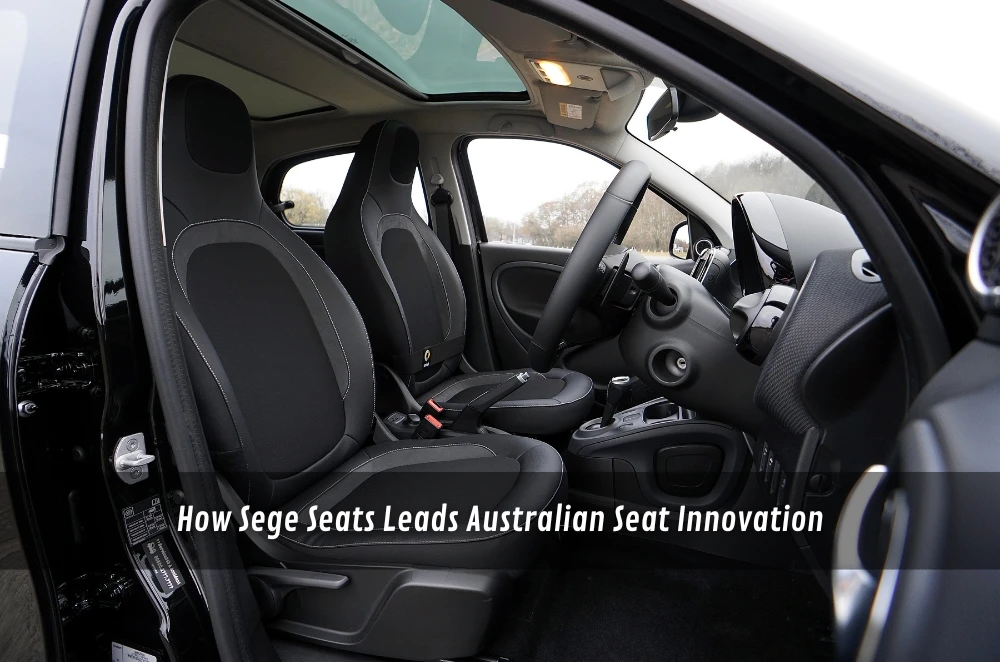

When fleet operators talk about custom vehicle seats, they usually mean selecting a different trim or foam option. But after walking through Sege Seats’ Australian facility, I realised innovation happens long before cushions or covers. It begins at the frame, is shaped through engineering, and is proven through safety testing.
This blog unpacks what I saw inside the manufacturing process, how Sege Seats differentiates itself, and what fleet managers should consider when choosing or upgrading seats.
The changing expectations of vehicle seating
From “standard issue” to engineered systems
A generation ago, vehicle seats were simple: a welded frame, a few foam pads and fabric stretched over the top. That era is long gone. Today, seat design must meet strict safety requirements, withstand long-distance commercial use, and integrate features operators now expect—USB ports, arm-rests, adjustable components and durable trims.
Because of these rising demands, Australian manufacturers like Sege Seats have shifted from basic production to full engineering-driven seating systems. Their approach blends local relevance with advanced manufacturing methods, all while aligning with national safety requirements. Fleets need this combination more than ever.
Three shifts in the Australian market stand out:
- Customisation now comes first. Operators want seat width changes, mounting variants, fabrics matched to fleet branding and added features.
- Precision manufacturing is the baseline. Foams are moulded to exact densities, frames follow strict tolerances, and upholstery requires durable automotive-grade stitching.
- Safety and ergonomics matter equally. Seats must pass impact, load and anchorage tests while supporting drivers and passengers for long hours.
These expectations set the stage for where Sege Seats focuses its attention.
Inside Sege Seats’ manufacturing process
A clear pathway from frame to finished product
During my visit, I followed the manufacturing flow from raw materials to final fit-off. Each step showed how much engineering sits behind what many people consider a “simple” component.
1. Frame engineering and structural design
The frame is the seat’s skeleton. At Sege Seats, it’s built with precision welding, reinforcement plates and load-tested joints. Every part is tracked through a quality system so the team knows exactly how each seat is built, batch by batch.
For fleet operators, this means a seat designed to handle years of vibration, fatigue loads and real-world movement—not just static showroom tests.
2. Foam moulding and ergonomic shaping
Next comes the part most passengers notice: the foam. Instead of using generic padding, Sege Seats uses engineered foam densities shaped to suit different use cases—school buses, coaches, driver cabins and more.
This matters in the long run. A well-designed foam core maintains its structure, reduces driver fatigue and avoids premature sagging. I’ve seen operators cut corners here before, and it rarely ends well: sagging seats, back complaints and early replacements.
3. Trim sewing and feature integration
After foam comes the trim stage. This includes everything from high-durability fabrics to vinyls and leather-look materials. The sewing work is automotive grade—tight stitch lengths, reinforced seams, heat-resistant thread—and optional integrations like USB charging, tray tables, armrests and headrest branding.
The key takeaway: finishing isn’t just cosmetic. Proper trim work protects foam longevity and makes maintenance easier across the seat’s life.
4. Testing, compliance and certification
No seat leaves the factory without compliance verification. Australian fleet seats typically need ADR-68 certification, covering seatbelt anchorage strength, dynamic crash performance and durability.
More details on compliance requirements can be found by reviewing vehicle seat safety standards.
Testing includes static load tests, fatigue cycles and dimensional checks. It’s the kind of verification that prevents issues down the line—especially in high-use vehicles like school buses or long-distance coaches.
5. Customisation and responsive supply chains
One thing I’ve learned from working with transport operators is that no two fleets are the same. Sege Seats recognises this and builds in flexibility. For example, a regional coach operator may need wider aisles and narrower seats; a charter company might want high-back seats with USB ports; school bus fleets might prioritise durability over luxury.
This tiered customisation avoids mis-specification—a surprisingly common and expensive mistake.
Choosing seats: Questions that fleet managers should ask
Learn from those who’ve needed to retrofit later
Seat procurement is often rushed during bus upgrades or new coach builds, but it shouldn’t be. Use this checklist to avoid long-term issues:
- Are the seats certified to ADR-68 or equivalent standards?
- What foam density is used, and how long is the expected lifespan?
- Are replacement parts available locally and quickly?
- Is customisation possible for mounting layouts, trims or accessories?
- What warranty or service support is available?
- Do seats offer ergonomic support for long-haul or high-duty cycles?
- Can covers be removed easily for cleaning or replacement?
A few years ago, I met a Victorian charter operator who bought budget seats during a fleet expansion. Within 18 months, the foam began to collapse, and drivers were complaining about backaches. They ended up retrofitting lumbar support and replacing seat components early—costing more than if they’d chosen higher-spec seats up front.
Planning with a vehicle seat replacement guide can prevent exactly those types of problems.
Safety and ergonomics: A dual priority
More important than passengers might ever notice
Safety compliance is non-negotiable. A seat becomes part of the occupant-protection system, not just a comfort feature. Strong frame design, anchor mounts and regulated seat-belt integration ensure that the seat performs during impact, not just in everyday travel.
Yet ergonomics matter just as much. A well-designed seat boosts driver alertness and reduces fatigue. That’s particularly important in long-distance services, mining transport and tourism fleets. If you want to explore that further, research on automotive seating ergonomics is worth a look.
What sets Sege Seats apart in Australia
From the perspective of those inside the facility
After touring their operation, several things stood out:
- Engineering strength: Each component fits within a larger safety and durability system.
- Local understanding: Their Australian team builds seats that suit local operating conditions.
- Vertical capability: From design to testing to final assembly, everything is handled internally.
- Quality culture: Process control and testing are embedded into daily production.
- User-led development: Operator feedback loops influence design updates and improvements.
These factors combine into a seat that isn’t simply manufactured—it’s engineered around real-world transport challenges.
Final thoughts
What operators should take forward
Replacing or upgrading seats shouldn’t be a quick checkbox. It impacts safety, uptime, driver comfort, maintenance budgets and fleet image. If you’re considering upgrades, start with an honest audit: where do complaints arise? Which seats lose form too early? What maintenance issues keep repeating?
Understanding these patterns leads to smarter specifications. Working with a manufacturer focused on engineered seating—rather than generic hardware—makes a genuine difference across a fleet’s lifespan.
For operators wanting more detail on planning upgrades, there’s a deeper vehicle seat replacement guide worth reviewing.



























Sign in to leave a comment.