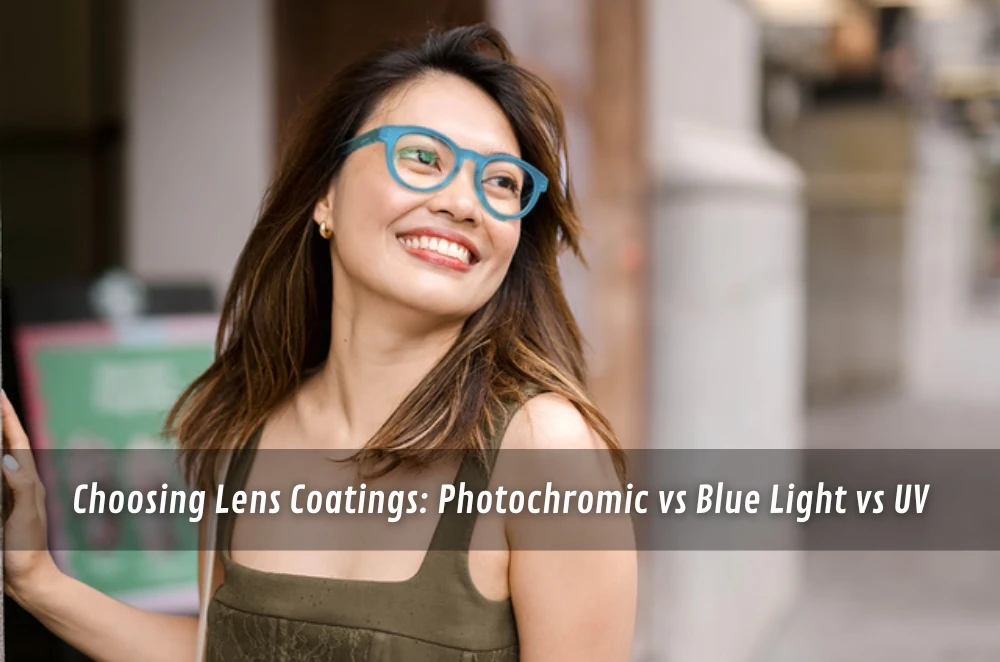

Most of us spend our days moving through a mix of light that never stays the same. The soft glow of morning, the sharp glare outside the office, the hum of fluorescent bulbs, and the cool flicker of screens at night — it all adds up. Choosing the right lens coating isn’t about chasing trends or tech jargon; it’s about finding what fits your everyday rhythm. Many people wonder about the difference between photochromic vs blue light lenses, thinking one must be better than the other. In reality, both have their place — it just depends on how and where you use them. Once you understand how your eyes respond to changing light and screen time, the right choice becomes clear. Think of it as tailoring your lenses to your lifestyle, not the other way around.
What each coating actually does
Coatings aren’t trophies. They’re tools. Pick the right tool, and most of the strain goes quiet. Alongside everyday options, global optics leaders like Zeiss are often referenced for pushing photochromic chemistry and high-clarity coatings, which help illustrate how fast modern lenses can change tint without getting in the way of colour accuracy.
- Photochromic: clear indoors, darkens outside when UV kicks it into gear. Good for people who drift between shade and hard sun all day.
- UV protection: baseline for Australian conditions; think long-game protection rather than quick comfort.
- Blue-light filtering: mostly about screen comfort and glare perception indoors.
- Anti-reflective (AR): trims stray reflections on both sides of the lens; often the single biggest clarity upgrade.
A couple of truths that cut through the noise:
- Dark isn’t the same as safe. Without UV filtering, a deep tint can feel soothing while doing nothing useful.
- Polarisation isn’t UV. It’s for reflected glare (water, wet roads), which is excellent, but a different job entirely.
Matching coatings to your day
Instead of asking which coating is “best,” ask when the light changes for you. That’s usually your answer. Brands known for AR development, such as Essilor, are frequently cited when discussing how anti-reflective layers tame headlight flare and screen reflections; the point here isn’t to chase labels, but to show how well-made AR can make night driving and office work feel easier.
- Photochromic suits this stop-start pattern. Your lenses adapt while you get on with it.
- Hours in open sun
- Prioritise sunglasses that meet Australian lens category labelling and offer robust UV filtering; photochromic is handy for variable conditions, but purpose-built sunnies handle prolonged exposure better.
- Night driving and indoor clarity
- AR coating pays immediate dividends—headlights and dashboard glow stop ghosting across the lens.
- Late-evening laptop
- A gentle blue-light filter can make the screen feel less harsh. Not for everyone, but for some it turns “squinty” into “fine, keep going.”
I do the Central Station shuffle most weekdays, stepping from shadow to bright sky in minutes. Photochromic softens that jump without me thinking about it. Back home under cool-white LEDs, AR plus a mild blue-light filter takes the edge off the screen. Nothing dramatic. Just less friction.
Fit, tint and category: what actually matters
Get the basics wrong, and even premium coatings feel average. Nail them and the fancy stuff hums along.
- Coverage & wrap: bigger lenses or subtle wrap reduce side spill and wind.
- Bridge that stays put: if frames creep down your nose, optical centres drift and everything feels “off.”
- Tint vs protection: a darker lens isn’t automatically safer; UV filtering and the right category do the heavy lifting.
- Transition speed: modern photochromic is quick, but cold mornings and weak UV can slow the change. Worth noting for dawn rides.

Eye care basics for modern routines
A few small habits punch well above their weight. They cost nothing, and they make any coating setup feel better.
- Set your workspace so the brightest light isn’t directly above or behind you. Diffused light, fewer harsh points.
- Give your eyes short breathers. Even thirty seconds helps. It’s the reset more than the clock-watching.
- Lift the text size; don’t lean toward the screen. Your neck and eyes will thank you.
- Outside, treat UV as a given—hat and sunglasses when the sun’s out for more than a quick dash.
Good vision doesn’t come from luck. It comes from steady habits and simple awareness — the kind of things covered in eye care for healthy vision, which outlines how routine care and protection fit together. The message is straightforward: treat your eyes the same way you’d treat your skin under the Australian sun — with a bit of respect and prevention every day.
Getting the prescription and frames right
Coatings can’t rescue a tired script or a wobbly fit. Sort the fundamentals first, then layer coatings to suit the job.
- Current prescription: tiny shifts can add up to big fatigue by day’s end.
- PD and fitting heights: a couple of millimetres out makes glasses feel “not quite right” all day.
- Lens material: thinner isn’t always better; optics, weight and durability all trade off.
- Lifestyle mapping: name your high-stakes moments—night driving, spreadsheets, early runs, water glare—and point the coating stack at those moments.
When you’ve got the essentials covered, it’s easier to see what coatings can add. A good place to start is understanding prescription glasses, which explains how fit, frame shape, and lens type work together in everyday life. The more you know about how those parts connect, the better your lenses will serve you day to day.
Quick checks before you order
- Can you move your eyes across the lens without your lashes brushing?
- Do the frames hold position when you smile and talk?
- Does the bridge sit comfortably for more than a minute, or do you feel a hot spot building?
- Are you choosing AR by default? It quietly improves almost everything.
Make your lenses last in Australian conditions
Salt air, dust, heat—coatings cop it here. A few habits keep them honest.
- Rinse first, then wipe: shifts grit before you polish, which prevents those hairline scratches that never go away.
- Microfibre, always: shirts and paper towels are sandpaper in disguise.
- Don’t bake them: car dashboards and window ledges can cook coatings and warp frames.
- Weekly clean: a dot of pH-neutral soap, lukewarm water, and gentle blot dry.
Anyone who’s lived through an Aussie summer knows that lenses cop a lot — from coastal humidity to sudden heatwaves. That’s why caring for glasses in Australian weather isn’t just about cleaning tips; it’s about keeping your eyewear ready for the kind of conditions we face year-round. Small, steady care makes more difference than most new coatings ever could.
Final thoughts
If your day zigzags between rooms and sunshine, photochromic makes life simple and UV-rated sunnies can sit ready for long outdoor stretches. If screens chew up your evenings, a light blue-light filter can make the difference between gritting your teeth and cruising to the finish. Keep your script up to date, pick frames that actually stay put, and clean the lenses like you would a camera. When those basics line up, the coatings disappear and the day takes centre stage—which is exactly the point.































Sign in to leave a comment.