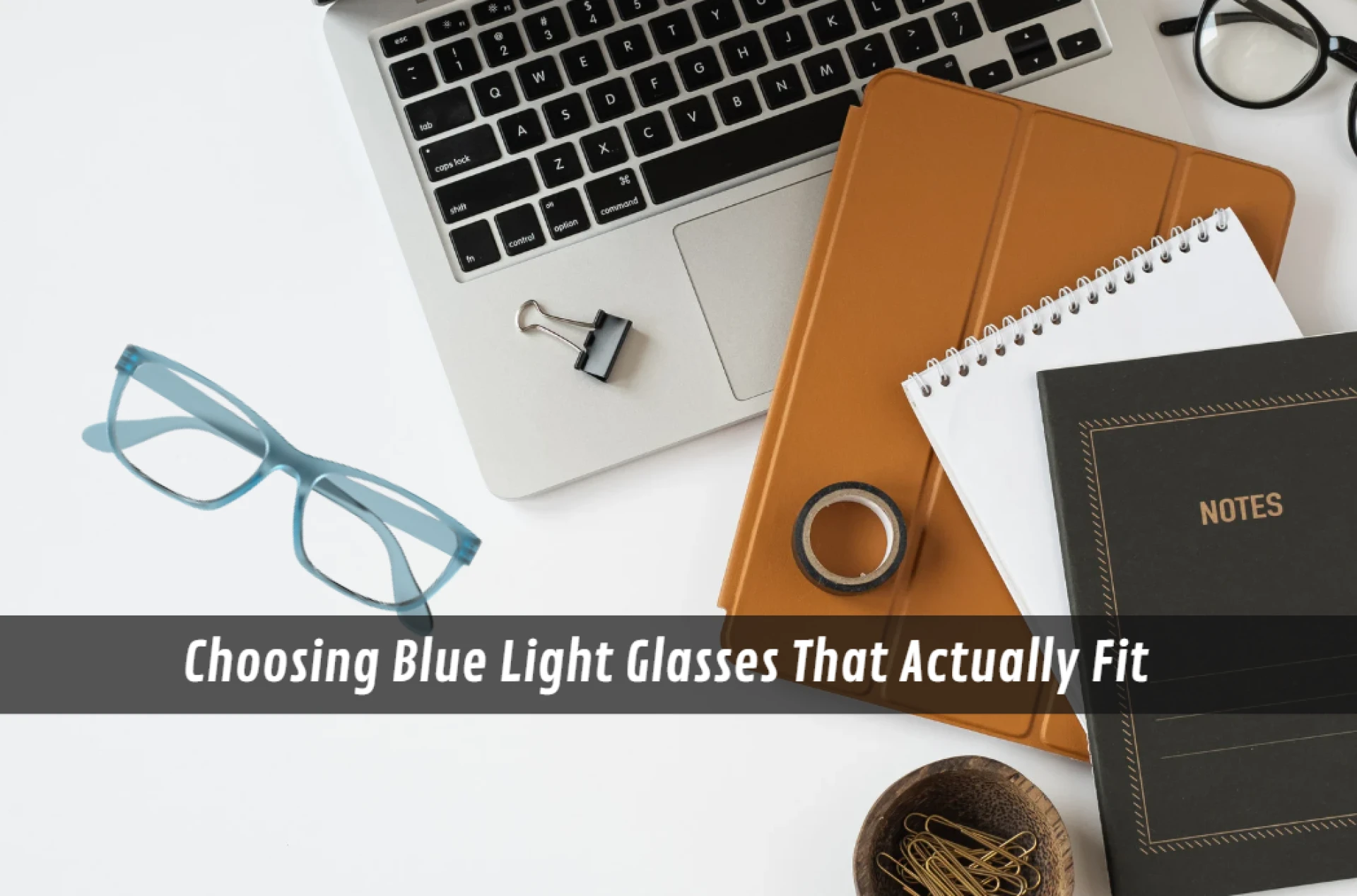

If you’ve ever searched for “blue light glasses near me”, you’ll know the drill: endless identical frames, big claims, small print. This guide cuts through the noise so you can pick a pair that actually suits your eyes, your day, and your budget—without getting lost in marketing spin.
What blue light lenses actually do
Blue-light-filter lenses reduce a slice of short-wavelength visible light (roughly 400–500 nm) from screens and LED lighting. In practice, that often feels like less glare and a slightly warmer look to whites. They can be handy if you’re on a laptop late or under bright, cool office LEDs.
But they’re not miracle workers. If you’re wondering do blue light glasses improve sleep, Australian government materials explain the evidence is mixed and still developing. In short: useful for comfort, not a guaranteed sleep fix on their own.
A few quick realities to keep expectations sane:
- Blue light isn’t UV. Different part of the spectrum; different risks.
- Filters vary. Some coatings are near-clear; others are noticeably amber.
- Comfort determines wear time. The comfier the fit, the more you’ll actually use them.
Fit and comfort matter more than you think
A great filter in a lousy frame becomes a desk drawer ornament. Pay attention to:
- Bridge design: Keyhole bridges sit higher and can ease pressure on low or narrow bridges; saddle bridges distribute weight evenly.
- Temple length and angle: Too short? Behind-ear soreness. Too long? Slippage every time you nod.
- Pupillary distance (PD): Lenses work best when their optical centres align with your PD; even a few millimetres off can increase strain.
- Weight and material: Lightweight, flexible frames help for long sessions—especially with headsets.
At-home fit check: look straight ahead and gently nod. No slipping. Smile—if lenses touch your cheeks, you’ll be wiping smudges all day. Look left and right: your view should stay centred through the lens, not drift toward the edge.
When blue light glasses help (and when they don’t)

From my own month-end reporting marathons—laptop open until 10:30—I noticed two wins:
- Late-evening work: A light-to-medium filter softens the icy cast of LEDs. I feel less “wired” after shutdown (though logging off earlier helps most).
- Harsh office LEDs + multiple monitors: A decent anti-reflective coating takes the edge off overhead glare.
But a few limits became obvious:
- Skip breaks and posture? No lens can fix a tight neck or dry eyes. The 20-20-20 habit still helps.
- Bad ergonomics beat good lenses. Screen too high, chair too low—strain continues.
- Sleep quality depends more on timing and brightness than a single accessory. Use glasses alongside night modes and dimmer evening lighting.
For readers who want a deep dive into eye strain specifically, an internal explainer on do blue light glasses work for eye strain would be ideal.
How to choose a pair that suits your day
Match your lens and frame to the way you actually use screens.
Office all-rounder
- Filter strength: Light to medium (subtle warmth) to keep colours accurate for docs, email and the odd deck.
- Coatings: Quality anti-reflective (front and back) to cut ceiling light reflections; oleophobic helps with smudges.
- Frame: Lightweight, flexible temples that play nicely with headsets.
Creative work (photo, video, design)
- Filter strength: Light only—you need faithful colour.
- Setup tip: Keep a colour-critical monitor preset and toggle device night modes off during grading, back on for admin.
Study and long reading
- Filter strength: Medium warmth can feel easier on the eyes for book-length PDFs.
- Frame: Nose pads for micro-adjustment; narrower lenses to reduce weight.
- Habit: Bump text size up and brightness down at night.
Gaming sessions
- Filter strength: Medium if your room lighting is cool; light if colour fidelity matters for competitive play.
- Frame: Slim, flat temples that don’t pinch under over-ear headphones; grippy tips help during long sessions.
For extra buyer context that won’t compete with this post, readers may like best blue light glasses for gaming.
Lens features that actually matter

Spec sheets can read like car brochures. Here’s the shortlist worth paying for:
- Verified filtering profile: When available, transmission graphs beat vague marketing claims.
- High-quality anti-reflective: Reduces mirror-like reflections you notice on Zoom calls and under LEDs.
- Back-surface AR: Stops window or lamp glare sneaking in from behind you.
- Scratch resistance: Essential if you’re rough on glasses or clean them with your shirt hem (we’ve all done it).
- Adjustability: Nose pads, flexible hinges and materials that tolerate small tweaks keep comfort dialled in.
Habits that out-perform marketing
The biggest gains I’ve seen came from a simple evening routine:
- Brightness discipline: Drop screens to ~30–40% after dinner.
- Night modes + light filter: The combo feels calmer than either alone.
- Warmer room lighting: Swap cool-white bulbs for warm after 8 pm.
- Hard stop: Close the last tab 30 minutes earlier than usual. It’s small, but noticeable.
Common misconceptions, quickly
“Blue light from phones is basically UV.”
No—different wavelengths and different biological effects. That doesn’t mean screen glare is harmless; it just means UV-style damage isn’t the mechanism at play.
“Stronger filter is always better.”
Not for everyone. Heavier amber tints can skew colours and feel distracting. If colour matters, start light and pair with night modes before going deeper.
“Any amber lens will fix my sleep.”
Not necessarily. Glasses can help you feel more comfortable in the evening, but sleep improves most when you also reduce overall brightness and shift screen timing—consistent with Australian guidance that emphasises broader sleep-health habits, not just gadgets.
Buying locally vs online
You can absolutely order online with a measured PD and a frame shape you already know suits your face. Still, there’s value in trying frames on—especially if you’ve got a narrow bridge, slightly asymmetric ears (very common), or you wear headsets.
- In-store perks: On-the-spot adjustments, quick swaps, a real sense of weight and grip.
- Online perks: Wider range, easy re-orders, virtual try-ons for size and shape.
- Hybrid approach: Test fit in person, then order the colour you want online once you know the model.
Final thoughts
Start with comfort and alignment, because that’s what decides whether you’ll actually wear the glasses long enough to notice any benefit. Pick a light to medium filter for most tasks; go heavier only if your lighting is very cool and bright. Combine lenses with smart habits—lower brightness, night modes, and a slightly earlier sign-off—and check authoritative Australian sources like ARPANSA for balanced guidance on light and sleep. If you want to go deeper on eye strain, point readers to an internal explainer using do blue light glasses work for eye strain. And for niche use-cases like gaming, add a neutral external resource via best blue light glasses for gaming.
































Sign in to leave a comment.