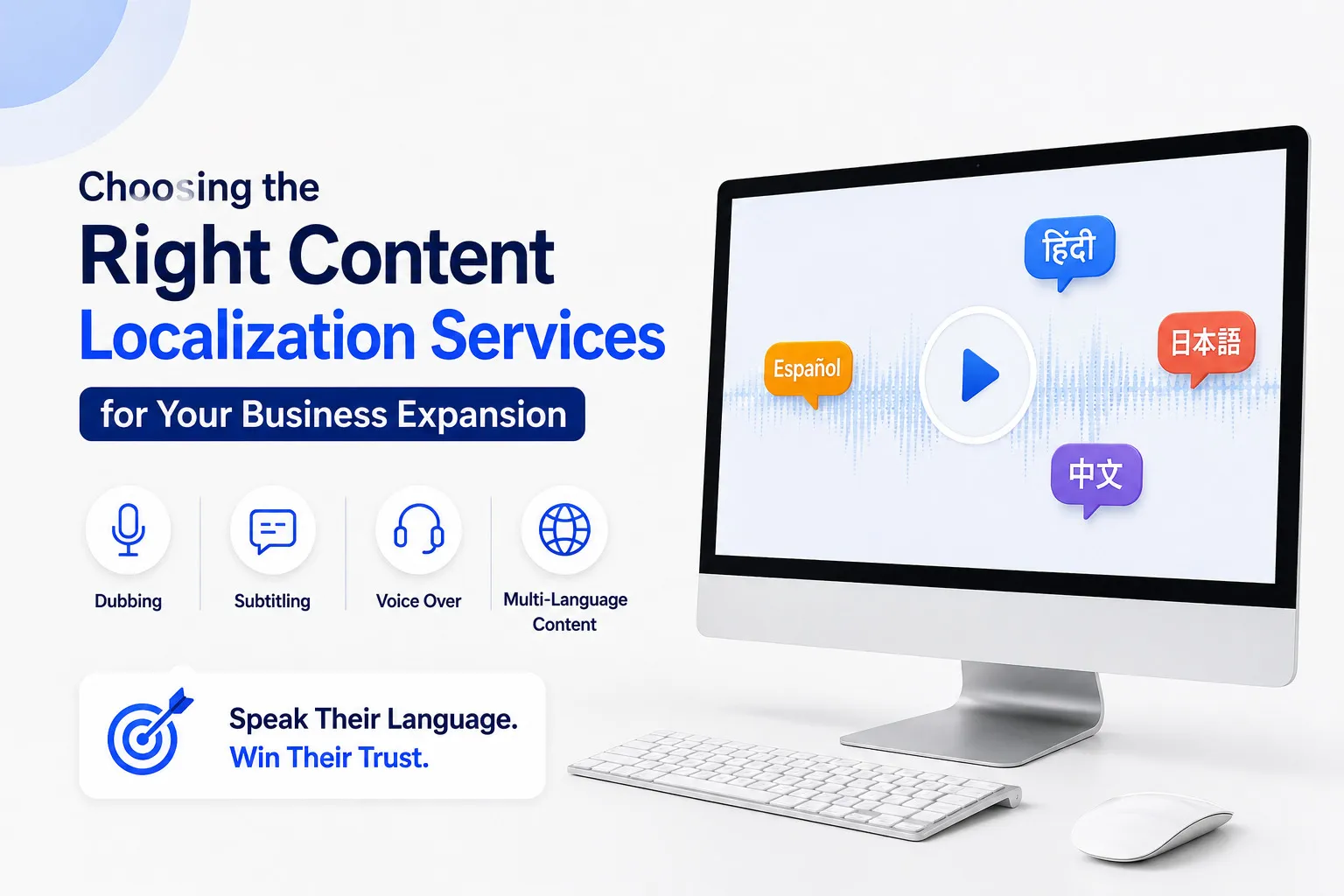

A video that performs well with one audience can fall flat with another if the localized version feels robotic, out of sync, or just plain off. That's where content localization services come in. They help your content sound and feel native to every audience it reaches, not just the original one.
In this guide, we'll break down what content localization really means, why it matters for creators and production houses looking to grow globally, and how to choose a partner that gets it right the first time.
What Are Content Localization Services?
Localization is more than translation. Translation swaps words from one language to another. Localization goes further. It adapts tone, pacing, humor, expressions, and delivery to match a specific culture and audience.
Good content localization services cover a wide range of formats:
- Films, series, and short-form video
- Dubbing and subtitling services for YouTube and streaming content
- Voice-over services for documentaries, tutorials, and branded content
- Multi-language versions of a single video or channel
- Localization for gaming, animation, and e-learning content
The goal is simple. Make your content feel like it was created for that audience, not translated for them.
Why Localization Matters for Creators and Production Houses
Audiences don't just speak different languages. They watch, listen, and engage differently.
A joke or turn of phrase that lands perfectly in English might confuse or fall flat in Spanish, Hindi, or Japanese. Viewers notice this. People are far more likely to watch, subscribe, and stay engaged with content that speaks to them in their own language, with the right tone and delivery.
For YouTubers, production houses, and independent creators, this isn't a nice-to-have. It's how you unlock new markets and new subscribers. Localized content builds watch time faster. It reduces drop-off in the first few seconds. And it signals that you respect the audience you're trying to reach, wherever they are.
This is especially true in entertainment and creator content, where dubbing services and subtitling have become essential tools for reaching global audiences. Streaming platforms, YouTube channels, and independent studios all rely on high-quality dubbing to keep viewers watching, regardless of what language they speak.
Key Factors When Choosing a Localization Partner
Not all providers offer the same level of quality. Here's what to look for before signing a contract.
1. Industry Experience
A general translation agency isn't the same as a specialized dubbing and localization studio. Look for a partner with proven experience in entertainment, YouTube content, streaming, or gaming, not just corporate documents.
Ask for case studies or sample work. A team that has handled real dubbing and subtitling projects will understand pacing, lip-sync accuracy, and comedic or emotional timing in ways a generalist simply won't.
2. Native Linguists and Voice Talent
Machine translation has come a long way, but it still misses nuance. The best content localization services use native-speaking linguists and professional voice actors who understand cultural context, not just vocabulary.
This matters most in dubbing, where timing, emotion, and delivery all need to match the original performance while sounding natural in the new language.
3. Technical Quality Control
Dubbing and subtitling are technical processes. Audio needs to sync with lip movements. Subtitles need to fit on screen without losing meaning or breaking pacing. A reliable partner will have a clear quality assurance process, not just a translator and a microphone.
4. Scalability
Your content output today might look very different in a year. If you're planning a regular upload schedule or expanding to new platforms, choose a localization partner who can scale with you across new languages and formats without sacrificing consistency.
5. Turnaround Time and Communication
Content creators often work on tight publishing schedules. Ask potential partners about their typical turnaround times and how they handle revisions. Clear communication upfront saves headaches later, especially when you're managing a regular content calendar.
Common Mistakes Creators and Studios Make
Even experienced creators and production houses get localization wrong sometimes. A few recurring issues include:
- Relying only on automated translation or auto-dubbing tools for viewer-facing content
- Ignoring cultural context, such as humor, slang, or regional expressions
- Treating dubbing as an afterthought instead of part of the production process
- Choosing the cheapest vendor instead of the most qualified one
These mistakes can be costly. Poor localization doesn't just confuse viewers. It can hurt watch time, engagement, and channel credibility in a new market before you've had a chance to build an audience there.
How to Evaluate Providers Before You Commit
Before choosing a vendor, ask a few direct questions:
- Do they use native speakers, or only bilingual staff?
- Can they show examples of dubbing services or subtitling for content like yours?
- What does their quality review process look like?
- How do they handle feedback and revisions?
A confident, transparent provider will answer these questions clearly. If they can't, that's a warning sign.
Final Thoughts
Growing your channel or studio beyond one language isn't just about translation. It's about earning trust with a new audience. Content localization services help you do exactly that by making sure your content lands the way it was meant to, in every language you publish.
Whether you need dubbing, subtitling, voice-over work, or full-scale multilingual content support, the right partner will treat your creative voice as their top priority. Take the time to choose carefully. Your global audience will notice the difference.






















Sign in to leave a comment.