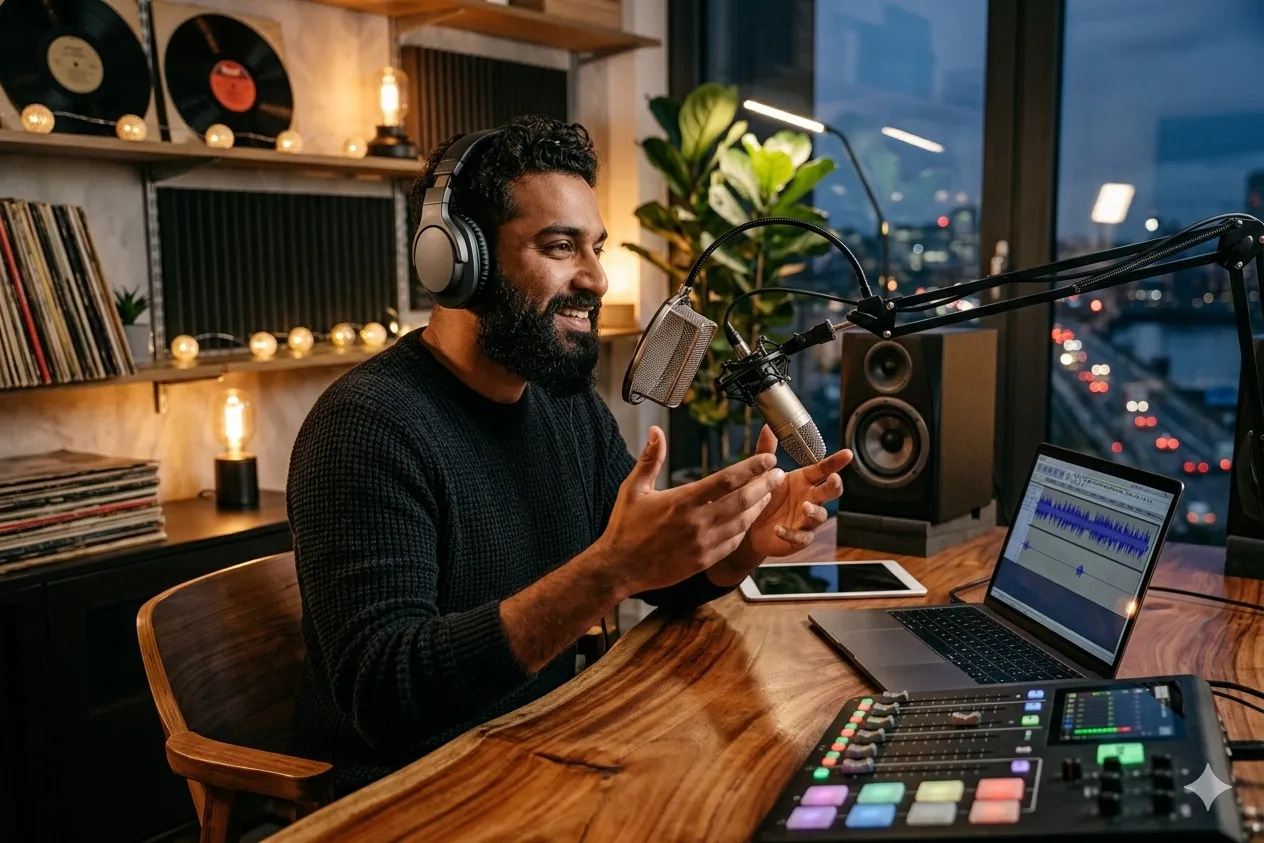

India's digital content world has changed fast. Streaming subscriptions have crossed 500 million. Regional language viewership is overtaking English on major OTT platforms. YouTube has over 450 million monthly active users in India alone.
In this environment, one thing is clear. Creators who speak the audience's language win. That is exactly where Hinglish dubbing services have found their moment.
What Is Hinglish, and Why Does It Matter Now?
Hinglish is a natural mix of Hindi and English. Hundreds of millions of Indians speak it every day. It is not a compromise or a shortcut. For an entire generation, it is simply how they talk.
Walk into any metro city or college campus in North India. The conversations around you will be in Hinglish. Yet most YouTube content is still made in formal Hindi or full English. That leaves a massive, engaged audience underserved.
Professional Hinglish dubbing services fix this. They adapt content into the language people actually speak. Not the language classrooms teach. Not the language corpora prefer. The language people use with friends and family.
The result? Content that feels native. Not translated.
The OTT Boom and the Multilingual Shift
India's OTT market is projected to reach $15 billion by 2030. This is based on estimates from FICCI and EY. A large share of that growth is coming from non-metro audiences. Cities like Kanpur, Indore, Bhopal, and Patna are driving it. These are first-generation smartphone users. They have strong language preferences.
Netflix, Amazon Prime Video, and Disney+ Hotstar have all noticed. They have invested heavily in Hindi and regional language content. YouTube's algorithm has also shifted. It rewards watch time and engagement over subscriber count. Both metrics rise when content feels linguistically familiar.
Media localization is no longer a nice-to-have. It is a distribution strategy.
For YouTube creators, the math is simple. If 300 million more people can enjoy your content through Hinglish dubbing, why would you not adapt it?
Breaking Down the Core Benefits
1. Dramatically Wider Audience Reach
The most immediate benefit is reach. A technology tutorial made in English can go much further with quality dubbing. Students in tier-2 and tier-3 cities can follow it. They understand Hinglish. But formal English feels distant to them.
This is not a small audience. A 2024 Google-KPMG report found that over 90% of new Indian internet users preferred Indian languages or a mix of Indian and English. That is precisely what Hinglish delivers.
Professional content translation through dubbing removes friction. It closes the gap between your message and your audience.
2. Higher Watch Time and Better Engagement
YouTube does not just count views. It measures watch time, view duration, likes, comments, and shares. All of these improve when the content feels natural to the viewer.
When people do not have to mentally translate what they are hearing, they stay longer. They engage more. They are more likely to return.
Creators who switched to Hinglish-dubbed content report higher average view durations. The reason is simple. Cognitive ease drives retention. Multilingual content strategy, done well, delivers real improvements in these platform metrics.
3. SEO Advantages on YouTube and Google
YouTube is the world's second-largest search engine. It indexes audio, captions, and metadata. Hinglish-dubbed content with matching Hinglish titles and descriptions gains discoverability. This search space is far less crowded than English.
Real users search in a Hinglish style. They mix Hindi and English in the same query. Effective Hinglish dubbing services ensure your spoken content matches how real people search. The result is organic SEO lift.
This is entertainment localization working as a search strategy.
4. Better Brand Trust and Audience Connection
Research has long shown this. People trust messages in their own language more. For brands using YouTube, this has direct commercial impact.
A product explainer dubbed in Hinglish does not just reach more people. It reaches them with more persuasive impact. Familiar language lowers psychological resistance.
Regional audiences in India have historically been ignored by mainstream content. Brands that change this are seen as respectful and relatable. That perception builds subscriber loyalty. It drives conversions. Language adaptation is brand-building.
5. Cost-Effective Market Penetration
Building original Hinglish content from scratch is expensive. It means rebuilding scripts, talent, direction, and production. Dubbing existing content is far more efficient.
Professional Hinglish dubbing services let creators monetize their existing video libraries. No rebuilding required. The content asset is already made. Dubbing simply extends its commercial life into a new market.
For international brands entering India in edtech, fintech, health, or e-commerce — this is a smart entry route. Media localization through dubbing is faster and cheaper than starting over.
6. Competitive Differentiation in a Crowded Market
YouTube India is intensely competitive. Millions of active channels exist in English and Hindi alone. Standing out is hard.
Hinglish-dubbed channels occupy a distinct space. They reach audiences that English-only channels cannot. They feel more contemporary than formal Hindi channels. This positioning is hard to replicate quickly.
Early investment in Hinglish dubbing services creates a real competitive advantage. It is a strategic moat in the creator economy.
7. Alignment with Platform and Policy Trends
India's IT rules increasingly emphasize accessible and inclusive content. YouTube has rolled out multi-language audio tracks. This feature integrates directly with dubbed content workflows.
Professional dubbing services are built to deliver content in formats that platforms support. Localized content is not just produced. It is optimally distributed.
The Quality Question: Why Professional Dubbing Matters
Not all dubbing is equal. Machine-translated voiceovers with flat delivery hurt credibility. Hinglish speakers are bilingual and culturally sharp. They notice when dubbing sounds fake.
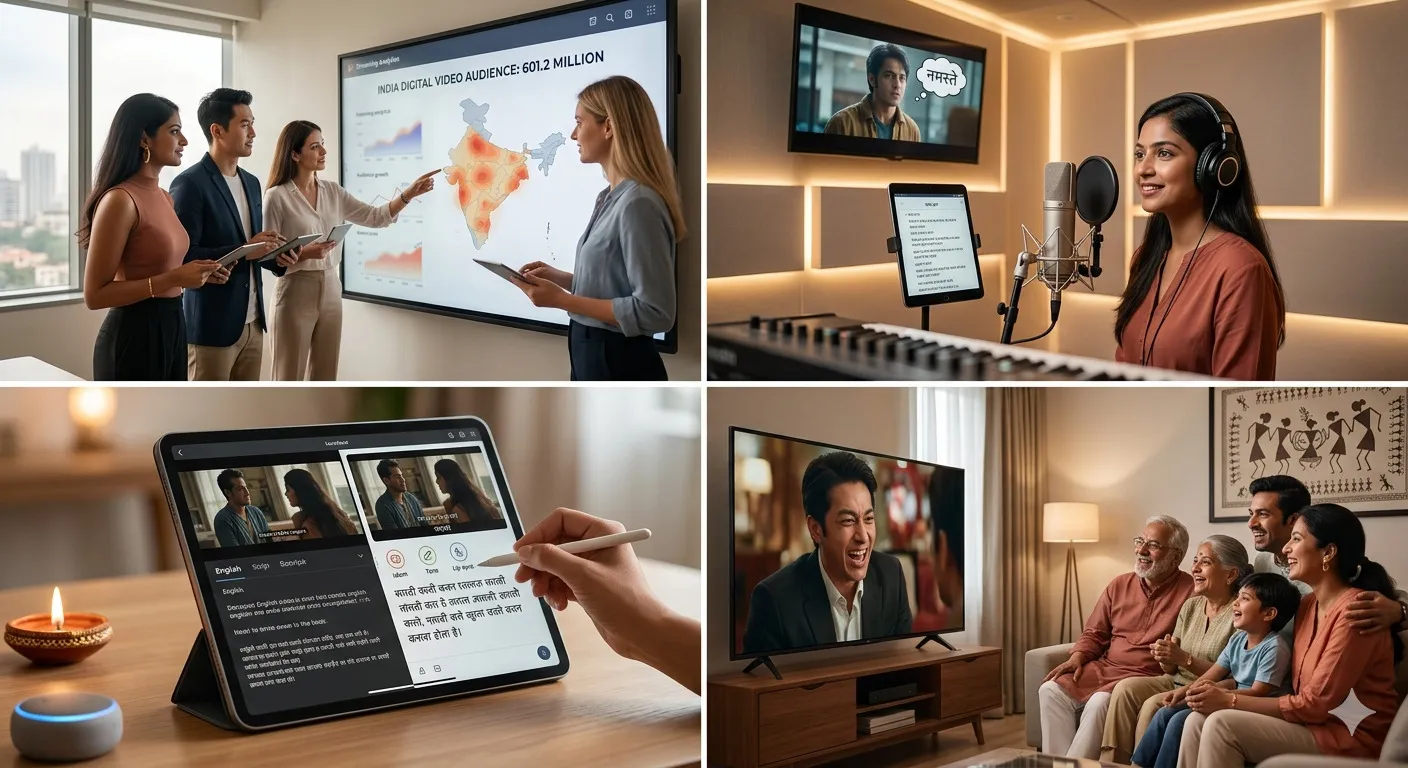
Professional Hinglish dubbing services go beyond word-for-word translation. They involve careful voice casting. The delivery reflects natural Hinglish rhythms. Lip-sync is calibrated for on-screen speakers. Tone is matched between original and dubbed performances. Cultural nuance is preserved.
A skilled dubbing studio does not just swap English words for Hindi ones. It re-voices the content entirely. The audience feels the content was made for them. That is where the real value lies.
International Creators and the Indian Market
This opportunity is not just for Indian creators. International brands and YouTube channels see India as a major growth market. Many are now commissioning Hinglish dubbing as part of their India entry strategy.
Edtech platforms, gaming channels, financial literacy creators, and health-and-wellness channels from the US, UK, and Southeast Asia are all investing in Hinglish adaptation. The case is clear.
India is one of the largest digital audiences in the world. Its middle class is growing fast. Creators who show cultural awareness get rewarded. Hinglish dubbing services are not just a production tool here. They are a market-entry vehicle.
What the Data Suggests for 2026 and Beyond
The trends all point the same way. Internet penetration in rural India is growing. Affordable 5G plans are bringing video streaming to new audiences. Smart TV adoption in tier-2 and tier-3 markets is rising fast.
Each of these trends expands the audience for well-localized content. The commercial stakes of language adaptation are getting higher. Creators who build Hinglish content pipelines now will be ahead. Those who treat localization as an afterthought will fall behind.
Media localization has moved from a niche service to a core business strategy. Hinglish dubbing sits at the center of that shift.
Conclusion
The case for Hinglish dubbing services is grounded in data, not sentiment. It is built on platform mechanics, audience behavior, and competitive logic.
Attention is scarce. Linguistic familiarity drives engagement. Creators and brands that adapt for Hinglish audiences will consistently outperform those who do not.
India's digital economy is maturing fast. The definition of mainstream content is shifting. The question is no longer whether to dub content in Hinglish. The question is how quickly you can start.


















Sign in to leave a comment.