
Why Hindi Localization Is No Longer Optional for Video Creators
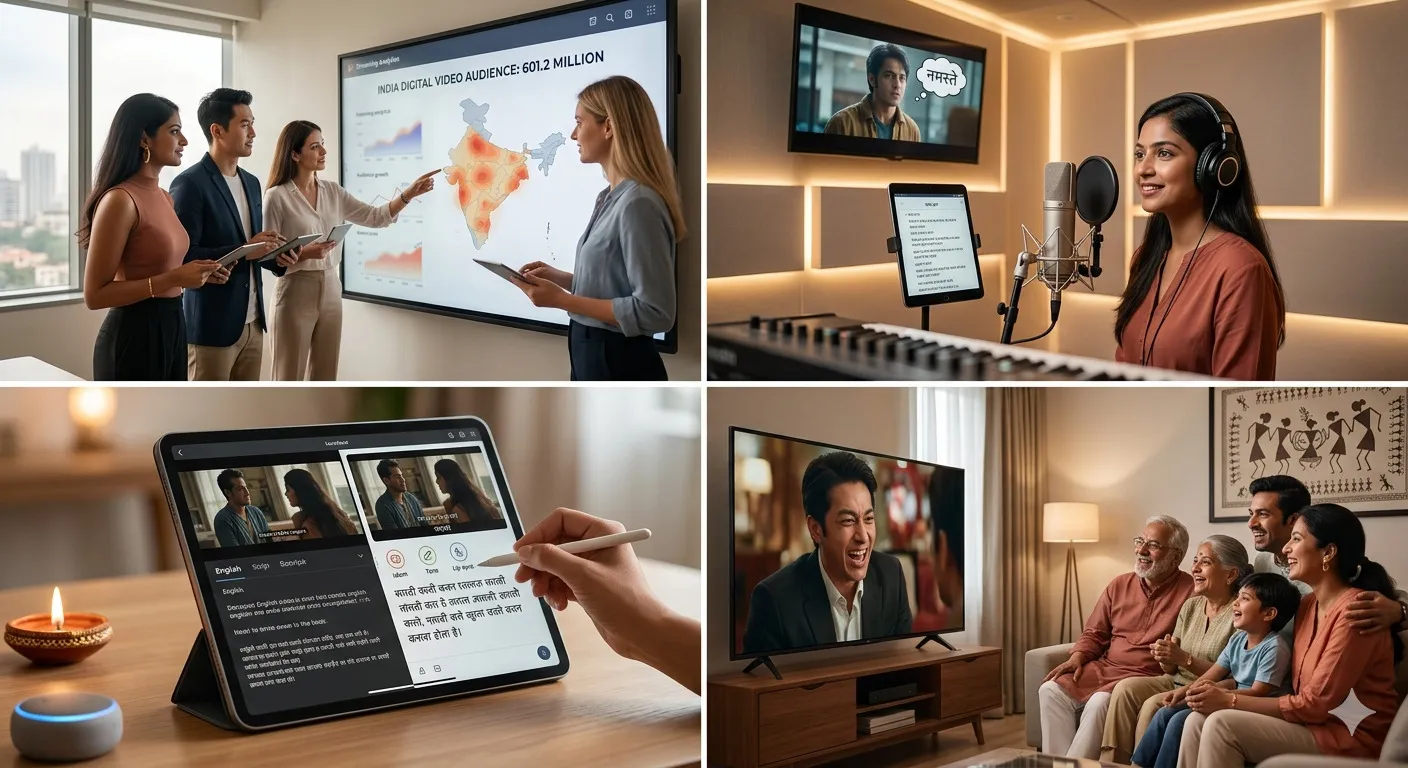
India's digital video audience is massive. And it is still growing.
According to the Ormax OTT Audience Report 2025, India now has 601.2 million online video viewers. That is a 9.9% jump from 2024. It means 41% of the entire Indian population watches digital video regularly.
By mid-2024, the OTT market had already crossed 500 million active users. The market value was projected to surpass $10 billion by the end of that year.
Within this audience, Hindi-language content dominates streaming hours. Platforms that invested in Hindi programming early have seen stronger subscriber retention. This is especially true in Tier 2 and Tier 3 cities. These audiences prefer content in their own language. They are not going anywhere.
Yet a large gap remains. A 2024 Ormax supply-side study found that only 9% of streaming originals catered to regional languages outside Hindi, Tamil, and Telugu. Huge amounts of premium content still reach Indian viewers in English subtitled, poorly dubbed, or not adapted at all.
That gap is an opportunity. Professional Hindi localization services have moved from being a production afterthought to a genuine business strategy.
Localization vs. Translation: They Are Not the Same Thing
Many people use these two words interchangeably. That is a mistake.
Translation converts words from one language to another. That is all it does.
Localization does something much deeper. It adapts the entire viewing experience. That includes tone, humor, cultural references, on-screen text, and the emotional feel of a narrator's voice. The goal is simple: the content should feel like it was made in Hindi from the start.
For video content, this matters even more. Hindi localization services must consider lip sync, voice character matching, regional dialects, and storytelling pace. A word-for-word English-to-Hindi translation may be technically correct. But when a voice artist reads it aloud, it often sounds stiff and unnatural.
Audiences notice. They stop watching.
India's OTT Boom Has Made Multilingual Content Essential
India's OTT market in 2026 looks nothing like it did five years ago.
Netflix, Amazon Prime Video, Disney+ Hotstar, JioCinema, and SonyLIV are all fighting for the same viewer. The battleground has shifted. It is no longer just about original content. It is about reaching audiences in the language they think and feel in.
Hindi-dubbed international content consistently outperforms subtitled versions in viewer retention. This trend is strongest in smaller cities. English literacy is lower there. Smartphone penetration, however, is high and rising.
Korean dramas dubbed in Hindi on Netflix became cultural touchpoints across Hindi-speaking India. That would have seemed far-fetched a decade ago. Today, it is a proven content strategy.
The investment wave has reached beyond entertainment, too. EdTech platforms are localizing course content. Healthcare companies are producing Hindi wellness videos. Corporate training teams are replacing English e-learning modules with Hindi versions. The data consistently shows one thing: people understand and retain information better in their mother tongue.
This is why demand for Hindi localization services has surged across every content category.
What a Professional Hindi Localization Pipeline Actually Looks Like
First-time commissioning editors often assume localization means hiring a few voice artists and recording some lines. The reality is far more layered.
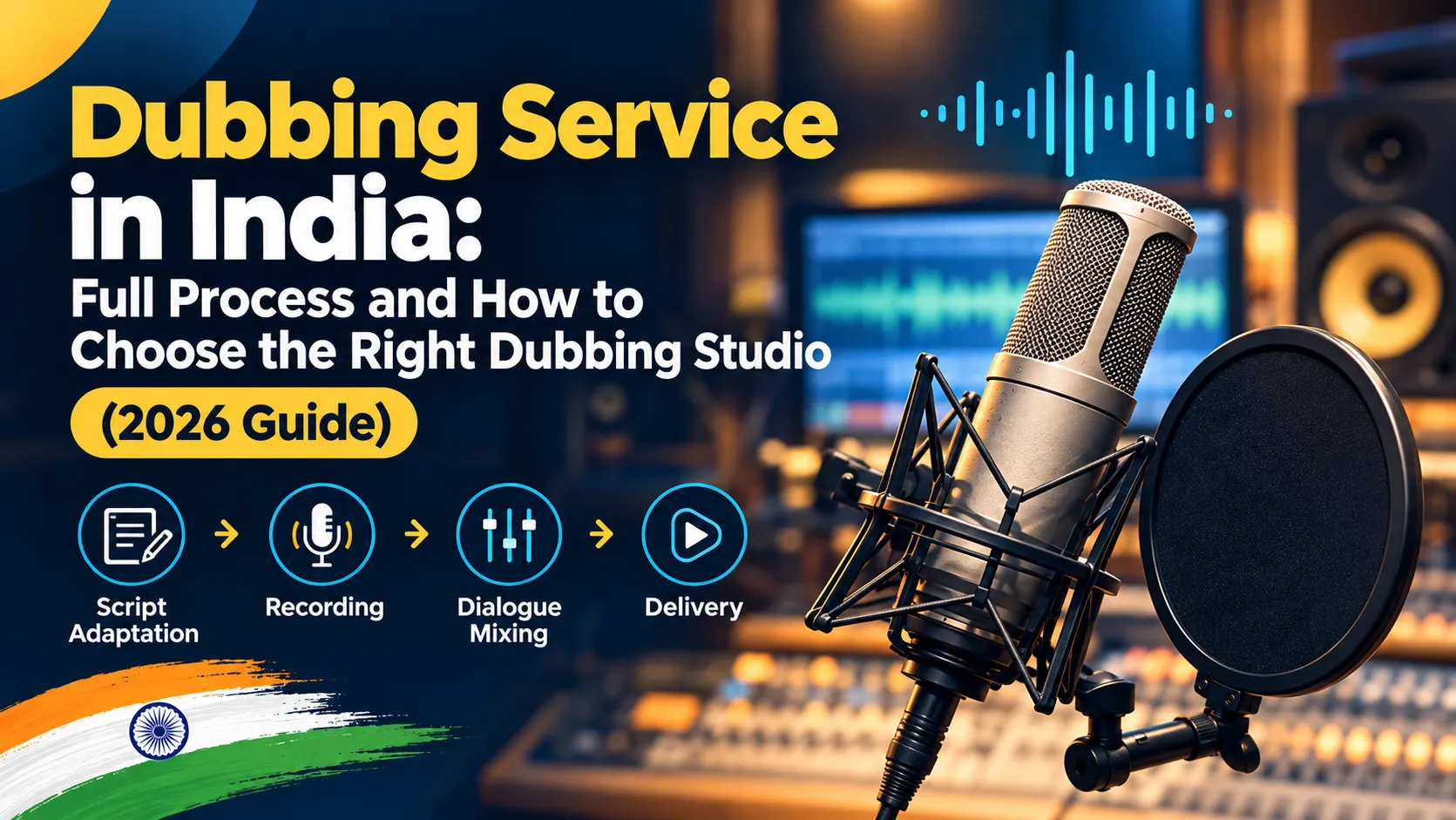
Here is what a quality workflow involves.
Script Adaptation and Linguistic Review
Nothing gets recorded until the script is properly adapted. This is not the same as translation.
A good adaptation writer identifies cultural references that do not travel. They replace them with equivalents that resonate with a Hindi-speaking audience. They adjust sentence lengths to match on-screen timing. They preserve the emotional weight of the original dialogue.
Being bilingual is not enough for this role. A skilled adapter understands storytelling structure. They know when a joke lands and when it does not.
Voice Casting and Direction
Voice casting is one of the most underestimated parts of the process.
Every character carries a voice identity. Age, personality, social background, and emotional history all live in how a character sounds. Cast the wrong voice, and viewers feel the disconnect immediately. A gravelly villain given a light tenor. A teenage protagonist who sounds middle-aged. These mismatches break the story.
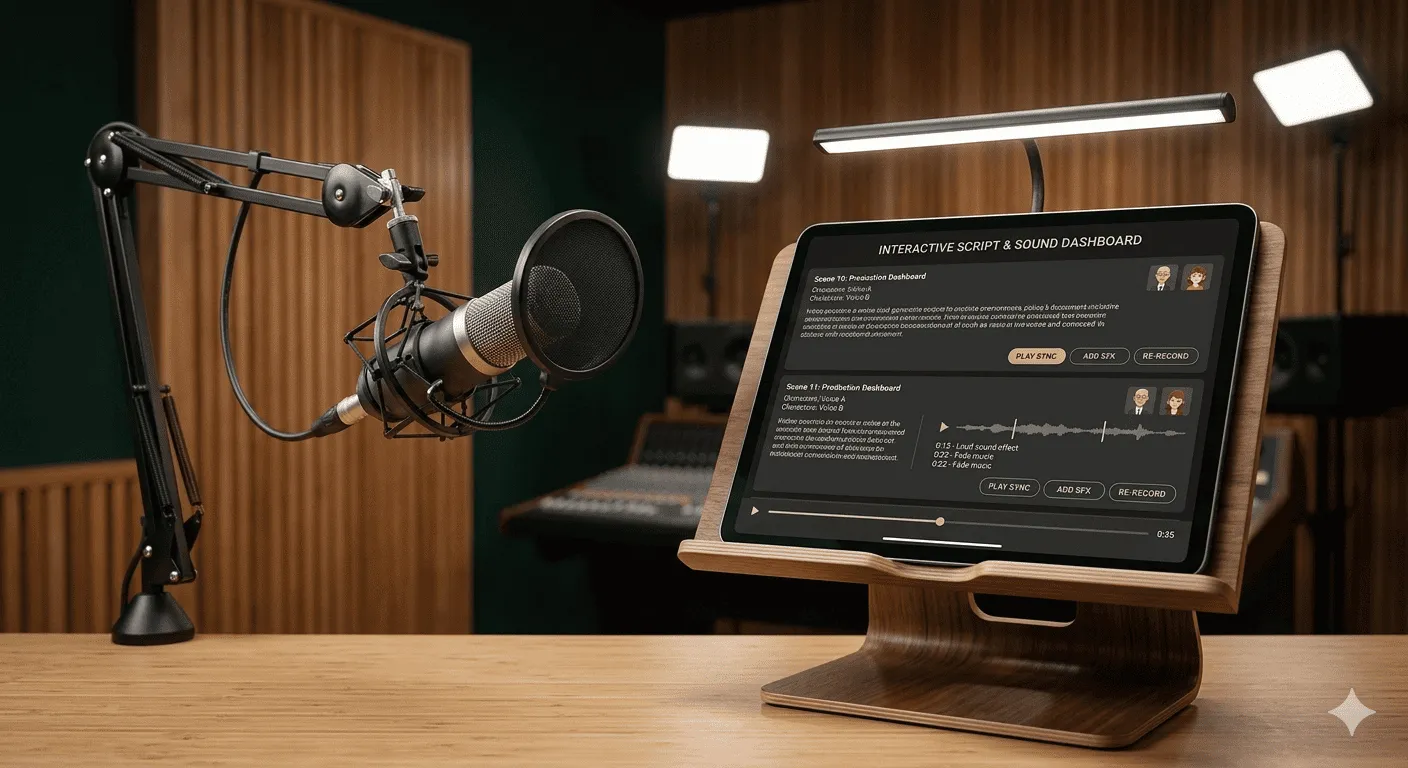
Professional Hindi localization services maintain a wide roster of trained voice artists. They also employ experienced studio directors. A director's job is to get a genuine performance, not just accurate words.
Lip Sync and Audio Engineering
For dubbed content, lip sync is the metric audiences judge unconsciously.
Modern studios use a mix of manual adjustment and AI-assisted tools to match Hindi phonemes to on-screen mouth movements. But the final check is always human. Automated tools miss context. Trained ears catch it.
After recording, the audio goes through full post-production. Dialogue editing, noise reduction, mixing, and mastering. The final track must meet the delivery specifications of the target platform.
Subtitle and Caption Localization
Not every project needs a full dub.
Documentaries, news formats, and many educational videos work well with Hindi subtitles or closed captions. But subtitle localization is a specialized skill in its own right. It involves precise timing, readability standards, on-screen text translation, and platform compliance. Netflix, for example, has detailed timed text style guides. Localization partners must follow them exactly.
Hindi Is Not One Language. It Is Many.
This is something most localization guides skip over. It matters enormously.
The Hindi spoken in Delhi is different from the Hindi of Lucknow. Patna, Bhopal, and Jaipur each carry their own vocabulary and rhythm. Standard Hindi Shuddh Hindi or Manak Hindi, is used in formal broadcasting. Hindustani, a softer blend of Hindi and Urdu, is what you hear in popular cinema and television.
For entertainment, Hindustani is usually the right choice. It connects with a broader audience. For government communication or formal education, standard Devanagari Hindi fits better. For community health content targeting rural Uttar Pradesh, an even more local register may be appropriate.
Getting this wrong creates distance. The audience may understand the words. But the content will not feel like it is speaking to them.
The best Hindi localization services advise clients on register selection before production begins. This is not a minor detail. It shapes how the entire project is received.
Lessons from the Streaming Wars: When Hindi Dubbing Works and When It Fails
Real examples tell the story better than any theory.
When Netflix released Money Heist with a Hindi dub alongside its Spanish original, it opened the show to an entirely new viewer base. People who had never watched a foreign-language series found themselves hooked on a Spanish heist drama. The Hindi dubbing felt natural. The performances had energy. The dialogue did not sound translated.
The show became a genuine cultural conversation across Hindi-speaking India.
Now compare that to some early anime dubbing attempts in India. Translation choices were too literal. Tone was mismatched. The voice performances felt disconnected from the characters on screen. The dubbed versions drew backlash from fans and performed poorly.
The lesson is consistent. The quality of Hindi localization services directly affects how many people watch, how long they stay, and how they talk about the content afterwards. A well-executed dub is invisible. Viewers simply forget they are watching something that was originally made in another language. A poor dub is all they see.
How Technology Is Changing Hindi Localization in 2026
Artificial intelligence has entered the localization workflow at several points. Some of the changes are genuinely useful. Others are still finding their place.
AI translation engines have improved significantly in Hindi output quality. They handle straightforward dialogue reasonably well. But machine translation still struggles with idioms, humor, and culturally specific content. The practical model most studios now use is a hybrid one: AI handles the first-pass translation at volume, and human editors refine it. This reduces turnaround time without trading away accuracy.
Voice cloning and synthetic dubbing have attracted a lot of attention. The technology has advanced. But the professional consensus is measured. AI voices currently lack the emotional range that keeps a viewer engaged through a long series or a feature film. For short-form content, corporate training videos, or promotional material, synthetic voices have found acceptance. For narrative entertainment, human artists still hold the advantage.
Automated subtitle synchronization and quality control tools have been adopted more widely and with less debate. They improve consistency and speed without affecting the creative quality of the output.
How to Choose the Right Hindi Localization Partner
The partner you choose will determine the quality of the final output. Budget matters. But so does fit.
Here is what experienced commissioning editors look for.
A strong Hindi localization studio should have a portfolio that spans both entertainment and non-entertainment content. These projects require different skill sets. Entertainment dubbing needs performance direction and character voice consistency across multiple episodes. Corporate localization needs precise terminology and a controlled, neutral register. A studio that only does one well may struggle with the other.
Technical delivery capability is non-negotiable. The studio should be able to produce content that meets Netflix, Amazon, or Apple delivery specifications the first time. Repeated back-and-forth over delivery issues is expensive and a signal of weak processes.
Transparency matters too. You should have clear visibility into adaptation decisions, cast selection, and review milestones throughout the project.
Finally, ask for a sample. Request a short test dub or a sample subtitle file before committing to a full project. The difference in quality between studios becomes obvious very quickly to anyone who has reviewed localized content before.
The Road Ahead for Hindi Localization
India's content economy is still expanding fast.
Rural internet penetration is rising. Affordable smartphones continue to reach first-time users in smaller towns and villages. OTT platforms are investing heavily in Hindi-language libraries to win these audiences.
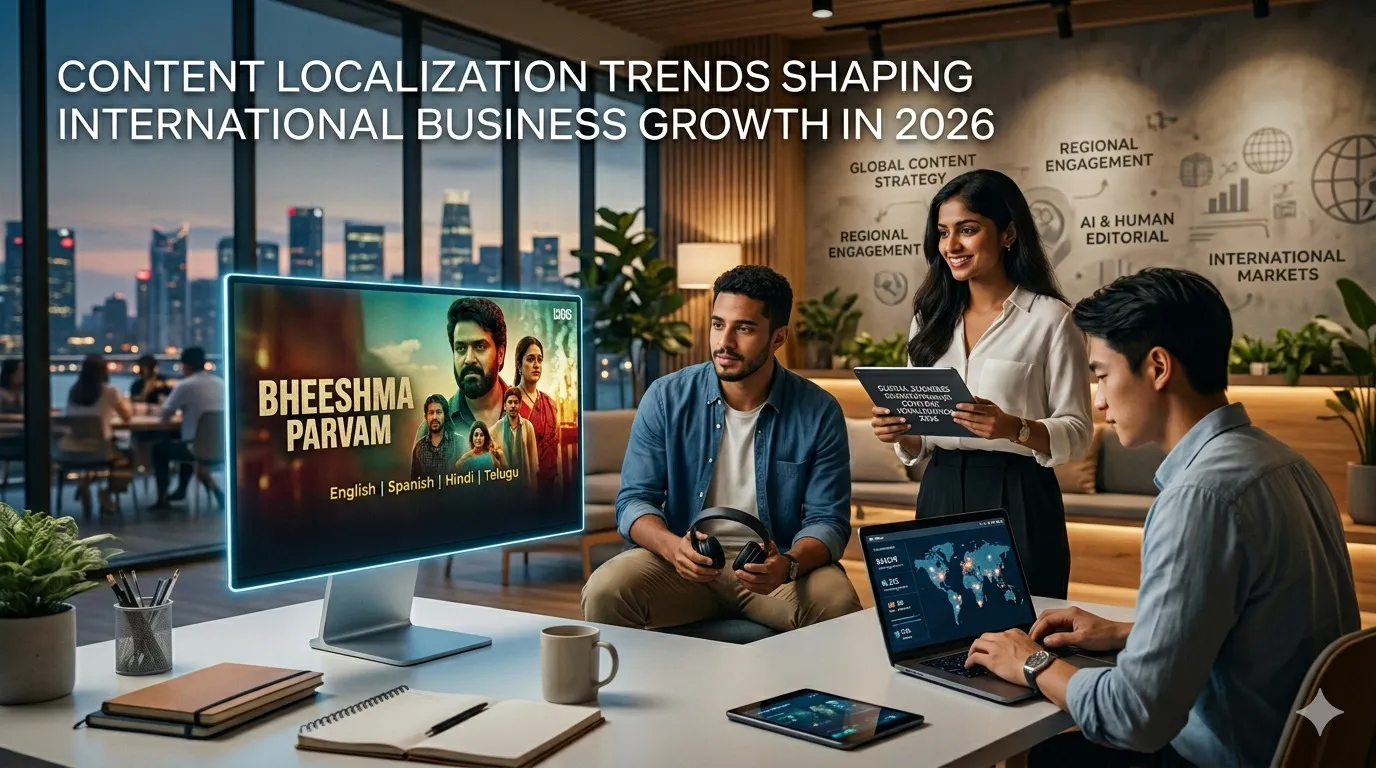
At the same time, Indian-made content is increasingly seeking global distribution. That means localization is now moving in both directions. Hindi content needs to be adapted into English and other languages. International content needs to arrive in Hindi. The localization industry sits at the center of both flows.
Demand for Hindi localization services will continue to grow across every vertical, including entertainment, education, healthcare, corporate communication, and government outreach.
For creators and distributors willing to treat localization as a core investment rather than a final checkbox, the returns are clear. India's Hindi-speaking audience is large, loyal, and increasingly selective about content quality.
They want to be spoken to in their language. Not translated at.

















Sign in to leave a comment.