
Introduction:
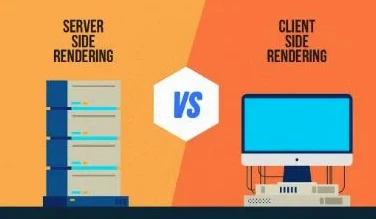
In the ever-evolving landscape of web development, the debate between client-side rendering (CSR) and server-side rendering (SSR) continues to spark discussions among developers. Both approaches have their merits and drawbacks, and choosing the right one depends on various factors. In this article, we will delve into the nuances of client-side rendering and server-side rendering, exploring their strengths and weaknesses to determine which one might be better suited for particular scenarios.
Also Read: Server-Side Vs. Client-Side Rendering: A Guide For Web Development
Client-Side Rendering (CSR):
Client-side rendering refers to the process where the browser is responsible for rendering the web page. In CSR, the server sends raw data to the client, usually in the form of JavaScript, and the browser then executes the code to build the DOM (Document Object Model) and render the page. This approach provides a seamless and interactive user experience as the initial load is quick, and subsequent interactions do not require full page reloads.
Advantages of CSR:
Faster Initial Load: CSR shines when it comes to the initial page load. Users can see the content faster as the server sends minimal HTML, CSS, and JavaScript, and the browser takes care of rendering.
Rich User Interactivity: As most of the rendering logic resides on the client side, web applications built with CSR frameworks (e.g., React, Angular, Vue) offer a smoother and more interactive user experience.
Reduced Server Load: Since the server primarily sends data and the client handles rendering, the server is relieved of some processing burden, making it suitable for scenarios where scalability is crucial.
Disadvantages of CSR:
SEO Challenges: Search Engine Optimization can be a challenge with CSR as search engine crawlers may struggle to index content effectively, impacting the website's search rankings.
Slower Time-to-Content: While the initial load is fast, subsequent interactions may involve fetching additional data and rendering on the client side, potentially leading to slower time-to-content for certain actions.
Server-Side Rendering (SSR):
Contrary to CSR, server-side rendering involves the server processing the initial request and sending fully rendered HTML to the client. The browser receives a pre-built page, reducing the need for extensive client-side processing.
Advantages of SSR:
SEO-Friendly: SSR is inherently more SEO-friendly as search engine crawlers can easily index the fully rendered HTML, improving the website's visibility in search results.
Better Performance on Low-Powered Devices: Devices with limited processing power benefit from SSR as the server handles the rendering, ensuring a smoother user experience on less capable browsers or devices.
Improved Time-to-Content for Initial Load: Since the server sends fully rendered HTML, the initial load time is often faster, especially for users with slower internet connections or less powerful devices.
Disadvantages of SSR:
Higher Server Load: SSR places a higher load on the server, as it is responsible for rendering the complete HTML for each request. This can impact scalability in scenarios with high traffic.
Reduced Interactivity: Web applications built with SSR may experience reduced interactivity compared to CSR counterparts. Subsequent interactions often require full page reloads, leading to a less seamless user experience.
Conclusion:
In the tug-of-war between client-side rendering and server-side rendering, there is no one-size-fits-all solution. The choice depends on the specific requirements of a project, considering factors such as SEO goals, user interactivity, and server scalability.
For applications where user interactivity and responsiveness are paramount, client-side rendering might be the preferred choice. On the other hand, if search engine visibility and faster initial loads are critical, server-side rendering emerges as a more suitable option.
In many cases, a hybrid approach known as "hybrid rendering" is employed, combining the strengths of both CSR and SSR to strike a balance between initial load speed, interactivity, and SEO performance.
Ultimately, developers must carefully weigh the pros and cons of each approach and tailor their choice to the unique demands of their projects, ensuring that the selected rendering strategy aligns with the overarching goals of the web application Development.




























Sign in to leave a comment.