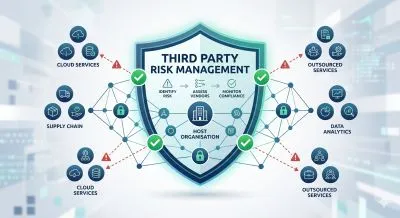

In today’s interconnected business world, organisations rarely operate in isolation. From cloud storage providers and SaaS applications to external accountants and supply chain partners, modern businesses rely heavily on external networks. But while outsourcing drives efficiency, it also introduces significant vulnerabilities.
If a vendor suffers a data breach or operational failure, your organisation bears the brunt of the fallout. This is where third party risk management comes into play. Understanding how this process works is essential for protecting your data, maintaining compliance, and securing your brand's reputation.
What is Third Party Risk Management?
Before diving into the mechanics, it is important to define what is third party risk management (TPRM). At its core, it is a strategic process designed to identify, assess, monitor, and mitigate the risks associated with outsourcing to external vendors, suppliers, and service providers.
While the term is often used interchangeably with vendor risk management or supplier risk management, TPRM is a broader discipline. It encompasses every single external entity that has access to your systems, physical premises, or sensitive intellectual property. The ultimate goal is to ensure that doing business with an outside party does not expose your organisation to unacceptable levels of danger.
Importance of Third Party Risk Management
You might wonder why businesses dedicate so much time and capital to this discipline. The importance of third party risk management cannot be overstated in an era defined by sophisticated cyber threats and strict regulatory oversight.
- Data Protection: Cybercriminals frequently target smaller third-party vendors as a backdoor into larger corporate networks.
- Regulatory Compliance: Australian regulators, such as APRA (with standards like CPS 234) and the OAIC, hold organisations accountable for data breaches, even if the breach occurred on a vendor's watch.
- Business Continuity: If a critical supplier suddenly goes bankrupt or suffers a massive IT outage, your daily operations could grind to a halt.
The Core Stages: How Does Third Party Risk Management Work?
A successful TPRM programme operates as a continuous lifecycle rather than a one-off checklist. It systematically guides a business through the entire lifecycle of a vendor relationship.
1. Vendor Identification and Categorisation
The process begins by creating a centralised register of every third-party relationship. Organisations must categorise these vendors based on criticality. A cloud provider hosting client financial data poses a much higher risk than a company supplying office stationery.
2. Third-Party Due Diligence
Before signing a contract, businesses must conduct thorough third-party due diligence. This involves researching the vendor's financial stability, legal history, and operational track record to ensure they are a reliable partner.
3. Third-Party Vendor Assessment
During a formal third-party vendor assessment, the vendor is asked to provide evidence of their security posture. This often includes reviewing independent audit reports (such as SOC 2), data privacy policies, and insurance certificates.
4. Contractual Mitigation
Once the assessment is complete, risk mitigation terms are embedded directly into the contract. This includes defining service level agreements (SLAs), data breach notification windows, and the right to audit the vendor's systems.
5. Ongoing Vendor Compliance Monitoring
Risk is dynamic; a vendor that is secure today might introduce vulnerabilities tomorrow. Continuous vendor compliance monitoring ensures that the partner adheres to the agreed-upon security controls throughout the lifespan of the contract.
Your Practical Third Party Risk Management Checklist
Implementing this framework can feel overwhelming. To help streamline the process, organisations should utilise a structured third party risk management checklist during procurement and onboarding.
- [ ] Discover: Identify all current external vendors and centralise them in a risk register.
- [ ] Tier: Classify vendors into high, medium, and low-risk tiers based on data access.
- [ ] Assess: Issue targeted security questionnaires based on the vendor’s specific tier.
- [ ] Verify: Validate vendor responses using independent security ratings and certifications.
- [ ] Remediate: Work with the vendor to fix any critical security gaps before signing contracts.
- [ ] Monitor: Set up continuous alerts for data breaches or compliance failures.
Third Party Risk Management Best Practices for Modern Businesses
To maximise the effectiveness of your security programme, it is wise to adopt industry-tested third party risk management best practices.
Standardise the Assessment Process
Do not reinvent the wheel for every supplier. Use standardised frameworks like the ISO 27001 or the NIST Risk Management Framework to evaluate security postures consistently.
Foster Collaboration Across Departments
TPRM is not just an IT problem. It requires active collaboration between legal, procurement, risk management, and executive leadership to ensure all angles are covered.
Automate Wherever Possible
Managing spreadsheets for hundreds of vendors is inefficient and prone to human error. Utilise specialised TPRM software to automate questionnaire distribution, track expiry dates, and alert your team to new risks.
Frequently Asked Questions
What is the difference between inherent risk and residual risk?
Inherent risk is the natural level of risk a vendor poses before any security controls or measures are put in place. Residual risk is the remaining level of risk after you have applied security assessments, contracts, and mitigation strategies.
How often should high-risk vendors be reassessed?
High-risk vendors should undergo a formal reassessment at least once a year. Additionally, they should be subject to continuous automated monitoring to catch any security issues in real-time.
Can an organisation outsource its risk accountability?
No. While you can outsource operational tasks to a third party, your organisation remains legally and financially accountable to regulators and customers if a breach occurs.

























Sign in to leave a comment.