

How a business talks to thousands of customers without owning a single phone line
How do modern businesses stay connected to thousands of customers without running their own telecom infrastructure?
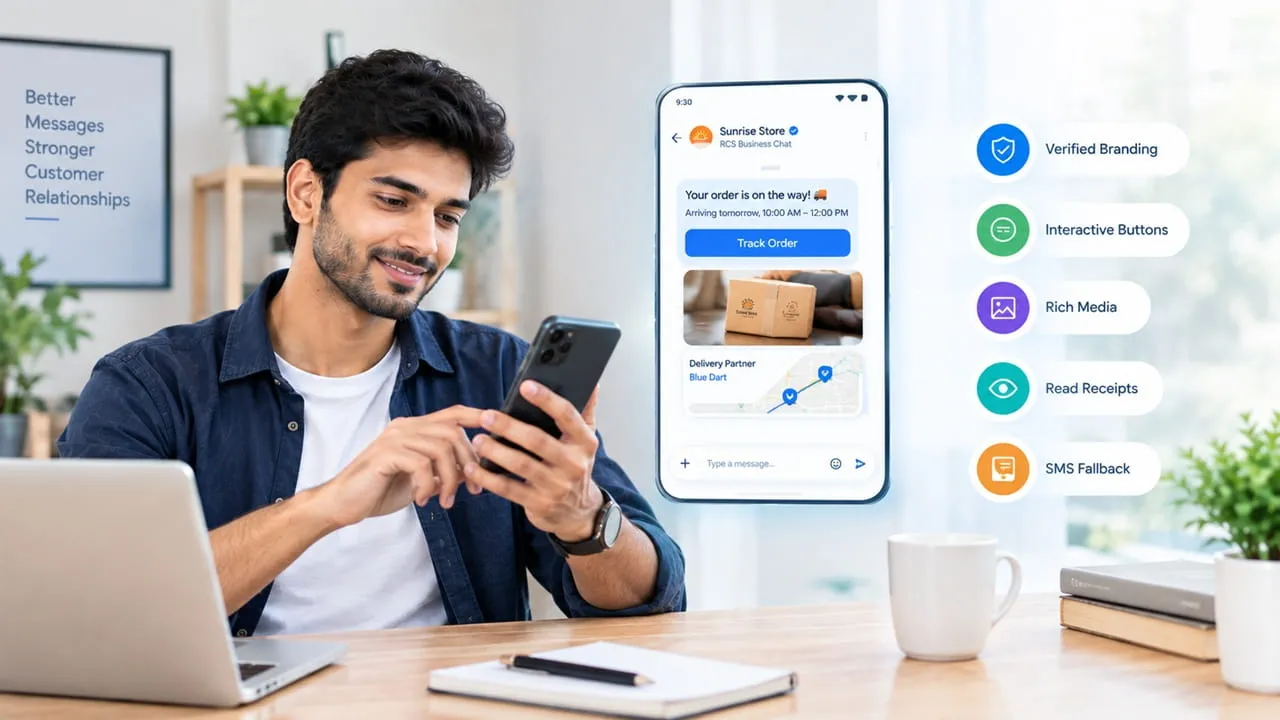
Through a cloud communication platform, software that handles SMS, voice, WhatsApp, RCS and email through the internet instead of physical phone lines. Rather than installing hardware or signing separate contracts with telecom operators, a business connects to the cloud platform once and sends every kind of message through it. Here’s what that actually looks like, and why so many businesses have moved to it.
Key Takeaways
- A cloud communication platform delivers SMS, voice, WhatsApp, RCS and email over the internet, not through owned telecom hardware.
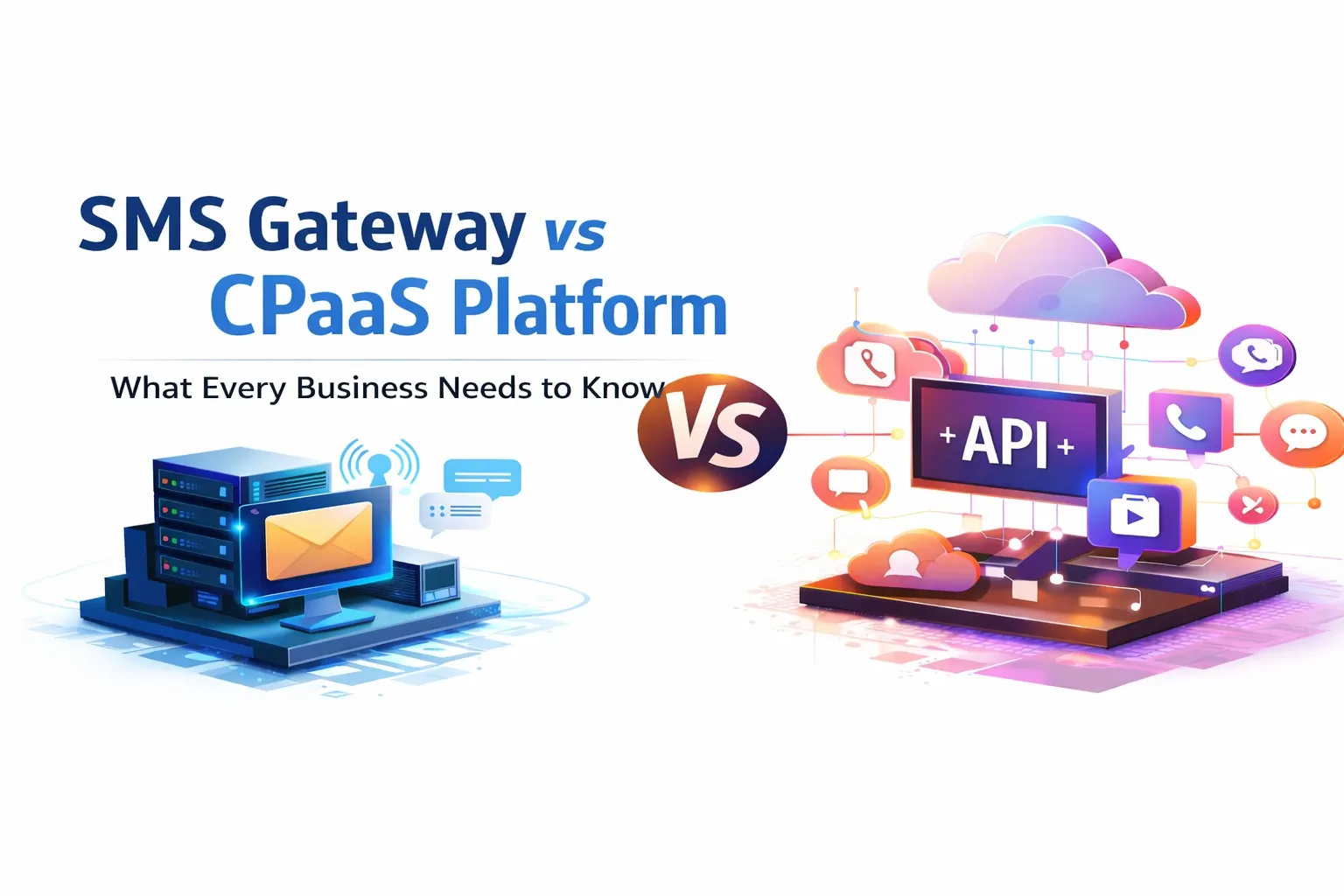
- CPaaS, Communication Platform as a Service, is the technical name for this model, accessed through communication APIs.
- Businesses save on setup cost and complexity since the provider manages carrier relationships and infrastructure.
- Cloud communication services scale up or down with actual usage, which suits businesses with seasonal or unpredictable volume.
- Reliability, compliance support and clear reporting matter more than price alone when comparing providers.
What Is a Cloud Communication Platform, in Plain Terms?
A cloud communication platform is software that lets a business send and receive messages and calls, SMS, voice, WhatsApp, RCS, email, over the internet, instead of through physical phone lines or owned telecom equipment. The business connects to the platform through a dashboard or an API, and the platform handles the actual delivery across mobile networks. Nothing about this requires installing hardware or signing separate contracts with every telecom operator in every city a business serves.
Why Are Businesses Moving Away from Traditional Telecom Setups?
Traditional telecom setups meant negotiating directly with operators, often separately for each region, maintaining physical equipment and handling compliance individually for every market. Cloud communications remove most of that. A business pays for what it actually uses, scales up during a sale or busy season without buying new hardware, and relies on the provider to maintain carrier relationships and uptime. For a growing business, that difference in setup time and cost is often the real reason for the switch, more than any single feature.
What Can You Actually Do With Communication APIs?
Communication APIs let a business’s own software trigger messages and calls automatically, based on real events: an order ships, a payment fails, an appointment is booked. Instead of someone manually sending each message, the API sends it the moment the event happens, and reports back whether it was delivered. This is what makes automated order updates, OTPs and reminders possible without a person typing each one by hand.
How Does a Business Communication Platform Fit Into Daily Operations?
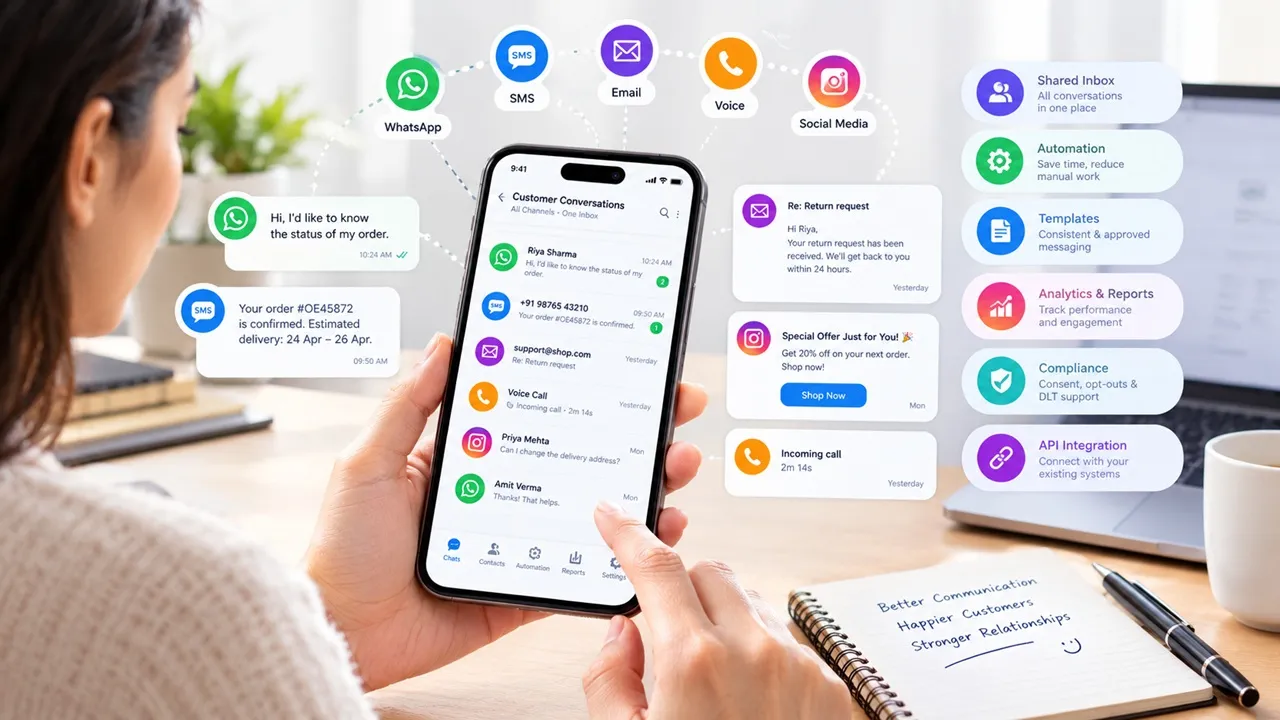
In daily use, a business communication platform usually sits behind the scenes, connected to a CRM, an e-commerce store or a booking system, sending the right message at the right moment without anyone having to remember to do it manually. A support team might see all customer conversations, across SMS, WhatsApp and email, in one shared inbox instead of five separate logins. A marketing team might use the same platform to send a festive offer to an opted-in list, with full visibility into who opened and clicked.
Practical Examples Across Industries
- An online store using a cloud communication platform for order confirmations, delivery updates and cart recovery messages.
- A bank sending OTPs and fraud alerts through redundant, high-reliability routes.
- A clinic automating appointment reminders and sending lab results securely.
- A logistics company routing delivery updates through SMS with a WhatsApp follow-up for complex queries.
Common Mistakes When Adopting Cloud Communications
- Choosing a provider based only on price per message, without checking delivery reliability.
- Not setting up fallback routes, so a single channel failure stops messages from reaching customers at all.
- Skipping compliance requirements, like DLT registration for SMS in India, which can get messages blocked.
- Running channels separately instead of connecting them, which recreates the exact mess cloud platforms are meant to solve.
How Do Pricing Models Usually Work?
Most cloud communication platforms charge per message, per call minute or per conversation, rather than a flat monthly fee. This usage-based pricing means a quiet month costs less and a busy, high-volume month costs more, which suits businesses whose messaging needs change with seasons, sales or campaigns. It also means a small business and a large one can use the same platform, just at very different volumes and very different total bills.
What Should You Check Before Choosing a Provider?
- Which channels does it support, SMS, voice, WhatsApp, RCS, email, and do you need all of them?
- What delivery guarantees and uptime does it offer, backed by an actual service agreement?
- Does it offer redundancy across multiple carrier routes?
- How well does it support compliance requirements relevant to your market?
- Is pricing clear, and does it scale sensibly with your expected volume?
- How good is the documentation and support if something breaks during a live campaign?
Final Thoughts
The appeal of a cloud communication platform isn’t really the technology itself. It’s what a business stops having to manage once the technology is handled by someone else, carrier contracts, hardware, compliance paperwork across regions. Arihant Global’s CPaaS team in Jaipur helps businesses across India set up exactly this kind of unified cloud communication as their messaging needs grow.
Frequently Asked Questions
Q1. What’s the difference between a cloud communication platform and CPaaS?
They’re essentially the same idea. CPaaS, Communication Platform as a Service, is the technical term for the cloud-based model that lets businesses access messaging and calling through APIs instead of owning the infrastructure themselves.
Q2. Is a cloud communication platform secure?
Reputable providers use encryption, access controls and compliance certifications to protect data in transit and at rest. It’s worth asking any provider specifically about their security certifications and how they handle customer data before committing.
Q3. How much do cloud communication services cost?
Pricing is usually usage-based, per message or per call minute, rather than a flat fee, so cost scales with how much a business actually sends. Get a clear, itemized rate card before comparing providers.
Q4. Can a small business use a cloud communication platform, or is it only for enterprises?
Small businesses can use it too. Most providers offer pay-as-you-go pricing with no large upfront commitment, which makes the technology accessible well before a business reaches enterprise-level volume.
Q5. Do I need a developer to use communication APIs?
For automated, event-triggered messages, yes, some developer involvement is usually needed to connect the API to your systems. Many platforms also offer no-code dashboards for simpler, manually triggered campaigns.
























Sign in to leave a comment.