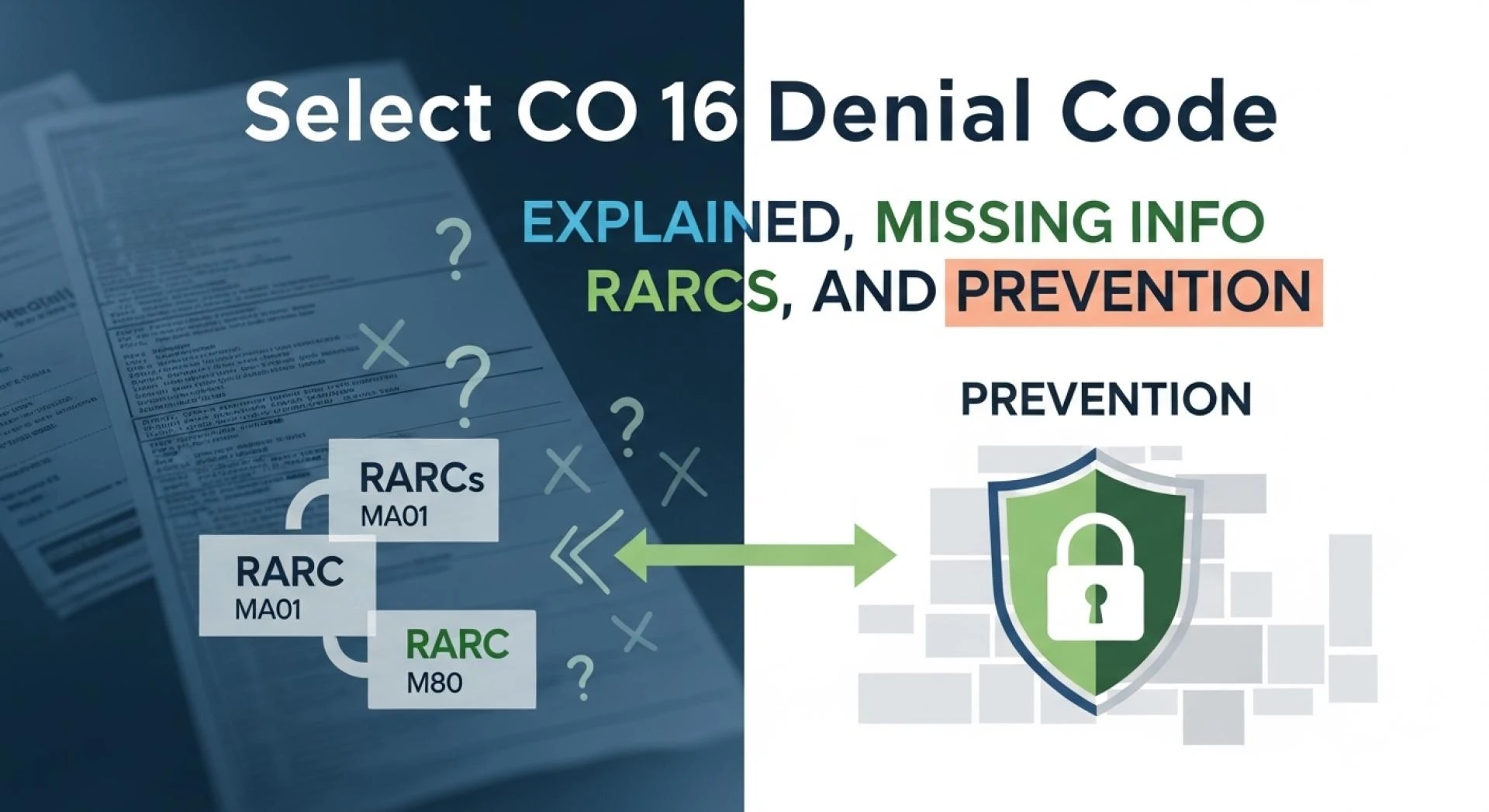

Medical billing accuracy directly affects revenue stability. Even when providers deliver high quality care and documentation supports medical necessity, claims can still be denied due to technical submission errors. One of the most frequent examples is the CO-16 Denial Code. This denial typically signals that required information is missing, incomplete, or invalid, preventing the payer from processing the claim.
Unlike denials tied to coverage termination or benefit exhaustion, code 16 usually points to correctable data issues. Because it often includes detailed remark codes, careful analysis is essential. When handled quickly and correctly, most of these denials are recoverable. When ignored, they lead to repeated rejections, delayed payments, and administrative strain.
This expanded guide explores what this denial means, how Remittance Advice Remark Codes connect to it, the major causes behind it, correction workflows, appeal considerations, and strong prevention strategies that support long term revenue protection.
What This Denial Communicates on a Remittance Statement
When code 16 appears with a contractual obligation prefix, it indicates that the claim lacks information required for proper adjudication. The payer system cannot finalize processing because one or more data elements fail to meet standards.
This denial does not automatically mean the service is not covered. It usually means the payer needs additional or corrected details before issuing payment.
In most cases, the remittance advice will instruct the provider to review accompanying remark codes. Those remarks identify the exact missing or invalid field, guiding the correction process.
Because this issue relates to claim completeness, it is often resolved through accurate correction and resubmission rather than formal appeal.
The Role of RARCs in Identifying the Exact Problem
Remittance Advice Remark Codes, commonly referred to as RARCs, provide detailed clarification about claim adjustments. When code 16 appears, these remarks become essential.
The primary adjustment code states that information is missing or invalid. The remark codes explain which element requires correction.
Examples of remark guidance may include:
- Missing or incomplete modifier
- Invalid diagnosis for procedure billed
- Absent authorization number
- Inaccurate patient identification
- Incorrect billing provider information
- Missing referring provider details
Each remark points to a specific data issue. Without reviewing these codes, billing staff may waste time resubmitting claims without fixing the root problem.
Effective denial management depends on understanding these remark codes thoroughly and responding accurately.
Why Code 16 Is So Common in Medical Billing
Submission related denials are among the most frequent in revenue cycle management. Several factors contribute to their prevalence.
Healthcare billing involves multiple data fields. Even small entry mistakes can cause system rejections. Insurance requirements vary by payer, adding complexity. Staff turnover and workflow inconsistencies also increase risk.
Because payer systems rely heavily on automation, claims missing required elements are often denied immediately. This strict electronic processing environment leaves little room for minor discrepancies.
Major Causes Behind Code 16 Denials
Although the denial category centers on missing information, the actual triggers vary. Understanding these common causes helps billing teams act quickly.
Patient Demographic Errors
Incorrect spelling of names, inaccurate dates of birth, or outdated insurance identification numbers prevent claims from matching payer records.
Even a single incorrect digit can block processing.
Required Modifier Omission
Certain services require modifiers to clarify circumstances, such as bilateral procedures or distinct services performed during the same encounter. Failure to include the appropriate modifier can trigger denial.
Modifier accuracy remains one of the most critical aspects of clean claim submission.
Diagnosis and Procedure Mismatch
When diagnosis codes do not support the procedure performed, payer systems may flag the claim. In some cases, diagnosis codes may be outdated or formatted incorrectly.
Maintaining current coding references reduces this risk.
Authorization Details Missing
Many services require prior approval. If the authorization number is not included on the claim or does not match payer records, denial may occur.
Accurate documentation of authorization details is essential.
Billing Provider Identifier Problems
Incorrect National Provider Identifier entries, taxonomy mismatches, or outdated enrollment records often cause claim rejection.
Alignment between enrollment files and claim data is critical.
Referring Provider Information Omitted
Certain services require identification of a referring or ordering provider. Missing or invalid identifiers can result in denial.
Impact on Revenue Cycle Efficiency
Although many code 16 denials are correctable, they consume valuable time and resources.
Consequences may include:
- Increased claim rework volume
- Longer reimbursement timelines
- Higher administrative costs
- Lower clean claim rates
- Reduced team productivity
When denial rates rise, billing staff spend more time correcting errors than focusing on proactive revenue growth.
Because these denials are typically preventable, they signal workflow weaknesses that require structured improvement.
Step by Step Correction Workflow
Resolving this denial effectively requires disciplined analysis and organized follow up.
Step One Analyze All Associated Remark Codes
Begin by reviewing every remark code attached to the claim. Identify the exact field or requirement mentioned.
Avoid assumptions. The remark codes provide direct instructions.
Step Two Compare Against Original Submission
Pull the original claim and examine the specified data element. Confirm whether the information was missing, incomplete, or formatted incorrectly.
Step Three Cross Check Supporting Documentation
Ensure that medical records, authorization confirmations, and provider enrollment files support the corrected claim data.
Consistency across documentation prevents repeat denial.
Step Four Make Precise Corrections
Update only the necessary fields based on remark guidance. Overcorrecting or changing unrelated data can create new issues.
Step Five Resubmit Within Filing Limits
Timely correction is essential. Monitor payer deadlines carefully to avoid losing reimbursement rights.
Step Six Confirm Acceptance
Track the corrected claim to ensure it processes successfully. If denied again, re evaluate remark codes for additional clarification.
Situations That May Require Appeal
Most code 16 denials can be resolved through correction. However, formal appeal may be appropriate when:
- The original claim included all required information
- Payer systems failed to recognize valid data
- Enrollment records were accurate but misapplied
Appeals should include clear documentation, copies of the original claim, and explanation of compliance with payer requirements.
Meeting submission timelines remains critical.
Long Term Prevention Framework
Prevention depends on strong internal controls and cross department coordination.
Enhance Registration Accuracy
Front desk staff should verify patient demographics and insurance information at every visit. Collect updated identification and confirm coverage details.
Accurate intake reduces downstream billing errors.
Utilize Claim Editing Technology
Clearinghouse claim scrubbers identify many formatting errors before submission. Automated checks improve clean claim rates significantly.
Provide Continuous Coding Education
Coding guidelines evolve regularly. Ongoing training ensures accurate diagnosis selection and correct modifier use.
Establish Authorization Verification Protocols
Create standardized checklists requiring documentation of authorization approval before services are rendered.
Centralized tracking prevents omissions.
Conduct Quality Assurance Reviews
Periodic audits of submitted claims help identify patterns. Addressing recurring errors strengthens overall performance.
Real World Scenario Illustrating Code 16
A specialty clinic submits claims for imaging services. Several claims are denied due to missing referring provider identifiers. The billing team initially resubmits without reviewing remark codes, leading to repeated denial.
After examining the remittance advice carefully, the team adds the required referring provider information and resubmits. Payment is issued.
This scenario highlights the importance of careful review rather than rushed correction.
Professional Oversight and Revenue Optimization
Managing denial trends requires expertise and structured reporting systems. Many healthcare organizations benefit from professional revenue cycle support.
Partnering with experienced professionals such as Avenue Billing Services allows practices to implement advanced claim review processes, reduce submission errors, and strengthen compliance monitoring. Structured oversight reduces preventable denials and improves cash flow consistency.
Specialized teams can identify systemic weaknesses and implement targeted improvements.
Essential Insights About Code 16
The CO-16 Denial Code represents missing or invalid information that prevents claim adjudication. It almost always requires analysis of associated remark codes to determine precise corrections.
Unlike coverage denials, it generally reflects technical submission issues rather than service eligibility problems. Most cases are recoverable when corrected promptly and accurately.
Frequent causes include demographic errors, modifier omissions, diagnosis inconsistencies, missing authorization numbers, and provider identifier discrepancies.
Strong verification processes, staff education, and claim editing tools significantly reduce risk.
Creating a Culture Focused on Accuracy
Reducing submission errors requires collaboration across departments. Registration teams, clinical staff, coders, and billing professionals must align workflows.
Develop clear written protocols outlining:
- Insurance verification steps
- Modifier validation procedures
- Authorization documentation standards
- Pre submission quality review
Encourage accountability and continuous improvement.
When accuracy becomes part of organizational culture, denial rates decline naturally.
Final Thoughts on Strengthening Submission Integrity
Code 16 denials remind billing teams that precision drives reimbursement success. Although often correctable, repeated occurrences signal deeper workflow gaps.
Practices that prioritize data accuracy, invest in technology, and conduct regular training build a resilient revenue cycle structure. Clean claim submission protects revenue, improves payer relationships, and reduces administrative burden.
By focusing on prevention and structured correction, healthcare organizations can transform a common denial challenge into an opportunity for operational excellence and long term financial stability.


























Sign in to leave a comment.