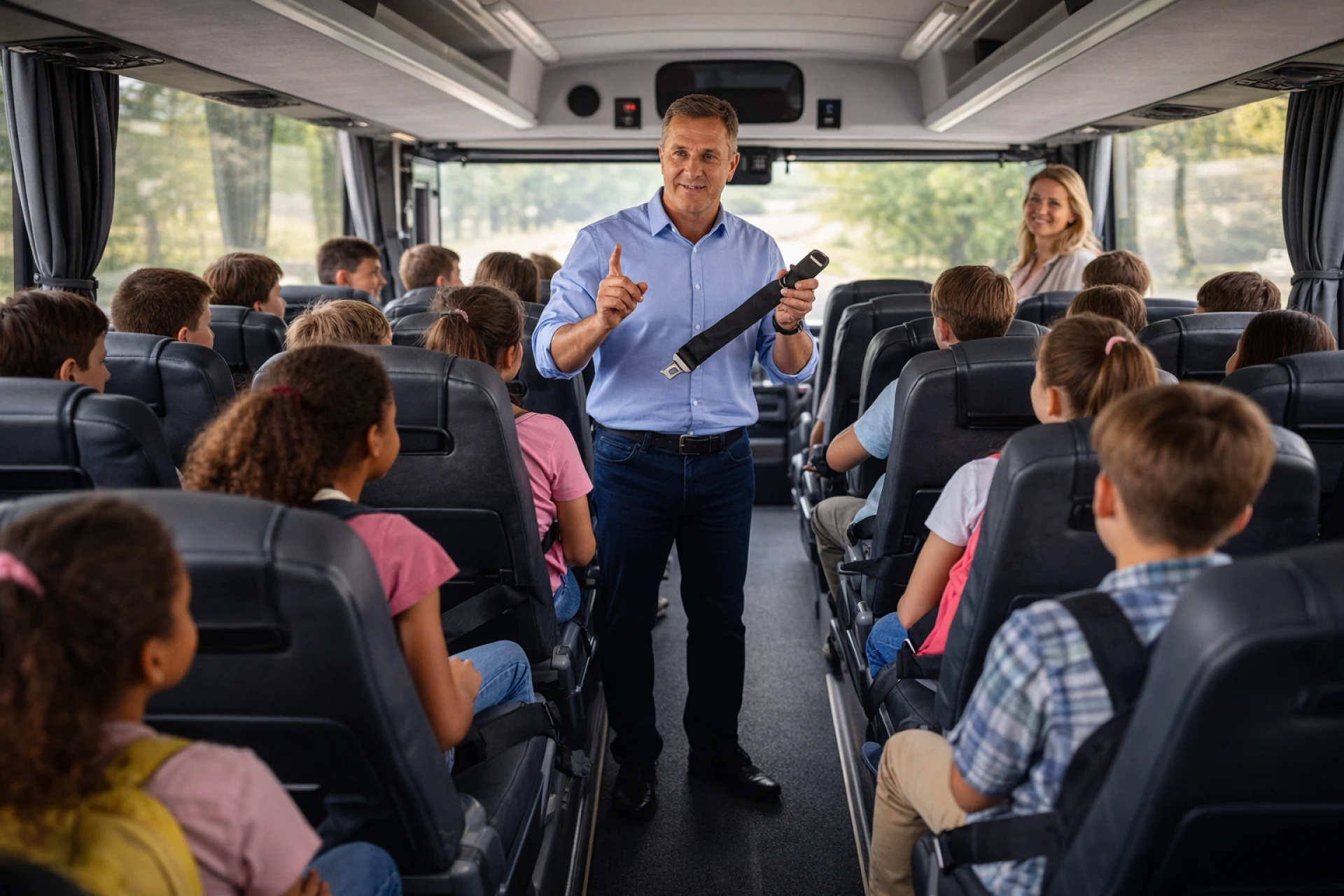
The fastest way seatbelt rules fall apart is when students have to work it out while the bus is moving. They copy the loudest person, not the safest habit. So I keep the briefing short, the same every time, and focused on what they actually need to do—no speeches.
What I say before we roll (30 seconds):
- Find your seat first. Bags down, aisle clear, then sit.
- Buckle straight away. Don’t wait until we’re moving.
- Belt sits low on hips, not on belly. If it’s across the stomach, fix it now.
- If your belt doesn’t click, raise your hand. Don’t swap seats to “find a better one.”
- Stay seated the whole trip. Seatbelts don’t help if people keep standing up.
I also name the “why” in one line: sudden braking is when loose bodies become projectiles. That’s enough to make most students take it seriously without turning it into a scare tactic.
On trips that run as part of school bus services, this matters even more because students build habits in the first week. If buckling is normal from day one, you don’t have to “fight” it later.
How I teach students to wear the belt properly (without making it awkward)
A lot of students think wearing a seatbelt is binary: it’s either on or off. In reality, fit matters. I’ve seen kids wear the belt twisted, clipped behind their back, sitting on it, or pulled so loose it’s basically decorative. Most of that isn’t rebellion—it’s discomfort, rushing, or not knowing what “right” looks like.
Here’s the simple fitting routine I use:
Step 1: Sit back fully.
If they’re perched forward or sideways, the belt won’t sit correctly.
Step 2: Pull the belt flat.
No twists. A twisted belt rubs and students start fiddling with it five minutes later.
Step 3: Position check.
- Lap part low, across hips.
- Shoulder part across the chest, not cutting into the neck.
Step 4: Snug, not tight.
I tell students: if you can fit a hand between your chest and the belt, that’s fine. If you can fit a lunchbox, it’s too loose.
If a student is small and the shoulder belt rides high, I don’t ask them to “just deal with it.” I ask an adult to help adjust seating or positioning (without turning it into a public moment). The goal is compliance that lasts longer than the first ten minutes.
The problems schools see mid-trip—and how I stop them early
Most seatbelt issues show up right after the excitement kicks in: friends calling across rows, students leaning into the aisle, someone wanting to move seats, someone dropping a phone. When that starts, belts become the first thing kids loosen “just for a second.”
This is what I watch for, and what I do immediately:
Common issues
- Clicking in, then unclicking once we move
- Wearing the belt under the arm (comfort choice that can be risky)
- Leaning across the aisle to talk
- Standing to grab something from a bag
- Seat swapping (often starts as “I’m just sitting with my friend”)
My fixes
- I correct early and quietly: “Back in your seat. Buckle on.”
- I use seat moves instead of arguments if it keeps happening.
- I keep one “flex seat” near an adult for students who can’t settle.
- I make bags a rule: essentials on your lap before we leave, not mid-trip.
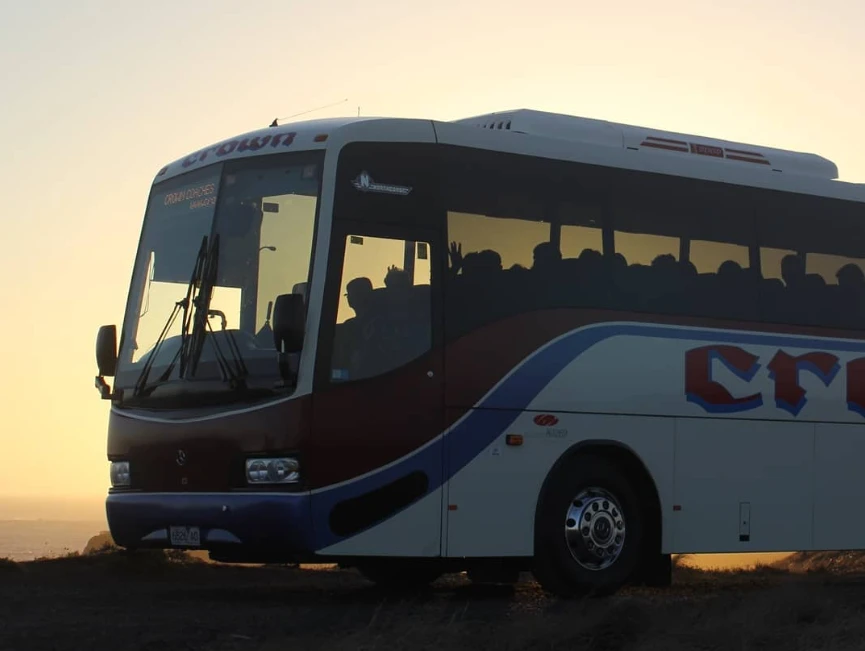
When the vehicle is full—like many coach buses on camp or excursion days—the aisle becomes the danger zone. A single student standing forces others to twist, reach, and shuffle. That’s why I treat “stay seated” as part of seatbelt management, not a separate rule.
The staff routine that makes seatbelts consistent across every trip
The difference between “seatbelts are required” and “seatbelts are worn properly” is adult consistency. If one trip is strict and the next is casual, students learn the rule is optional.
This is the routine I follow with staff:
Before departure
- Adults spread out (front/middle/back) so students can get help fast.
- One adult does a quick visual scan: you’re not checking every buckle, you’re checking patterns—who’s unbelted, who’s twisting, who’s standing.
- If belts are compulsory for the trip, we don’t roll until the baseline is set.
During the trip
- We correct small things immediately so they don’t become the group norm.
- If we stop, we re-set: sit, buckle, then move.
Arrival
- Students stay seated until the vehicle is fully stopped.
- Unbuckle only when told. Then exit row-by-row to stop the aisle crush.
For schools organising coach hire melbourne, I’ve found the smoothest trips are the ones where seatbelt expectations are built into the departure script, not added as an afterthought once the door shuts. It keeps the tone calm and avoids the “everyone argues at once” moment.



















Sign in to leave a comment.