
In UK healthcare facilities, the degree of cleanliness necessary will vary according to the risk of infection within each location. For example, areas assessed as low risk, including administrative offices, hallways, waiting rooms, and staff locations, typically require routine cleaning; however, this is only to remove dirt and to keep them clean on an ongoing basis without any visible signs of contamination or clinical activity.
On the other hand, high-risk areas, which include patient rooms, operating rooms, intensive care units (ICUs), and laboratories, including pathology and microbiology, require both complete cleaning and adequate disinfection.
Cleaning and disinfection protocols must be maintained to minimize cross-contamination and maintain the patient's safety in a patient room. Strict cleaning protocols are essential in areas with an increased susceptibility to infections, for example, operating rooms and intensive care units, due to the high risk associated with the patient population in these locations. Likewise, laboratories must adhere to stricter cleaning processes to eliminate the risk of exposure to toxic or harmful microorganisms.
Choosing the Right Disinfectant Solutions in the UK
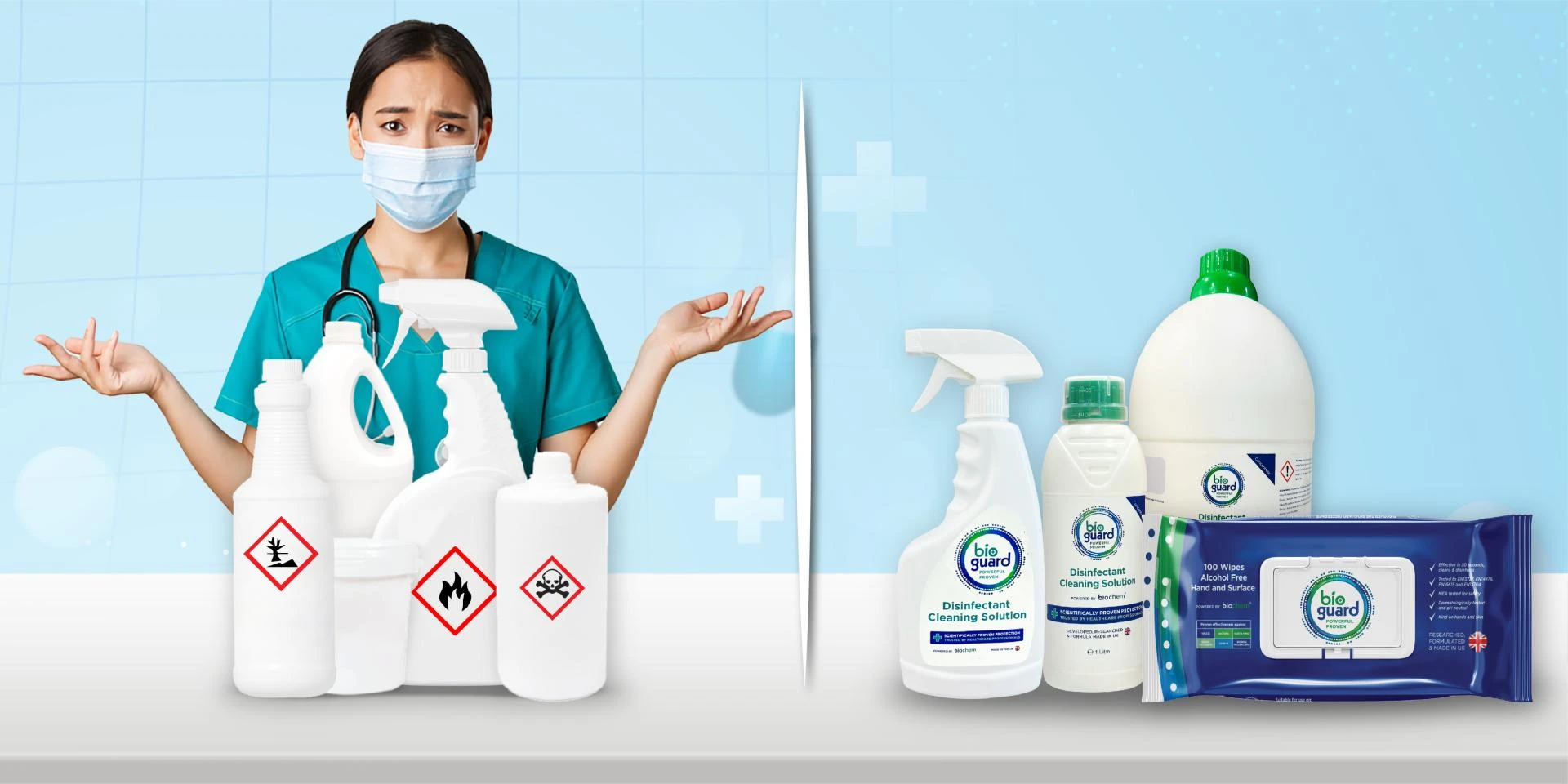
In healthcare environments within the UK, it is important to select the right disinfectant solution for effective infection control. The effectiveness against specific pathogens, required kill time, and safe usage of disinfectant products in conjunction with compatible equipment used to protect the patient should be considered prior to the purchase of disinfectant products from a particular brand. Brands like Bioguard have a diverse range of products for both cleaning and disinfection, which comply with UK regulations and are effective against pathogens.
Difference Between Cleaning and Disinfection in UK
In the UK, disinfection and cleaning are two main areas of focus in ensuring that all healthcare facilities are able to meet the expected level of sanitation. The establishment of effective hygiene practices provides a safe environment for patients, visitors, and the medical staff.
It is also essential to understand that cleaning and disinfection each address a separate aspect of infection prevention and control. Cleaning refers to the elimination of visible dirt and organic matter. The use of disinfection methods is necessary for the destruction of pathogenic microorganisms that can lead to illness or disease.
Patient safety is a core principle of UK healthcare, and effective cleaning and disinfection are essential to maintaining it. When following national infection prevention and control guidelines, staff members must utilize the correct cleaning products in UK, follow proper infection prevention protocols, and practice good hygiene.
Understanding Cleaning and Disinfection in UK
Best cleaning products in United Kingdom is the process of removing visible dirt, dust, and organic matter from a surface by means of water, detergents, and mechanical methods such as scrubbing or wiping. In hospitals, safe, clean environments created through cleaning are essential for preventing and controlling infections.
Cleaning does not kill all microbes on any given surface; it decreases the total population by decreasing the number of microbes on that particular surface. As a result, cleaning reduces the likelihood of transmitting pathogens from one patient to another.
Disinfection is a method of infection control that stops dangerous bacteria, viruses, and other pathogens from spreading. Patients, healthcare personnel, and visitors are all protected by effective disinfection, which also removes the potential risk of cross-contamination.
Key Differences Between Cleaning and Disinfection
As mentioned above, cleaning and disinfection are both equally important. One supports the removal of dirt; the other kills microorganisms. These are two major pillars for safety in healthcare environments.
Cleaning involves scrubbing and wiping with detergents; disinfection relies on chemical disinfectants or specialized systems that are especially created to eliminate pathogens.
Cleaning is effective when reducing microbial levels, but it isn’t reliable for destroying pathogens. Control of bacteria can be regulated using disinfectants, and it's essential in high-risk clinical areas.
Healthcare facilities in the UK are required to follow defined infection prevention and control guidelines, ensuring that cleaning and disinfection are carried out correctly based on risk level, surface type, and clinical setting. Compliance helps protect patient safety and supports national healthcare standards.






















Sign in to leave a comment.