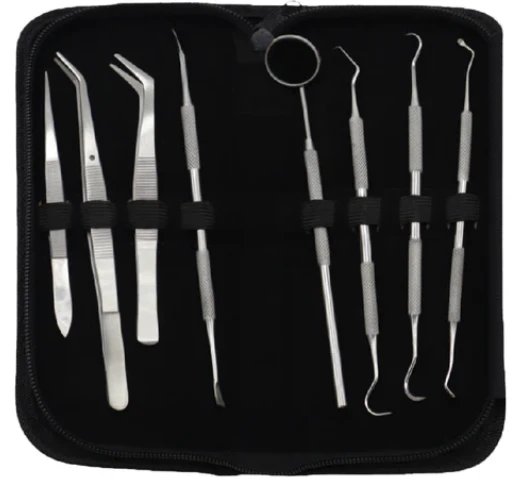

For practical experience and hands-on instruction, dental students mostly rely on their kits. Yet, a lot of trainees unintentionally commit errors that can affect their efficiency, skill growth, and even the instrument's longevity. Students can optimize their learning experience and guarantee that their tools stay in top shape by being aware of these typical hazards and knowing how to avoid them.
1. Improper Handling of Instruments
One of the most common mistakes dental students make is mishandling their instruments. Tools such as explorers, scalers, and forceps require careful handling to maintain their sharpness and precision.
How to Avoid It:
- Always use instruments for their intended purpose.
- Hold tools with a firm yet gentle grip to prevent accidental drops.
- Avoid excessive force, as it can lead to premature wear and tear.
2. Neglecting Proper Sterilization
Sterilization is crucial in preventing contamination and ensuring patient safety. Many students either skip steps in the sterilization process or fail to follow proper protocols.
How to Avoid It:
- Always clean instruments before sterilization to remove debris.
- Follow the recommended autoclaving procedures.
- Store sterilized instruments in a clean and dry environment to prevent contamination.
3. Incorrect Storage of Instruments
Improper storage can lead to damage, rust, and misplacement of essential tools. Many students tend to toss instruments into their kits without organizing them.
How to Avoid It:
- Use designated compartments or pouches to keep instruments organized.
- Ensure instruments are dry before storing them to prevent rusting.
- Regularly check for missing or damaged tools to avoid last-minute inconveniences.
4. Failing to Sharpen Instruments Regularly
Blunt instruments make procedures more difficult and less effective, yet many students overlook the importance of sharpening their tools.
How to Avoid It:
- Regularly inspect tools for dull edges.
- Use appropriate sharpening techniques and tools, such as sharpening stones or honing devices.
- Seek guidance from instructors on the proper way to maintain sharpness.
5. Overlooking Ergonomics and Proper Hand Positioning
Improper hand positioning and poor ergonomics can lead to fatigue, discomfort, and even long-term musculoskeletal issues.
How to Avoid It:
- Maintain a relaxed but firm grip on instruments.
- Adjust posture to avoid strain on the hands and wrists.
- Use ergonomic instruments if available to reduce fatigue.
6. Using Excessive Force on Delicate Instruments
Some instruments, such as mirrors and probes, are delicate and can easily break or bend if excessive force is applied.
How to Avoid It:
- Use a controlled, gentle touch when working with delicate instruments.
- Avoid applying unnecessary pressure during procedures.
- Replace damaged tools promptly to ensure accurate performance.
7. Ignoring Manufacturer Guidelines
Each instrument has specific care instructions provided by the manufacturer, yet many students fail to follow these guidelines.
How to Avoid It:
- Read and understand the manufacturer’s instructions for care and maintenance.
- Follow recommended cleaning and sterilization procedures.
- Use instruments only for their intended purposes to prevent damage.
8. Not Practicing Enough with Their Kit
Many students do not practice enough outside of their clinical sessions, which can slow down their skill development.
How to Avoid It:
- Set aside time for practice at home or in lab sessions.
- Utilize study models or practice kits to enhance proficiency.
- Seek feedback from instructors to improve techniques.
Conclusion
One of the most important resources for a dental student is a dental kit, and how it is handled and maintained can have a big impact on how well they learn. Students can improve their abilities, prolong the life of their instruments, and adequately prepare for their future employment in dentistry by avoiding these typical errors and implementing best practices. They will get the most out of their dental kits for dental students during their schooling and beyond if they are properly maintained, organized, and practiced.
For Further Information Visit: Best Surgical Supply Store




























Sign in to leave a comment.