
A modern Access Control System is no longer a stand-alone lock-and-key upgrade - it is the security backbone of every intelligent building across the UAE. As Dubai, Abu Dhabi, and Sharjah embrace connected infrastructure, integrating access control with Building Management Systems (BMS) has become essential for facility managers who want centralized visibility over doors, lifts, HVAC, and life-safety systems from a single dashboard.
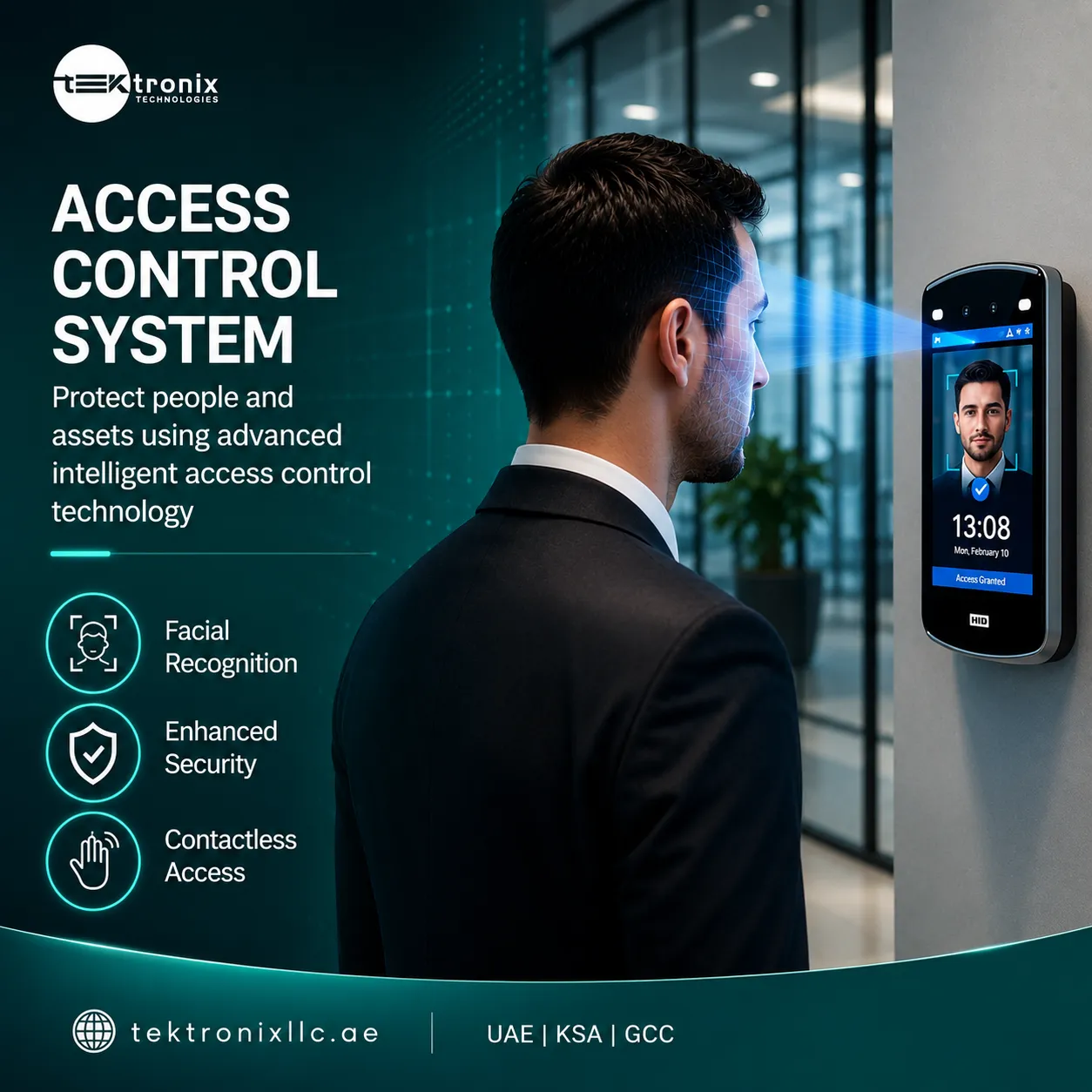
This guide walks through the design, deployment, and day-to-day operations of BMS-integrated access control, and shows where UAE-focused Access Control Solutions fit into that picture - from the reader on the wall to the reporting engine in the control room.
Understanding Access Control Systems in Modern UAE Buildings
An Access Control System governs who can move through a door, gate, turnstile, or lift lobby, and precisely when. Early systems relied on mechanical keys and manual logbooks; today's buildings run on IP-networked controllers, encrypted credentials, and cloud-connected software that ties every access event to a timestamp, a user, and a location.
In the UAE's high-rise residential towers, corporate headquarters, hospitals, and logistics hubs, a well-designed Door Access Control system is the first line of defense against unauthorized entry, and it doubles as an operational tool - tracking occupancy, enforcing shift schedules, and generating audit trails for insurance and regulatory reviews.
Why BMS Integration Matters for UAE Facilities
A Security Access Control system that operates in isolation only tells half the story. When access control is integrated with a Building Management System, a single credential swipe can trigger lighting, adjust HVAC zoning, release fire-rated doors during an alarm, or restrict elevator floors after hours.
● Energy efficiency: unoccupied zones automatically power down HVAC and lighting
● Life-safety coordination: doors unlock automatically on a verified fire alarm signal
● Unified audit trail: access logs, CCTV footage, and BMS events share one timeline
● Reduced operational overhead: one interface instead of five disconnected panels
Design Principles for Integrating Access Control Solutions
Architecture and Network Planning
Before selecting hardware, the network architecture needs to support the integration. Most UAE deployments now run on a Power-over-Ethernet backbone with dedicated VLANs separating access control traffic from general office data, along with redundant controllers at critical doors and a documented failover plan for network outages.
Cybersecurity segmentation is not optional in a BMS-integrated environment - a compromised access control device should never provide a path into building automation or IT networks. Firewalled subnets, certificate-based authentication, and regular firmware patching should be written into the design brief from day one.
Choosing the Right Access Control Device
Every Access Control Device - reader, controller, electric strike, or credential - needs to match the risk profile of the door it protects. A retail entrance and a server room rarely need the same hardware tier.
● Card and fob readers for general staff and tenant access
● PIN keypads as a secondary factor at high-security doors
● Biometric readers for server rooms, pharmacies, and cash-handling areas
● Weatherproof outdoor readers for gates, car parks, and loading docks
For facilities that need multi-factor verification, encrypted credential storage, and real-time synchronization across sites, an Advanced Access Control System combines several of these device types into one managed platform rather than a patchwork of standalone panels.
Biometric Access Control: The Advanced Layer
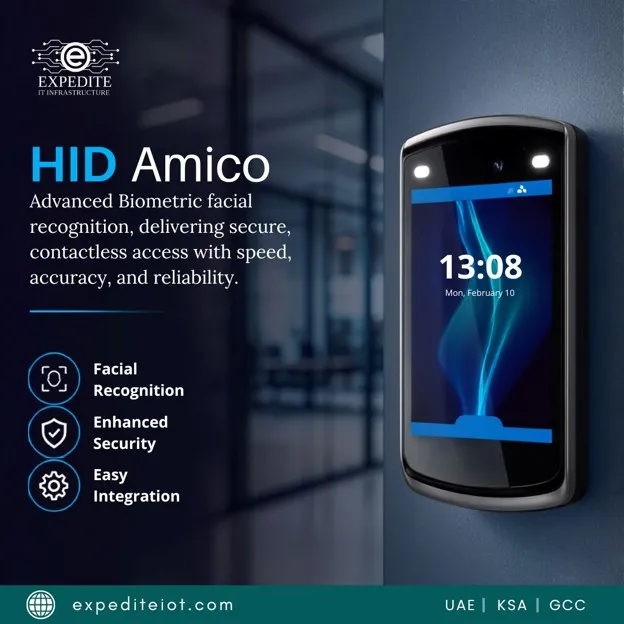
Fingerprint, facial recognition, and iris-based Biometric Access Control has become standard in UAE facilities that handle sensitive assets, data, or cash. Touchless facial recognition, in particular, has gained traction post-pandemic for its combination of hygiene, speed, and spoof-resistance through liveness detection.
Biometric Access Control Dubai - Use Cases
Demand for Biometric Access Control Dubai projects is strongest in commercial towers, data centers, banks, and healthcare facilities, where regulators and insurers increasingly expect a verifiable, non-transferable credential rather than a card that can be lost, shared, or cloned.
Mobile Access Control and Smart Credentials
Smartphone-based Mobile Access Control is reshaping how UAE tenants, visitors, and contractors move through buildings. Bluetooth and NFC credentials let facility managers issue, revoke, or time-limit access remotely - no physical card printing, no reader replacement, and instant deactivation the moment an employee offboards.
QR-code visitor passes generated from a mobile app also reduce front-desk congestion in busy Dubai and Abu Dhabi office towers, while giving security teams a searchable digital record of every guest on site.
Deployment Best Practices Across the UAE Emirates
Rollout strategy differs by emirate, building type, and regulatory environment. The principles below reflect patterns seen across recent UAE deployments.
Access Control System Dubai - Commercial Towers
An Access Control System Dubai project typically spans multi-tenant office towers and mixed-use developments, where phased deployment by floor minimizes tenant disruption and lift-lobby integration is a core requirement from the outset.
Access Control System in Abu Dhabi - Government & Critical Infrastructure
An Access Control System in Abu Dhabi installation, particularly for government or critical-infrastructure sites, generally demands stricter credential vetting, redundant controllers, and closer alignment with national security and civil defense guidelines than a typical commercial rollout.
Access Control System in Sharjah - Educational & Industrial Facilities
For schools, universities, and industrial parks, an Access Control System in Sharjah deployment often prioritizes zoning - separating student, staff, and visitor movement - alongside integration with time-and-attendance and perimeter systems.
Operations, Maintenance & Lifecycle Management
Deployment is only the starting point. Ongoing operations determine whether the investment keeps performing:
● Scheduled firmware and software updates across all controllers and readers
● Quarterly credential audits to remove expired or duplicate access rights
● Preventive maintenance visits for door hardware, strikes, and battery backups
● Periodic penetration testing of the network segment carrying access traffic
● Documented SLAs with response-time commitments for faults at critical doors
Standards, Compliance & Proven Expertise
A UAE-ready Access Control System UAE deployment should be planned around local regulatory expectations - civil defense requirements for fire-linked door release, municipality approvals for new installations, and data-handling practices appropriate for biometric information. Working with an integrator that has hands-on field experience across the UAE and wider GCC - not just catalogue knowledge - is what separates a system that passes inspection from one that has to be reworked.
Tektronix LLC's engineering teams design, install, and support access control and building automation projects across the UAE, drawing on direct site experience in commercial, government, healthcare, and industrial facilities to specify hardware and integration logic that holds up under real operating conditions rather than lab conditions alone.
Choosing the Right Partner for Your Access Control System UAE Project
Whether the requirement is a single-building Door Access Control system or a multi-site rollout with biometric and mobile credentials layered in, the partner selected should be able to design the network architecture, source the right Access Control Device for each door, and remain available for long-term support.
Explore Tektronix LLC's access control system offering to see how design, deployment, and operations come together for UAE facilities, or reach out to discuss a building-specific access control solution for your project.
Conclusion
Integrating access control with a Building Management System turns a security requirement into an operational advantage - tighter energy use, faster emergency response, and a single source of truth for who moved where and when. UAE facilities that get the design right from the network layer up, choose devices matched to each door's risk level, and commit to ongoing maintenance are the ones that avoid costly rework later. Whether the project calls for card-based access, Biometric Access Control, or a mobile-first rollout, the fundamentals stay the same: plan the architecture first, then layer in the technology that fits the building and the emirate it sits in.
FAQs
1. What is the difference between a standalone Access Control System and one integrated with a BMS?
A standalone system only manages door locking and unlocking. A BMS-integrated system shares data with HVAC, lighting, fire alarm, and elevator controls, so a single access event can trigger building-wide responses automatically.
2. Which is better for UAE offices - card-based access or Biometric Access Control?
Card-based readers are cost-effective for general staff access, while biometric readers suit high-security areas such as server rooms and finance departments where credential sharing or loss is a real risk. Many UAE buildings use a mix of both.
3. Can Mobile Access Control replace physical access cards entirely?
In many commercial buildings, yes - smartphone credentials can fully replace cards for staff and regular visitors. Some facilities keep a small stock of physical cards as a backup for guests or during connectivity outages.
4. What compliance requirements apply to an Access Control System Dubai installation?
Dubai installations typically need to account for civil defense requirements around fire-linked door release, municipality approval for new fit-outs, and appropriate handling of any biometric data collected on site.
5. How often should an Advanced Access Control System be audited or upgraded?
A quarterly credential audit and an annual full system review - covering firmware, network segmentation, and hardware condition - is a reasonable baseline for most UAE commercial and institutional buildings.
Biometric Access Control Dubai






























Sign in to leave a comment.