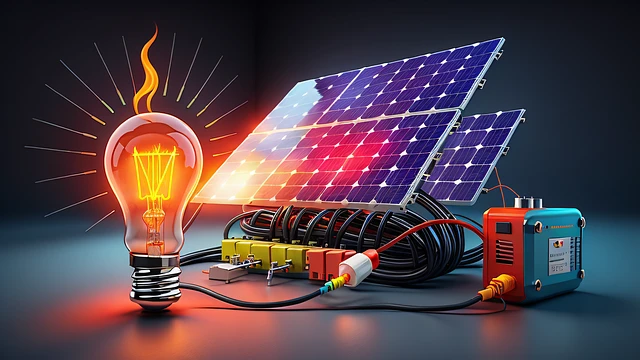

Choosing the wrong solar batteries is one of the most expensive mistakes you can make when building an off-grid system. Batteries are the heart of your setup. Get them right and your system runs smoothly for years. Get them wrong and you're replacing them way sooner than expected.
Here are the most common mistakes people make — and exactly how to avoid them.
Buying the Cheapest Batteries Available
Everyone wants to save money. That's completely understandable. But with solar batteries, cheap almost always means short lifespan, poor performance, and higher long-term cost.
Cheap lead acid batteries might seem like a bargain at $100–$150 each. But if they last only 2–3 years instead of 8–10, you end up spending double.
What to do instead: Compare cost per cycle, not just upfront price. Lithium batteries cost more initially but last 3–4 times longer. Over a 10-year period they almost always work out cheaper.
Wrong Battery Voltage for Your System
This is a technical mistake that beginners make all the time. Your solar batteries must match the voltage of your entire system — inverter, solar charge controller, and panels included.
Running a 12V battery with a 48V inverter simply does not work. It damages your equipment and can create serious safety hazards.
Common voltage systems:
| System Voltage | Best For |
|---|---|
| 12V | Small RVs, vans, tiny cabins |
| 24V | Medium cabins, moderate energy use |
| 48V | Full off-grid homes, high energy needs |
What to do instead: Decide your system voltage first. Then buy everything — batteries, inverter, charge controller — to match that same voltage.
Undersizing Your Battery Bank
This is probably the most common mistake of all. People calculate their daily power usage, buy just enough battery capacity to cover it, then wonder why they run out of power every night.
A properly sized battery bank for solar batteries for off-grid living should cover at least 2–3 days of usage without any solar input. This protects you during cloudy days and poor weather periods.
What to do instead: Multiply your daily watt-hour usage by 2 or 3. That's your minimum battery bank size. Always add a buffer for unexpected usage spikes.
Draining Batteries Too Deep
Every battery has a maximum depth of discharge. Go beyond it regularly and your battery life drops dramatically.
- Lead acid batteries — never discharge below 50%
- AGM batteries — never discharge below 50%
- Lithium batteries — safe down to 80–90% discharge
People who ignore this rule end up replacing their solar batteries in half the expected time. That's hundreds or thousands of dollars wasted.
What to do instead: Set your charge controller to cut off at the correct discharge limit for your battery type. Most modern charge controllers let you program this easily.
Mixing Old and New Batteries
Got a few old batteries lying around? Thinking about adding them to your new battery bank to save money? Don't.
Mixing old and new solar batteries causes the older batteries to drag down the performance of the new ones. Your entire bank performs at the level of the weakest battery. You end up with a system that underperforms and wears out faster.
What to do instead: Always build your battery bank with matched batteries — same brand, same age, same capacity, same chemistry. If you need to expand later, replace the entire bank rather than mixing old with new.
Ignoring Temperature
Batteries are sensitive to temperature. In hot climates they degrade faster. In freezing temperatures they lose significant capacity — sometimes up to 30–40% in extreme cold.
Many people install their solar batteries for off-grid systems in outdoor sheds or garages without any temperature management and wonder why performance drops in winter.
What to do instead: Install batteries in a temperature-controlled space where possible. If outdoor installation is unavoidable, choose lithium batteries with built-in battery management systems that protect against temperature extremes.
Skipping the Battery Management System
A battery management system — or BMS — protects your batteries from overcharging, over-discharging, short circuits, and overheating. Most quality lithium batteries come with a built-in BMS. Lead acid batteries generally do not.
Skipping this protection is like driving without a seatbelt. Everything is fine until suddenly it isn't.
What to do instead: Always use a quality solar charge controller with proper battery protection settings. If you choose lithium, make sure it has a built-in BMS included.
Choosing the Right Solar Batteries
Now that you know what to avoid, choosing the right battery becomes much simpler. Focus on:
- Lithium over lead acid for longer life and better performance
- Correct voltage matching your entire system
- Adequate capacity covering 2–3 days of backup
- Proper depth of discharge settings on your charge controller
- Matched batteries in your bank — no mixing old and new
Shop Solar Batteries at Off Grid Stores
Ready to build a battery bank that actually lasts? Browse our full range of solar batteries at Off Grid Stores. We carry 12V, 24V, and 48V lithium and AGM batteries from trusted brands — perfect for any solar batteries for off-grid living setup.
Free shipping across the USA on every order.



























Sign in to leave a comment.