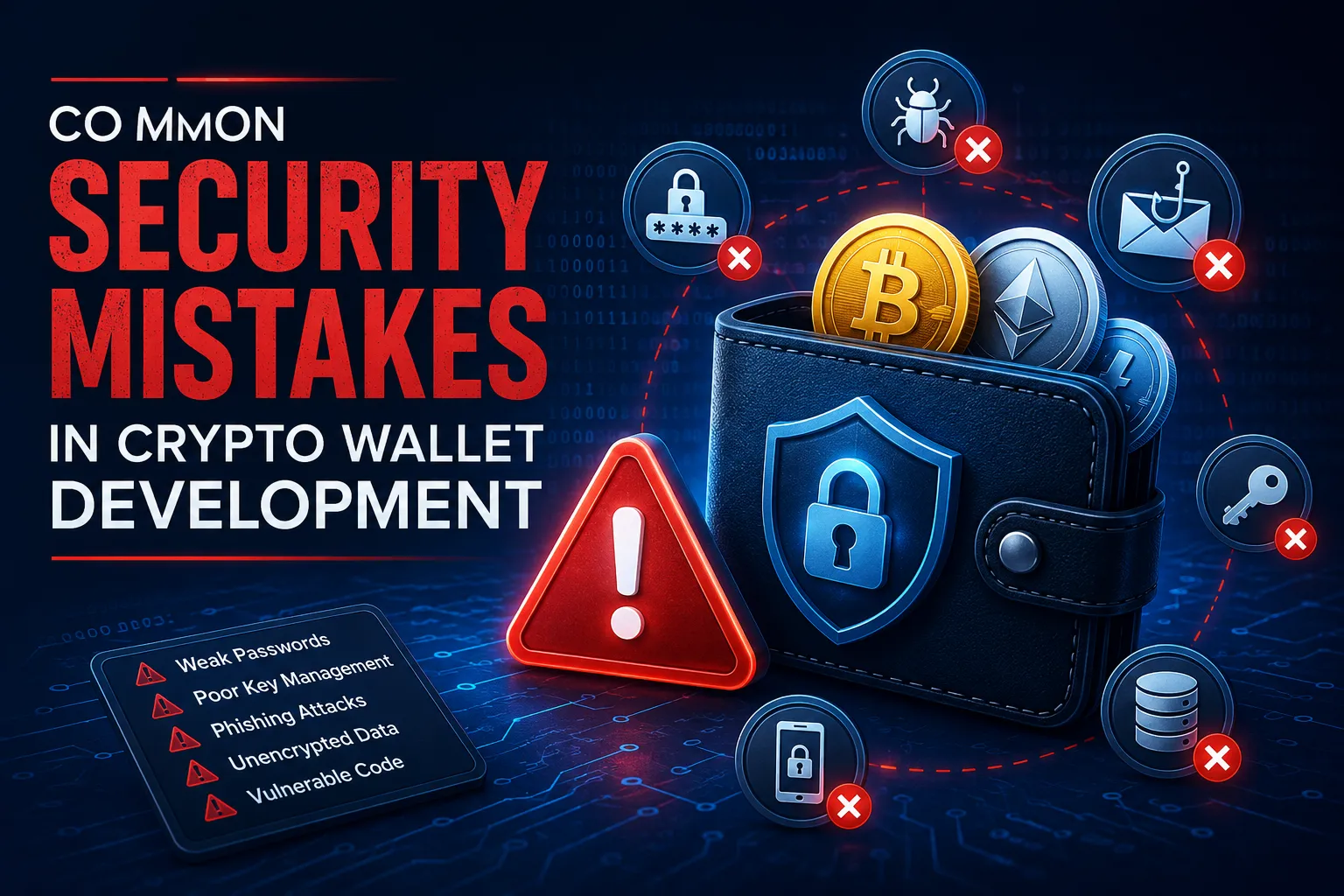

Crypto wallets are used to store, send, receive, and manage digital assets. Because they deal with valuable assets, security should be one of the first things considered when building a crypto wallet.
A small security mistake can lead to stolen funds, exposed private keys, or loss of user trust. Unlike a traditional bank account, crypto transactions usually cannot be reversed once they are completed. This makes wallet security even more important.
Many security problems happen because developers focus mainly on features and forget to protect the wallet at every level. Working with an experienced crypto wallet app development company can help businesses avoid common mistakes and build stronger security from the beginning.
Most common security mistakes to watch out for during crypto wallet development
Now, let's discuss each topic one by one.
1. Poor Private Key Management
Private keys are one of the most important parts of a crypto wallet. Anyone who gets access to a user's private key may be able to control the assets connected to it.
One common mistake is storing private keys in an unsafe location, such as plain text in a database or an unprotected device file.
A better approach is to protect private keys using strong encryption and secure key storage methods. Developers should also limit access to sensitive key information and avoid exposing private keys through application logs, APIs, or error messages.
Private keys should never be treated like normal user data.
2. Using Weak Encryption
Encryption helps protect sensitive wallet information from unauthorized access. However, using outdated or weak encryption methods can create serious security problems.
Some development teams choose encryption methods simply because they are easy to implement. This can leave sensitive information at risk.
The wallet should use well-tested and modern encryption standards. Encryption keys should also be managed separately and protected properly.
Security should not be reduced just to make development faster or cheaper.
3. Storing Sensitive Data Without Proper Protection
Crypto wallets may handle private keys, seed phrases, passwords, transaction details, and other sensitive information.
Keeping this information without proper protection is a major mistake.
For example, storing a seed phrase in plain text can create a serious security risk if the database or device is compromised. Developers should carefully decide what information actually needs to be stored and protect anything that must remain in the system.
The less sensitive information a wallet stores, the smaller the potential attack surface.
4. Ignoring Multi-Factor Authentication
A password alone may not provide enough protection for a crypto wallet, especially when the wallet can manage valuable assets.
Adding multi-factor authentication (MFA) gives users another layer of protection. Even if someone manages to obtain a password, they may still be unable to access the account without the second authentication method.
Depending on the wallet and its users, developers can consider options such as authenticator applications, hardware-based security keys, or other strong authentication methods.
MFA should be simple enough for users to understand while still providing meaningful protection.
5. Not Protecting the Wallet From Phishing Attacks
Not every crypto attack happens because of a technical weakness in the wallet. Users can also be tricked into giving away their credentials or approving a harmful transaction.
Fake websites, emails, wallet extensions, and messages can be designed to look legitimate. A user may unknowingly enter a seed phrase or approve a transaction that sends assets to an attacker.
Wallet applications should clearly explain what users are approving. Warning messages can also help users recognize suspicious actions.
Security education is just as important as technical protection.
6. Failing to Secure APIs
APIs connect different parts of a crypto wallet system. If an API is poorly protected, attackers may try to use it to access sensitive information or perform unauthorized actions.
Common mistakes include weak authentication, poor access control, missing rate limits, and exposing unnecessary information through API responses.
Developers should protect APIs with proper authentication and authorization. Access should be limited based on what each user or service actually needs.
Regular API security testing can also help identify weaknesses before attackers find them.
7. Skipping Security Testing
One of the biggest mistakes is assuming that a wallet is secure simply because it works correctly.
Security testing should be performed throughout the development process, not only before launch.
Developers should test authentication, private key handling, transaction processing, APIs, data storage, and other sensitive parts of the application.
Penetration testing and code reviews can also help identify vulnerabilities that may not be obvious during normal development.
A crypto wallet app development company should treat security testing as an ongoing process rather than a final checklist item.
8. Poor Transaction Validation
Crypto transactions involve sending assets to blockchain addresses. If transaction details are not properly checked, users may accidentally send funds to the wrong address or approve an unexpected transaction.
The wallet should clearly display important transaction information before the user confirms it. This can include the receiving address, amount, network, and transaction fee.
Developers should also validate transaction data before it is signed and sent to the blockchain.
A clear confirmation process can prevent many avoidable mistakes.
9. Ignoring Smart Contract Risks
Some crypto wallets interact with smart contracts, decentralized applications, and DeFi platforms. These interactions can create additional security risks.
A wallet may be technically secure but still expose users to risky smart contracts or malicious transactions.
Developers should consider how contract interactions are presented to users. Where possible, the wallet should provide clear information about what a transaction or contract approval will do.
Users should not be encouraged to approve actions they cannot understand.
10. Not Keeping the Wallet Updated
Security threats change over time. New vulnerabilities can be discovered in libraries, blockchain networks, operating systems, and third-party services.
Leaving an old version of a wallet running for too long can increase security risks.
Developers should regularly update dependencies, review security patches, monitor vulnerabilities, and release necessary fixes.
A proper update process also helps maintain compatibility with changing blockchain networks and security standards.
11. Giving Too Much Access to Employees
Internal access can become a security risk when employees or development teams have more permissions than they need.
For example, not every team member should be able to access production systems, sensitive databases, or wallet-related information.
Following the principle of least privilege can reduce this risk. Each person should receive only the access required to perform their job.
Activity logs and access monitoring can also help businesses identify unusual behavior.
12. Choosing Development Speed Over Security
Businesses sometimes try to launch a crypto wallet as quickly as possible. While speed matters, cutting security steps can create much bigger problems later.
Skipping proper testing, using unverified third-party code, or ignoring security reviews may save time during development but can result in expensive security problems after launch.
This is why choosing an experienced crypto wallet app development company can make a difference. A reliable development team can help businesses plan security alongside features instead of treating it as an afterthought.
How to Build a More Secure Crypto Wallet
Security should be included from the planning stage of crypto wallet development. Some important practices include:
- Use strong encryption for sensitive information.
- Protect private keys and seed phrases carefully.
- Add multi-factor authentication where appropriate.
- Use secure API authentication and access controls.
- Perform regular security and penetration testing.
- Keep third-party libraries and dependencies updated.
- Validate transaction information before signing.
- Follow the principle of least privilege.
- Monitor unusual login and transaction activity.
- Educate users about phishing and suspicious transactions.
- Keep detailed security logs without exposing sensitive information.
Businesses should also select their development partner carefully. Nimble AppGenie focuses on building fintech and blockchain applications with security considered throughout the development process.
Final Thoughts
Crypto wallet security is not something that can be added at the end of development. Private keys, user accounts, transactions, APIs, smart contract interactions, and internal systems all need proper protection.
The goal is not only to build a wallet with useful features but also to give users confidence when managing their digital assets.
Avoiding common mistakes such as weak key protection, poor encryption, weak APIs, limited testing, and careless transaction handling can make a major difference.
With the right security practices and support from a reliable development team, businesses can build a crypto wallet that is safer, easier to use, and better prepared for future threats. Nimble AppGenie can help businesses plan and develop secure crypto wallet solutions based on their specific requirements.






























Sign in to leave a comment.