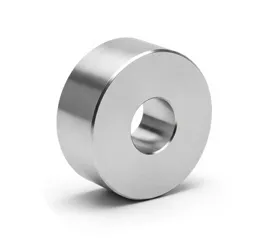

Precision components play a crucial role in ensuring the stability, alignment, and reliability of modern assemblies. Among these components, threaded aluminum spacers have become widely used across industries because they provide secure fastening solutions while maintaining accurate spacing between parts. Whether used in electronics, telecommunications equipment, automotive systems, or industrial machinery, these spacers contribute significantly to the structural integrity and performance of assembled products.
An aluminum threaded spacer offers several advantages, including lightweight construction, corrosion resistance, ease of machining, and compatibility with a wide range of fastening systems. Available in various configurations and thread styles, threaded spacers help engineers achieve durable and efficient assemblies without adding unnecessary weight to the final product.
Understanding Threaded Aluminum Spacers
Threaded aluminum spacers are precision-machined components featuring internal, external, or combined threading that allows them to be integrated into mechanical assemblies using screws, bolts, or studs.
Unlike plain spacers, threaded spacers provide additional fastening functionality while maintaining a predetermined distance between components.
These spacers are commonly manufactured from aluminum alloys because aluminum delivers an excellent balance between strength, machinability, and weight reduction.
Their primary functions include:
- Supporting mounted components
- Maintaining proper alignment
- Preventing compression damage
- Reducing vibration
- Improving assembly stability
- Simplifying installation and maintenance
Threaded spacers are available in standard sizes, but manufacturers can also produce customized versions to meet specific design requirements.
Why Aluminum Is Preferred for Threaded Spacers
Lightweight Material
Aluminum weighs significantly less than steel, brass, or copper, making it highly suitable for applications where minimizing overall assembly weight is important.
Industries such as aerospace, electronics, and electric vehicle manufacturing frequently prioritize aluminum components because weight savings can directly improve efficiency and performance.
Excellent Corrosion Resistance
One of aluminum's most valuable characteristics is its ability to form a protective oxide layer naturally.
This surface protection helps threaded spacers resist:
- Moisture exposure
- Mild chemical environments
- Atmospheric corrosion
- Outdoor operating conditions
As a result, aluminum spacers often require little maintenance throughout their service life.
Easy Machining Capabilities
Aluminum is relatively easy to machine, thread, and finish, allowing manufacturers to produce precision components with tight tolerances.
This capability is particularly beneficial when customers require specialized dimensions or custom thread specifications.
Cost-Effective Manufacturing
Compared to many specialty metals, aluminum offers an economical solution for high-volume production while still maintaining excellent mechanical performance.
Common Types of Threaded Aluminum Spacers
Several spacer configurations are available to accommodate different assembly requirements.
1. Female-Female Threaded Spacers
Female-female spacers contain internal threads at both ends.
These are among the most commonly used threaded aluminum spacers in electronic assemblies and panel mounting applications.
Typical Uses
- Printed circuit boards
- Control systems
- Communication devices
- LED lighting assemblies
- Instrument panels
Advantages
- Easy installation
- Secure fastening
- Compact design
- Reusable for maintenance purposes
They allow screws to be inserted from either side, making assembly procedures more convenient.
2. Male-Female Threaded Spacers
Male-female spacers feature an externally threaded stud on one end and an internally threaded hole on the opposite end.
This design simplifies stacked installations and allows multiple components to be mounted vertically.
Common Applications
- Multi-level PCB assemblies
- Industrial controllers
- Battery systems
- Automation equipment
Benefits
- Supports layered assemblies
- Reduces hardware requirements
- Speeds up installation processes
These spacers are especially useful where space constraints demand efficient component arrangement.
3. Male-Male Threaded Spacers
Male-male spacers include external threads on both ends.
They function similarly to studs and are often used when connecting two internally threaded components.
Applications
- Electrical enclosures
- Sensor mounting
- Robotics equipment
- Mechanical housings
Key Benefits
- High assembly flexibility
- Strong fastening capability
- Suitable for modular designs
Their configuration makes them valuable in specialized engineering projects.
4. Hex Threaded Aluminum Spacers
Hexagonal spacers are among the most recognizable spacer designs.
Their six-sided exterior allows installers to tighten or remove them easily using standard tools.
Popular Industries
- Electronics manufacturing
- Aerospace assemblies
- Telecommunications equipment
- Medical devices
Advantages
- Improved grip during installation
- Faster assembly times
- Enhanced torque application
Hex spacers are widely preferred in applications requiring frequent maintenance.
5. Round Threaded Spacers
Round spacers feature a cylindrical body with threaded ends.
They provide a clean appearance and are often selected when aesthetics are important.
Common Uses
- Consumer electronics
- Decorative lighting systems
- Compact machinery
- Laboratory equipment
Benefits
- Smooth profile
- Space-efficient design
- Lightweight construction
Round spacers can also be anodized to improve appearance and corrosion resistance.
6. Custom Threaded Aluminum Spacers
Standard products may not always meet complex engineering requirements.
Custom manufacturing enables companies to obtain an aluminum threaded spacer tailored to exact project specifications.
Customization options include:
- Unique lengths
- Metric or imperial threads
- Special coatings
- Hollow designs
- Reduced weight profiles
- Precision tolerances
Custom solutions help manufacturers improve product performance while reducing assembly challenges.
Industrial Applications of Threaded Aluminum Spacers
Electronics Industry
The electronics sector represents one of the largest markets for threaded spacers.
They help support and separate delicate components while ensuring proper airflow and electrical insulation.
Applications include:
- Server racks
- Routers
- Circuit boards
- Audio equipment
- Power supplies
Threaded spacers also simplify maintenance because technicians can easily remove and reinstall mounted parts.
Automotive Industry
Vehicle manufacturers increasingly use lightweight components to improve fuel efficiency and support electric vehicle development.
Threaded aluminum spacers are commonly found in:
- Dashboard modules
- Battery packs
- Electronic control units
- Lighting assemblies
- Sensor mounting systems
Their low weight contributes to overall vehicle optimization.
Telecommunications Equipment
Telecommunication systems often contain densely packed components requiring precise positioning.
Threaded spacers assist in:
- Antenna installations
- Signal processing equipment
- Data centers
- Networking hardware
They ensure stable mounting while allowing access for future servicing.
Aerospace Applications
Weight reduction remains a top priority in aerospace engineering.
Manufacturers utilize threaded aluminum spacers in:
- Navigation systems
- Cabin electronics
- Communication equipment
- Instrumentation panels
Their high strength-to-weight ratio supports aircraft performance objectives.
Industrial Automation
Automation equipment depends heavily on precise component alignment.
Threaded spacers help secure:
- PLC systems
- Sensors
- Machine guards
- Control cabinets
- Robotic assemblies
Reliable spacing reduces vibration and improves operational consistency.
Factors to Consider When Selecting Threaded Aluminum Spacers
Several considerations influence spacer selection.
Thread Type
Engineers must determine whether the application requires:
- Female-female threads
- Male-female threads
- Male-male threads
Choosing the appropriate thread style simplifies installation and improves assembly reliability.
Spacer Length
Spacer length affects component clearance, airflow, and accessibility.
Incorrect spacing can lead to alignment problems and equipment failure.
Material Grade
Different aluminum alloys provide varying levels of strength, machinability, and corrosion resistance.
Selecting the right grade ensures long-term durability.
Surface Finish
Manufacturers may apply anodized coatings to enhance:
- Wear resistance
- Appearance
- Environmental protection
Colored anodized finishes can also support branding requirements.
The Future of Threaded Spacer Manufacturing
Demand for lightweight, high-performance components continues increasing worldwide.
Several trends are shaping the spacer industry:
- Expansion of electric vehicles
- Growth in renewable energy systems
- Increased miniaturization of electronics
- Adoption of advanced CNC machining
- Greater emphasis on customized solutions
As manufacturing technologies evolve, threaded aluminum spacers will remain essential components for industries seeking precision, efficiency, and reliability.
Conclusion
Threaded aluminum spacers provide a practical and highly versatile solution for maintaining spacing, improving alignment, and securing components in modern assemblies. Available in female-female, male-female, male-male, hexagonal, round, and custom configurations, these components support a broad range of industrial applications.
From electronics and telecommunications to automotive and aerospace sectors, an aluminum threaded spacer offers the ideal combination of lightweight performance, corrosion resistance, and precision engineering. By selecting the appropriate spacer type and specifications, manufacturers can improve assembly quality, reduce maintenance requirements, and enhance overall product reliability.

























Sign in to leave a comment.