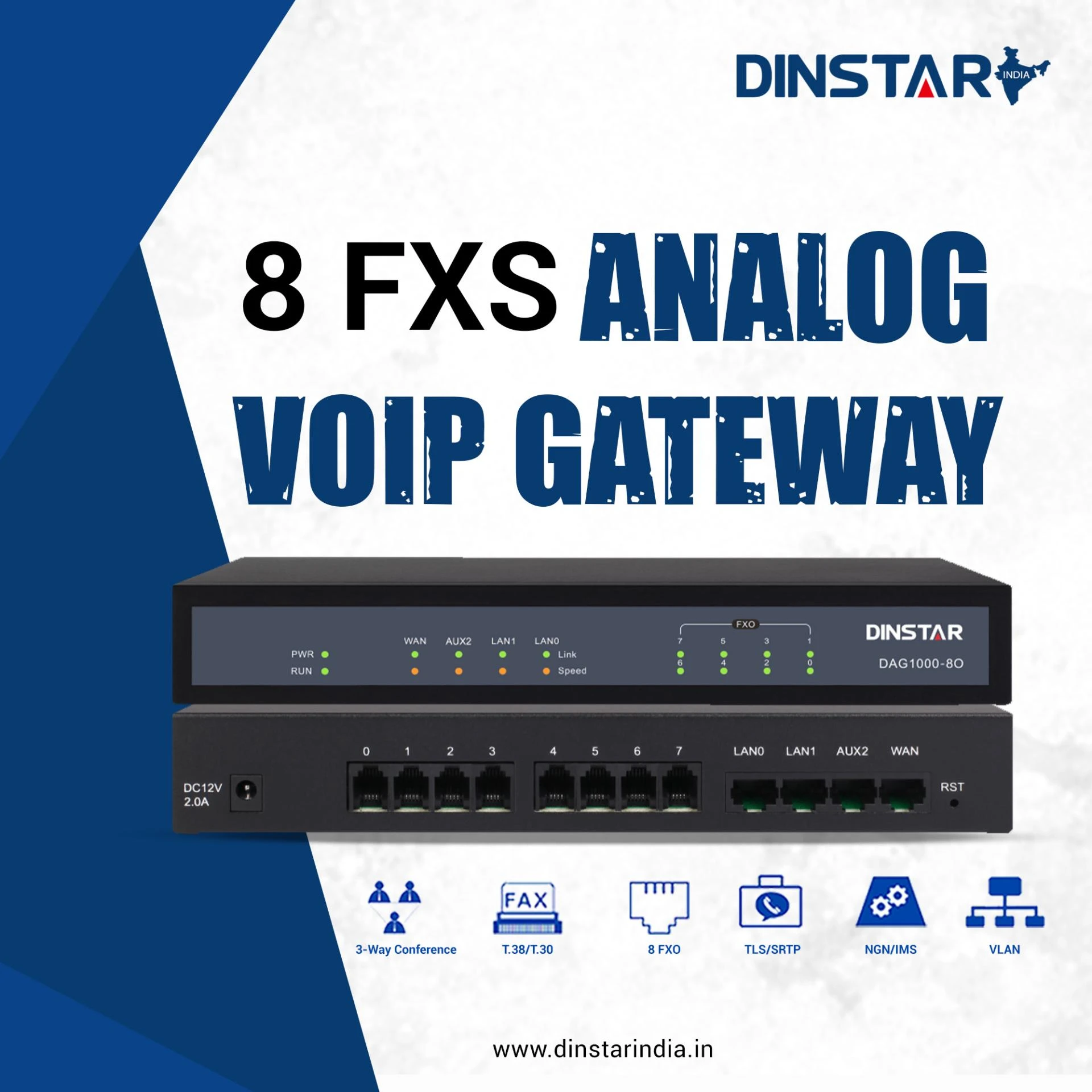

In the world of VoIP communication, the 8 Port FXS Gateway stands out as a crucial device for businesses aiming to transition from traditional telephony systems to advanced IP-based communication networks. Whether you're running a small office or a multi-branch enterprise, integrating an FXS gateway into your infrastructure can significantly improve the efficiency, cost-effectiveness, and scalability of your voice communication systems. In this comprehensive guide, we will delve into what an 8 Port FXS Gateway is, how it works, its key features, benefits, and how to choose the right one for your needs.
What is an 8 Port FXS Gateway?
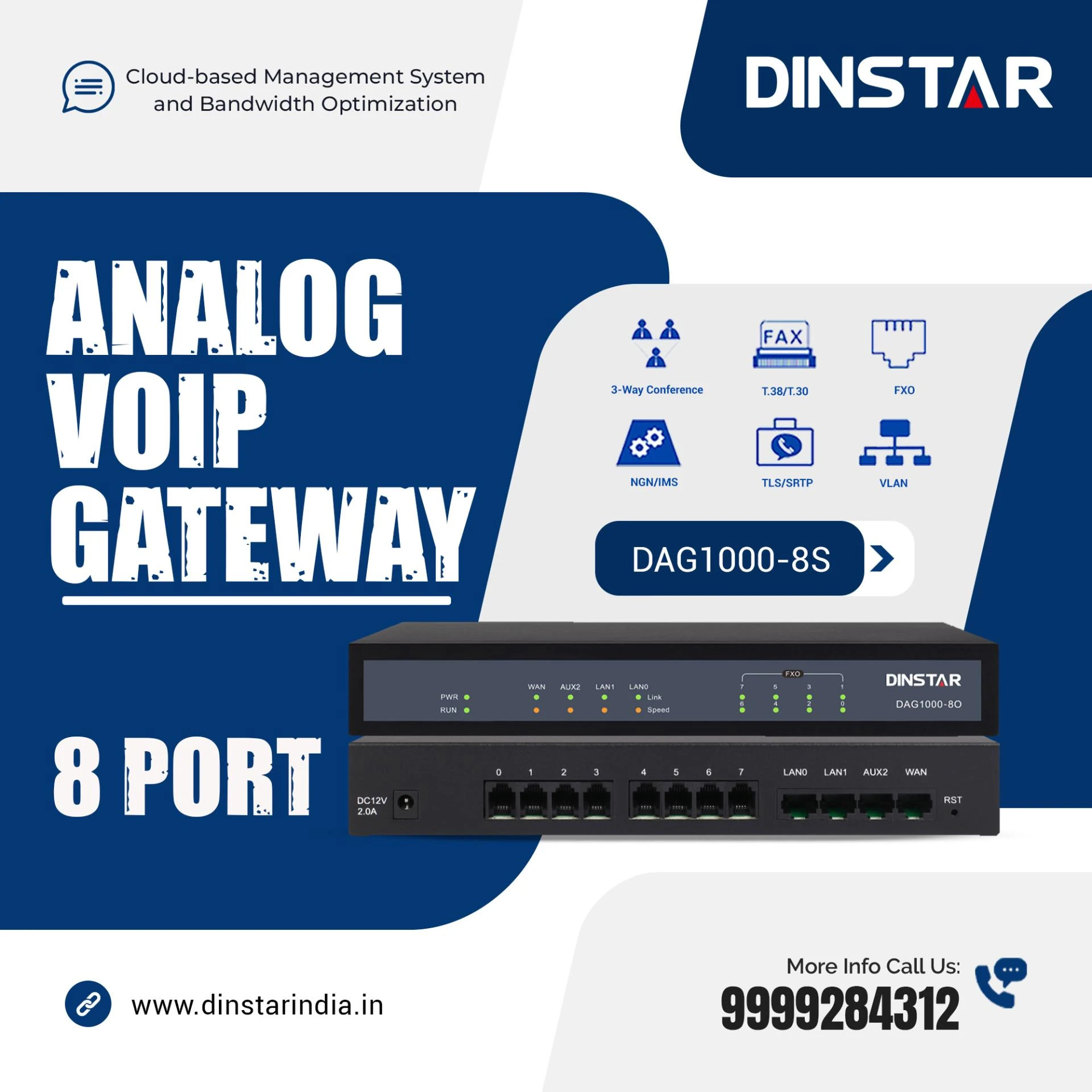
An 8 Port FXS Gateway is a telephony device that connects traditional analog telephones, fax machines, or PBX systems to a Voice over IP (VoIP) network. FXS stands for Foreign Exchange Subscriber, which refers to the port that delivers the analog line to the subscriber. An 8 Port FXS Gateway means it has 8 FXS ports, allowing up to eight analog devices to be connected to a VoIP network simultaneously. This makes it ideal for small to medium-sized businesses that want to retain their analog equipment while leveraging the benefits of modern IP telephony.
How Does an FXS Gateway Work?
The main function of an FXS gateway is to convert analog voice signals into digital IP packets that can be transmitted over the internet. When a user picks up an analog phone connected to the gateway, it sends a signal through the FXS port, which is then converted into a SIP (Session Initiation Protocol) call and routed through the VoIP network. Similarly, incoming VoIP calls are converted into analog signals and directed to the respective FXS port, allowing communication with traditional phones. This seamless integration enables businesses to modernize their communication systems without replacing all existing equipment.
Key Features of an 8 Port FXS Gateway
High Port Density: With 8 FXS ports, this gateway allows multiple analog devices to connect simultaneously, providing scalability for expanding offices or businesses with multiple departments. SIP Protocol Support: Most FXS gateways support SIP, ensuring interoperability with a wide range of IP-PBX systems, IP phones, and VoIP service providers. Voice Compression: Advanced voice codecs such as G.711, G.729, G.723, and G.726 are supported for efficient bandwidth utilization without compromising call quality. Echo Cancellation: Built-in echo cancellation ensures crystal-clear audio during conversations by eliminating feedback and background noise. Web-Based Management: An intuitive web interface enables easy configuration, monitoring, and firmware updates, simplifying device management. Security Features: Support for TLS and SRTP ensures secure communication over IP networks, protecting against eavesdropping and data breaches. Failover and Redundancy: Many 8 Port FXS gateways offer failover capabilities, automatically routing calls through alternate networks in case of IP failure. Compact Design: Designed to save space, these gateways often feature a sleek and compact form factor that fits easily into rack systems or desktop setups.
Benefits of Using an 8 Port FXS Gateway
Cost Savings: One of the biggest advantages is the significant reduction in communication costs. By using VoIP instead of traditional PSTN lines, businesses can save on long-distance and international calls. Investment Protection: Businesses don’t have to discard their existing analog phones or PBX systems. The FXS gateway acts as a bridge, allowing continued use of older equipment with new IP networks. Easy Integration: These gateways are typically plug-and-play, making them easy to install and configure without specialized IT expertise. Scalability: As your business grows, you can easily add more gateways or transition to a fully IP-based solution when ready, making FXS gateways a future-proof investment. Enhanced Features: VoIP networks offer advanced calling features such as voicemail-to-email, auto-attendant, call forwarding, and conference bridging, which can be accessed even on analog devices via the FXS gateway.
Applications of 8 Port FXS Gateway
Office Telephony: Ideal for small businesses or branch offices that use analog phones but want to connect them to a centralized VoIP system. Hotels and Hospitality: Many hotels use analog phones in guest rooms. An 8 Port FXS Gateway allows integration of these phones into a modern communication system without replacing the infrastructure. Educational Institutions: Schools and colleges can use FXS gateways to modernize their communication systems while retaining existing analog devices. Healthcare Facilities: Hospitals and clinics often rely on analog fax machines for transmitting patient data. FXS gateways allow these machines to operate over IP networks. Call Centers: Call centers that operate with legacy phone systems can use FXS gateways to transition gradually to VoIP without disrupting operations.
How to Choose the Right 8 Port FXS Gateway
When selecting an 8 Port FXS Gateway, consider the following factors: Compatibility: Ensure the gateway is compatible with your existing PBX system, VoIP provider, or SIP trunk. Audio Quality: Look for gateways that support advanced codecs and echo cancellation to guarantee high voice clarity. Management Tools: A user-friendly web interface or centralized management software will make it easier to configure and maintain the gateway. Reliability: Opt for devices with proven uptime and failover features to ensure uninterrupted communication. Support & Warranty: Choose a brand that offers excellent customer support, software updates, and a solid warranty period. Budget: While cost is a factor, don’t compromise on essential features and reliability just to save upfront costs.
Popular Brands Offering 8 Port FXS Gateways
Several reputed telecom equipment manufacturers offer high-quality 8 Port FXS Gateways. Some of the popular brands include: Dinstar: Known for its feature-rich, cost-effective VoIP gateways, Dinstar offers excellent performance, robust security, and easy scalability. Grandstream: Offers user-friendly interfaces, high reliability, and broad compatibility with third-party systems. Yeastar: Known for excellent support and seamless integration with their IP PBX solutions. Cisco: Ideal for enterprise environments with advanced networking and security features. Sangoma: Offers gateways designed specifically for business VoIP applications with solid performance and support.
Conclusion
The 8 Port FXS Gateway is an essential component for any business looking to modernize its communication system without abandoning existing analog infrastructure. It provides the perfect balance between traditional telephony and modern IP-based communication, offering flexibility, cost savings, and scalability. By understanding its functionality, benefits, and applications, and by choosing the right device based on your specific requirements, you can ensure seamless communication and future-proof your business operations. Whether you're upgrading your small office network or managing multiple analog lines across branches, an 8 Port FXS Gateway can be a smart and strategic investment.






























Sign in to leave a comment.