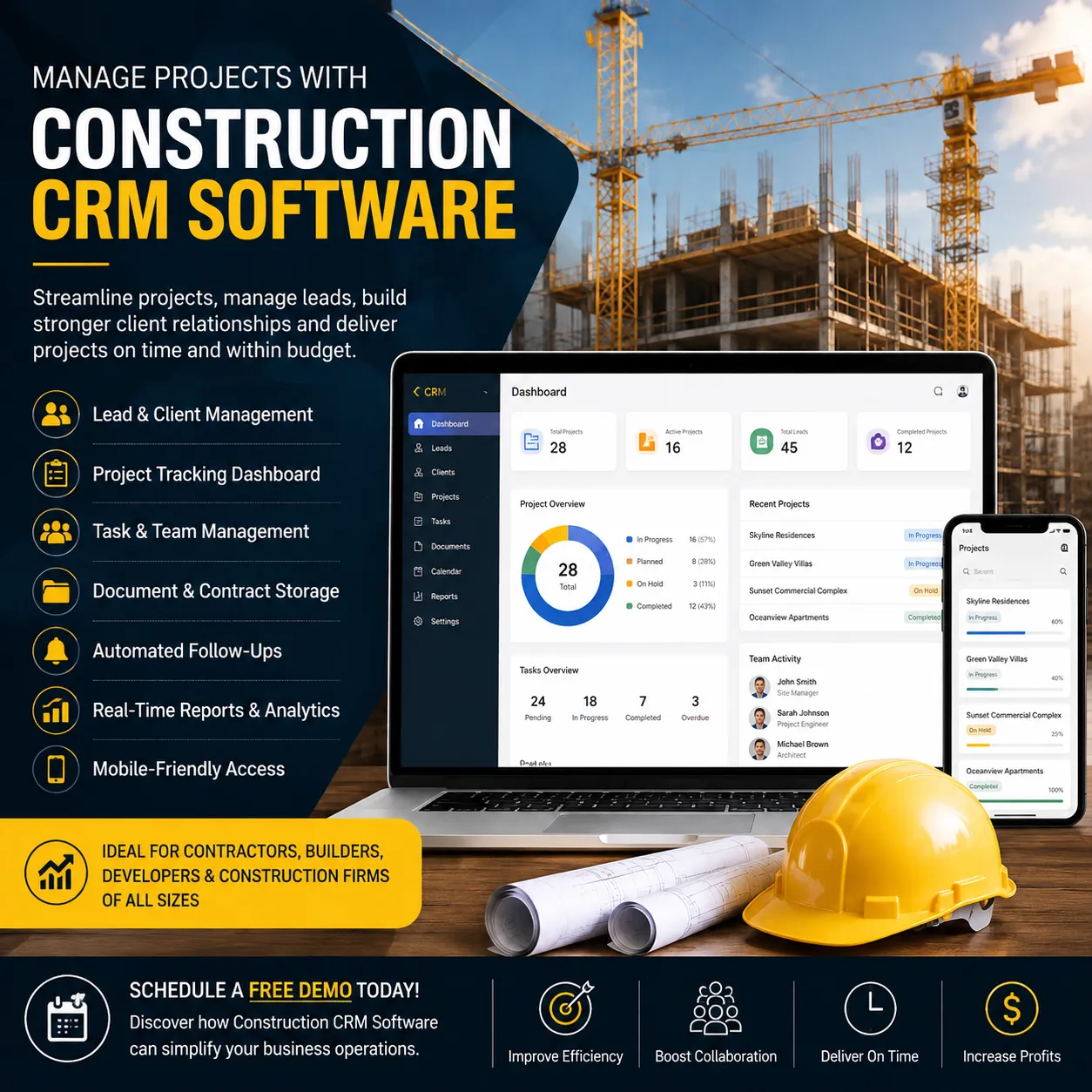

The construction industry relies on effective communication, accurate project planning, and strong customer relationships to complete projects successfully. However, managing leads, clients, contractors, estimates, schedules, and project updates using spreadsheets or disconnected tools often results in delays and inefficiencies. This is why many businesses are investing in Construction CRM Software to streamline operations and improve project outcomes.
Construction CRM Software is designed specifically for contractors, builders, developers, and construction companies. It combines customer relationship management with project management features, helping businesses organize their sales process, improve collaboration, and increase productivity. This buyer's guide explains everything you need to know before selecting the right solution for your business.
What Is Construction CRM Software?
Construction CRM Software is a specialized customer relationship management platform built for the construction industry. It helps businesses manage leads, customer information, project details, sales opportunities, contracts, tasks, and communication from a centralized dashboard.
Unlike generic CRM systems, construction-focused solutions include features that support estimating, project tracking, scheduling, document management, and collaboration between office staff and field teams.
Why Construction Companies Need CRM Software
Construction projects involve multiple stakeholders, including clients, architects, engineers, contractors, and suppliers. Without a centralized system, important information can become scattered across emails, spreadsheets, and paperwork.
Construction CRM Software solves these challenges by providing one platform to manage customer interactions, monitor project progress, assign responsibilities, and maintain organized records. This improves communication, reduces administrative work, and minimizes costly mistakes.
Essential Features to Look For
When evaluating Construction CRM Software, focus on features that directly support your daily operations.
Lead and Opportunity Management
The software should capture leads from multiple sources, organize prospects, and track every stage of the sales pipeline. Automated follow-up reminders help your sales team convert more inquiries into projects.
Customer Relationship Management
A comprehensive customer database allows you to store contact information, communication history, project records, quotations, and contracts in one secure location.
Project Management
Choose software that includes project scheduling, milestone tracking, task assignment, deadline management, and progress monitoring. These features help ensure projects stay on schedule and within budget.
Document Management
Construction businesses handle contracts, permits, invoices, blueprints, and project documents every day. A CRM should securely store these files while allowing quick access whenever needed.
Task Automation
Automation reduces repetitive work by sending reminders, assigning tasks, scheduling follow-ups, and generating notifications automatically.
Reporting and Analytics
Real-time dashboards provide valuable insights into sales performance, project status, team productivity, and revenue. These reports support faster and more informed decision-making.
Mobile Accessibility
Field engineers, supervisors, and contractors need access to project information while on-site. Mobile-friendly CRM software enables teams to update project progress, upload images, and communicate from anywhere.
Benefits of Construction CRM Software
Investing in Construction CRM Software offers several advantages for construction companies.
Organizes customer and project information in one place
Improves lead conversion rates
Enhances communication between office and field teams
Automates repetitive administrative tasks
Tracks project timelines and milestones
Provides real-time business insights
Increases employee productivity
Improves customer satisfaction
Supports business growth through better operational efficiency
These benefits help businesses complete projects more efficiently while maintaining strong client relationships.
Questions to Ask Before Buying
Before selecting a CRM solution, consider the following questions:
Does the software meet your current business requirements?
Can it scale as your company grows?
Is the interface easy for your team to learn?
Does it integrate with accounting, ERP, or project management software?
Is cloud-based access available?
What security measures protect your business data?
What level of customer support and training is included?
Does the pricing fit your budget?
Evaluating these factors will help you choose software that delivers long-term value.
Cloud-Based vs. On-Premise CRM
Many businesses now prefer cloud-based Construction CRM Software because it offers remote access, automatic updates, lower maintenance costs, and easy scalability. Teams can work from the office or job site without worrying about server maintenance.
On-premise CRM solutions provide greater control over infrastructure but require higher upfront investment, dedicated IT resources, and ongoing maintenance. Most small and medium-sized construction companies find cloud-based systems more practical and cost-effective.
How to Choose the Right Construction CRM Software
Start by identifying your business challenges and operational goals. List the features your team needs most, compare multiple vendors, request product demonstrations, and read customer reviews. Testing the software through a free trial allows your team to evaluate usability before making a final decision.
Choose a solution that offers flexibility, reliable customer support, regular updates, and room for future growth.
Conclusion
Selecting the right Construction CRM Software is an important investment for any construction business. The right platform helps manage leads, strengthen customer relationships, streamline project management, improve collaboration, and increase overall productivity.
Rather than choosing software based solely on price, focus on functionality, scalability, ease of use, integration capabilities, and vendor support. A well-designed Construction CRM solution can simplify daily operations, reduce project delays, and position your business for long-term success in an increasingly competitive construction industry.


























Sign in to leave a comment.