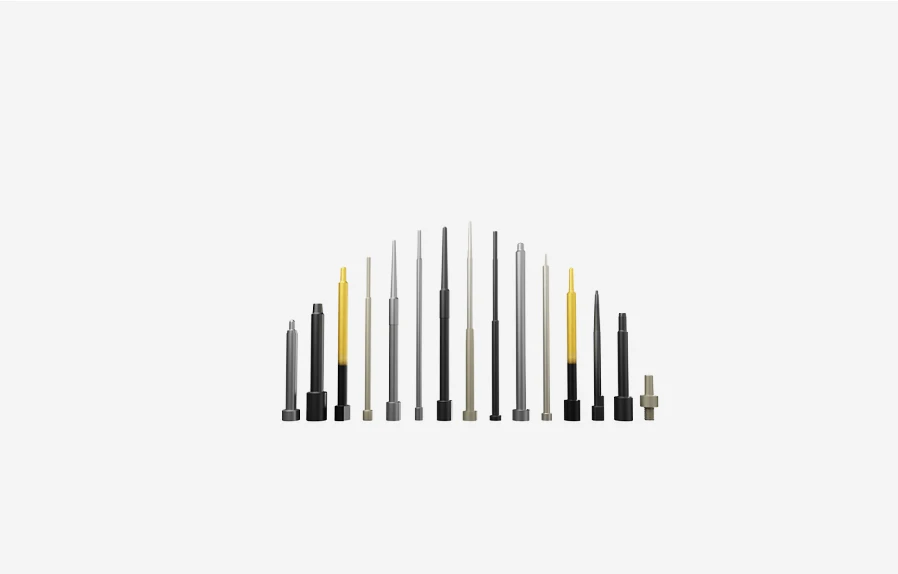

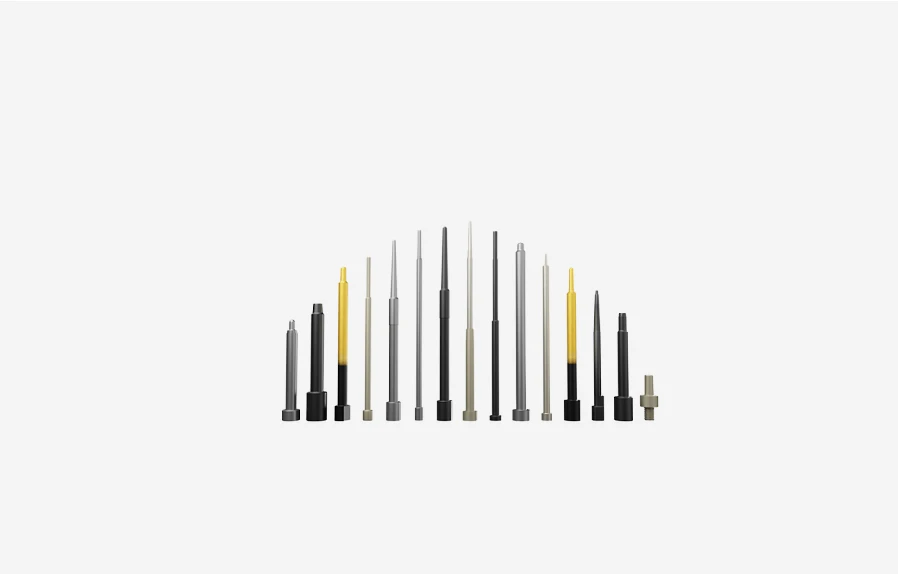
In the world of die casting and injection molding, core pins play a crucial role in ensuring the accuracy, durability, and efficiency of the manufacturing process. These small but vital components help create intricate designs, hollow sections, and precise details in molded parts. Understanding their types, materials, and applications can significantly enhance production quality and longevity.
What is a Core Pin?
A core pin is a cylindrical or tapered component used in mold cavities to create holes, recesses, or internal features in a molded part. These pins prevent material overflow and ensure that the final product meets exact design specifications. They are commonly used in plastic injection molding, die casting, and metal stamping industries.
Types of Core Pins
Core pins come in various types, each serving a unique function based on molding requirements:
- Straight Core Pins – The most commonly used core pins, ideal for simple mold structures.
- Tapered Core Pins – Designed for easy removal from molds and reducing stress on the mold cavity.
- Vented Core Pins – Feature tiny vents that allow gases and air to escape, preventing defects in molded parts.
- Shoulder Core Pins – Have a built-in shoulder for added stability and better mold alignment.
- Custom Core Pins – Specially designed for complex molding applications where standard pins are not sufficient.
Materials Used in Core Pins
The choice of material for core pins affects their durability, resistance to wear, and performance in high-heat environments. Common materials include:
- Hardened Steel – Provides excellent wear resistance and durability.
- Stainless Steel – Resistant to corrosion and commonly used in medical and food-grade applications.
- Carbide Core Pins – Extremely tough and ideal for high-temperature and high-pressure molding.
- Titanium-Coated Pins – Offer superior strength and longevity, reducing friction and wear.
Applications of Core Pins
Core pins are widely used across multiple industries for their precision and efficiency:
- Injection Molding Industry – Used in plastic manufacturing to create detailed shapes and internal structures.
- Die Casting Industry – Essential for metal parts production, ensuring smooth cavity filling and precise casting.
- Medical Device Manufacturing – Helps in crafting complex surgical tools and implants with high accuracy.
- Automotive Industry – Used in molding engine components, gears, and structural parts.
Advantages of Using Core Pins
Using high-quality core pins in manufacturing processes offers several benefits:
- Improved Mold Accuracy – Ensures products meet exact design tolerances.
- Minimizes Defects – Reduces shrinkage, warping, and air bubbles in molded parts.
- Increases Mold Longevity – Prevents excessive wear and extends the mold’s lifespan.
- Enhances Production Efficiency – Supports high-speed manufacturing without compromising quality.
How to Choose the Right Core Pin?
Selecting the best core pin depends on factors like material, coating, size, and application:
- Consider Mold Material – Match the core pin’s hardness with the mold to avoid damage.
- Choose Proper Coating – Titanium or carbide coatings improve durability and wear resistance.
- Select the Right Size & Shape – Ensure it aligns with the mold’s design to achieve optimal results.
- Standard vs. Custom Core Pins – Custom designs may be required for complex mold structures.
Maintenance & Best Practices
To extend the lifespan of core pins and maintain mold efficiency, follow these best practices:
- Regular Inspection – Check for wear, cracks, or misalignment to prevent defects.
- Cleaning & Lubrication – Properly clean pins to remove residue and apply lubricants to reduce friction.
- Storage & Handling – Keep core pins in a dry, protected environment to prevent corrosion or damage.
Conclusion
Core pins are an essential component in molding and die casting, providing accuracy, durability, and efficiency. Choosing the right type and material can significantly enhance production quality and cost-effectiveness. Whether used in plastic injection molding, metal casting, or medical device manufacturing, core pins play a key role in creating high-precision, defect-free products.
Frequently Asked Questions (FAQs)
1. What is the purpose of a core pin in molding?
Core pins create internal cavities, holes, or specific design features in molded parts, ensuring precise shaping and detailing.
2. How do I choose the right material for a core pin?
The choice depends on factors like mold type, temperature, and wear resistance. Common materials include hardened steel, stainless steel, and carbide.
3. Can core pins be customized?
Yes, custom core pins are available for complex mold structures requiring specific sizes, shapes, or coatings.
4. How do I maintain core pins for long-term use?
Regular inspection, cleaning, lubrication, and proper storage help extend the lifespan of core pins.
5. What are common issues with core pins?
Wear, misalignment, and contamination can affect performance, leading to defects in molded products.
6. Are core pins reusable?
Yes, but their lifespan depends on the material, coating, and usage conditions. Proper maintenance can enhance their durability.
7. How do core pins improve manufacturing efficiency?
They enhance accuracy, reduce defects, and support high-speed production while maintaining mold integrity.























Sign in to leave a comment.