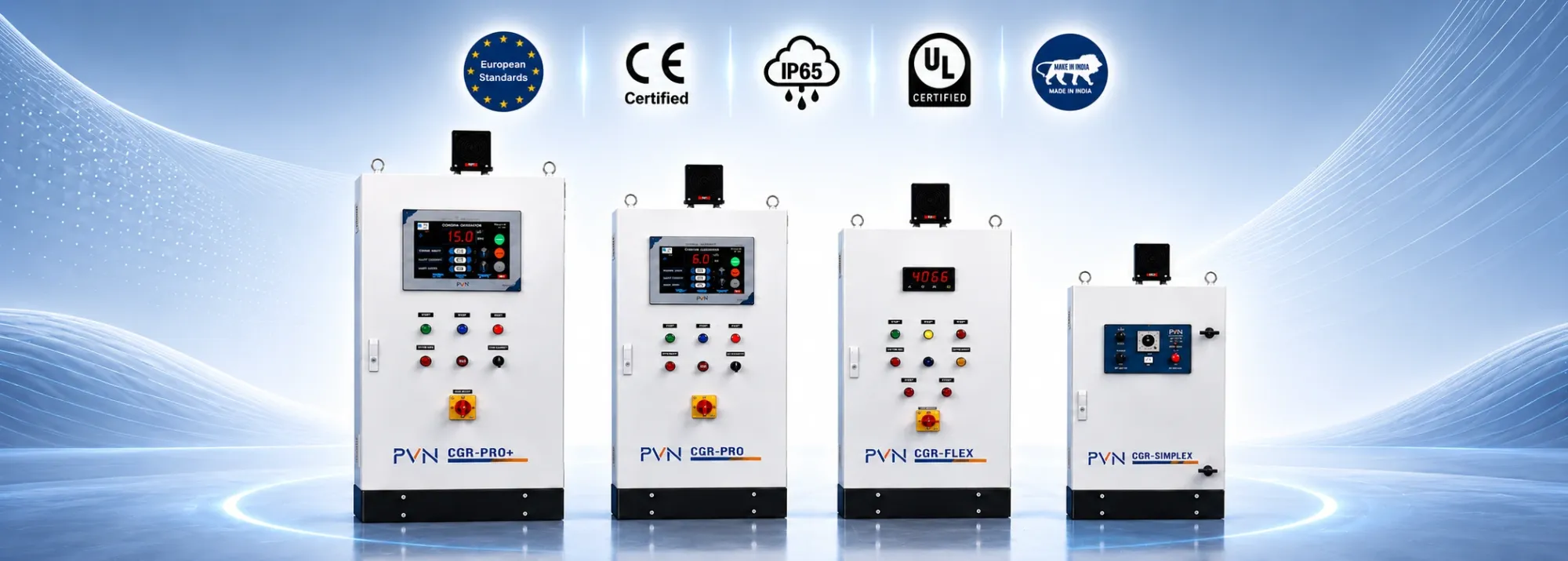

Every printer, coater and laminator who works with plastic film has faced the same question: why does the ink not stick? In most cases the answer is surface energy. Films such as PE, PP and BOPP resist wetting, so they must be prepared before they can be printed, coated or bonded.
A corona discharge surface treater prepares the film in-line, at production speed, without chemicals. In this guide we look at the science in plain language, the role of the generator and high-voltage transformer, and the practical points that decide whether a treater performs well on your line.

The Science Behind Corona Discharge Treatment
When a high voltage at high frequency is applied across a small air gap, the electric field becomes strong enough to ionise the air. This produces a faint glowing discharge called a corona. In a treater, the film passes through this discharge zone.
Inside the discharge, energetic electrons and reactive species hit the film surface. They break some molecular bonds and allow oxygen-containing groups to attach. These polar groups raise the surface energy, so liquids spread out and bond to the film instead of beading up.
Two important points follow from this:
- Treatment affects only the outermost layer of the film. The bulk properties, such as strength and clarity, are not changed when treatment is set correctly.
- The effect depends on how much energy reaches each part of the film, which is why power, line speed, web width and gap all matter.
The Heart of the System: Generator and High-Voltage Transformer
People often focus on the visible parts of a treater, such as the electrode and roll. But the electrical supply decides how steady and controllable the discharge is.
The generator
The generator converts mains electricity into a high-frequency output. A well-designed generator offers:
- Stable output that does not drift with temperature or load
- Wide power control so you can treat light films and demanding materials on the same system
- Speed-following control that adjusts power automatically as line speed changes
- Protection features against overload, short circuits and abnormal conditions
- Efficient operation, which keeps running costs and heat generation down
The high-voltage transformer
The transformer steps the generator's output up to the voltage needed to sustain the discharge. Its quality affects:
- Reliability: Good insulation and winding quality reduce the risk of breakdown.
- Thermal behaviour: A transformer that runs cool lasts longer and stays more stable.
- Matching: The transformer should be matched to the generator, electrode and gap, so power transfers efficiently.
If these two components are poorly matched or poorly built, you may see unstable discharge, uneven treatment, nuisance trips or early failure.
Other Parts That Shape Treater Performance
The electrical supply works together with the mechanical and discharge components.
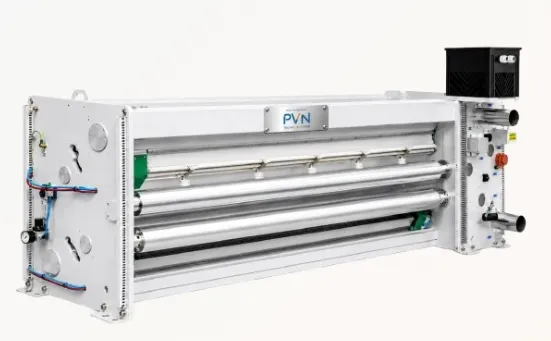
Electrodes: They distribute the discharge across the web. Their material, shape and condition influence uniformity and life.
Ground roll and dielectric covering: The roll under the film completes the electrical path, and its covering must withstand heat, ozone and electrical stress.
Station frame and gap adjustment: A rigid frame and accurate gap setting keep the discharge consistent across the width.
Ozone extraction: Removes ozone to protect operators and equipment.
Control panel: Lets the operator set power, monitor status and respond to alarms.
A good treater is a balanced system. A strong generator cannot make up for a warped electrode or an uneven gap.
Also Visit: corona treatment machine manufacturer
Variables That Affect Treatment Level
Understanding what controls the result helps you tune the process and troubleshoot.
Power: More power generally gives a higher treatment level, up to a point.
Line speed: At higher speed, the film spends less time in the discharge, so you need more power to reach the same level.
Web width: A wider web needs more total power to deliver the same treatment per unit area.
Electrode gap: A wider gap needs a higher voltage to sustain the discharge and may reduce efficiency, while a very small gap risks arcing. Keep the gap as the manufacturer recommends.
Film type and additives: Different polymers respond differently. Slip and anti-static additives can migrate to the surface and reduce treatment effectiveness.
Environment: Humidity, temperature and dust can influence the discharge and the film surface.
Because these factors interact, it helps to record settings and measured results for each material and speed. Over time, this builds a reliable process window.
Under-Treatment and Over-Treatment
Both extremes cause problems.
Under-treatment leaves surface energy too low, causing poor ink anchorage, tape-test failures, crawling coatings and weak lamination bonds.
Over-treatment can cause blocking, where layers stick together on the roll, as well as film damage, odour or reduced heat-seal performance in some materials. It also wastes energy.
The aim is to treat to the level your process needs, with a modest margin for decay, and then confirm it with simple testing.
Choosing the Right Treater for Your Application
Use this checklist when selecting equipment:
- Define the materials: List all the films and substrates you will treat.
- Set the targets: Find out the surface energy your inks, coatings or adhesives require.
- Know your speeds and widths: Include maximum values and likely future needs.
- Decide on single- or double-sided treatment.
- Check the space and mounting options on your machine.
- Review the power supply available at the site.
- Look at control features, especially speed-following and diagnostics.
- Assess the build quality of the generator, transformer, electrodes and rolls.
- Check safety features, including enclosures, grounding, interlocks and ozone handling.
- Confirm support, meaning spares, training, service and documentation.
Share this information with suppliers up front. It leads to a better-matched proposal and fewer surprises during commissioning.
Installation and Commissioning Tips
- Have qualified personnel handle all electrical work, following local codes.
- Align the electrode and roll carefully so the gap is even along the full width.
- Ground the system properly.
- Set up ozone extraction and check airflow.
- Calibrate the speed signal if the generator follows line speed.
- Run trials on your real materials and record the settings that achieve the required level.
- Train operators so they understand the basics, not just the buttons.
Keeping the Treater in Good Shape
A few routine habits keep performance stable:
- Clean regularly. Remove dust and film residue from electrodes and rolls, with power isolated.
- Inspect. Look for cracks, wear, discolouration and signs of arcing.
- Check the gap at planned intervals.
- Monitor treatment levels with dyne testing or a similar method.
- Watch for warning signs, such as unusual noise, frequent trips or falling treatment at the same settings.
- Service the electrical system as the manufacturer recommends, and use approved spares.
Treat any sign of arcing or abnormal operation seriously, because it can damage the electrode, roll or electrical components if left alone.
Safety Considerations
Corona treaters work at high voltage and generate ozone, so safety must be part of the design and the routine.
- Keep guards and enclosures in place.
- Always isolate and lock out power before maintenance.
- Make sure ventilation and ozone extraction work properly.
- Follow your site's electrical safety rules and the equipment documentation.
- Train staff on hazards and emergency procedures.
Final Thoughts
A corona discharge surface treater turns hard-to-print plastic films into reliable substrates for ink, coating and adhesive. Its success depends on a well-matched generator and transformer, accurate electrodes and rolls, a stable gap, sensible control and consistent care.
When you select and operate a treater, think of it as a complete system rather than a single machine. Define your materials and targets, ask suppliers detailed questions, verify results with regular testing and keep maintenance on schedule. Do this, and you will see steadier adhesion, cleaner print quality and fewer rejected rolls.






























Sign in to leave a comment.