

Corporate reporting is no longer a compliance formality. It has become an imperative part of any business operations. The audience has changed — investors, partners, employees, and even the public now expect clarity, integrity, or context.
A business wants to tell its story better. Still, poor corporate report design has remained the biggest hurdle. This gap may result in frustration while creating confusion alongside missed opportunities. What should feel like progress ends up as a repetitive, box-checking task. Find out how this trend is shifting and what you should expect next.
The Role of Corporate Reporting for Your Business
Corporate reporting serves as a mirror. It reflects performance, intent, and direction. It gives stakeholders the insights they need to make decisions confidently.
Strategic Communication Tool
Corporate reports are more than data sheets. They shape perception, build trust, and convey a company's commitment to accountability.
Investor Relationship Management
They help attract and retain investors by showcasing long-term value creation and clear financial strategy in a reliable, concise format.
Risk Transparency
Effective reporting unpacks business risks without hiding behind jargon. It lets stakeholders see how risk is recognised and addressed clearly.
Operational Benchmarking
Reports aren't only external-facing. Internally, they're used to compare performance over time, analyse gaps, and refine internal processes systematically.
Compliance and Regulation
They fulfil legal obligations but also reflect ethical responsibility — demonstrating that the business meets industry standards openly.
Top Corporate Reporting Trends to Expect from Agencies in the Next 5 Years
Trends aren't about buzzwords. They're shifts in expectation, capability, and relevance. Agencies must respond to real-world needs. Here's what's ahead.
Human-Centric Storytelling
Agencies are learning: numbers alone don't speak. Readers want reports that speak like humans do. Expect a shift in tone, style, and structure. There will be real narrative arcs, executive voices, and relatable framing. Financial data will be matched with interpretation that's easy to follow. This shift helps reports resonate and not just inform. When a corporate reporting agency builds this in, it's no longer reporting — it's communicating with real clarity.
Integrated Reporting as a Default
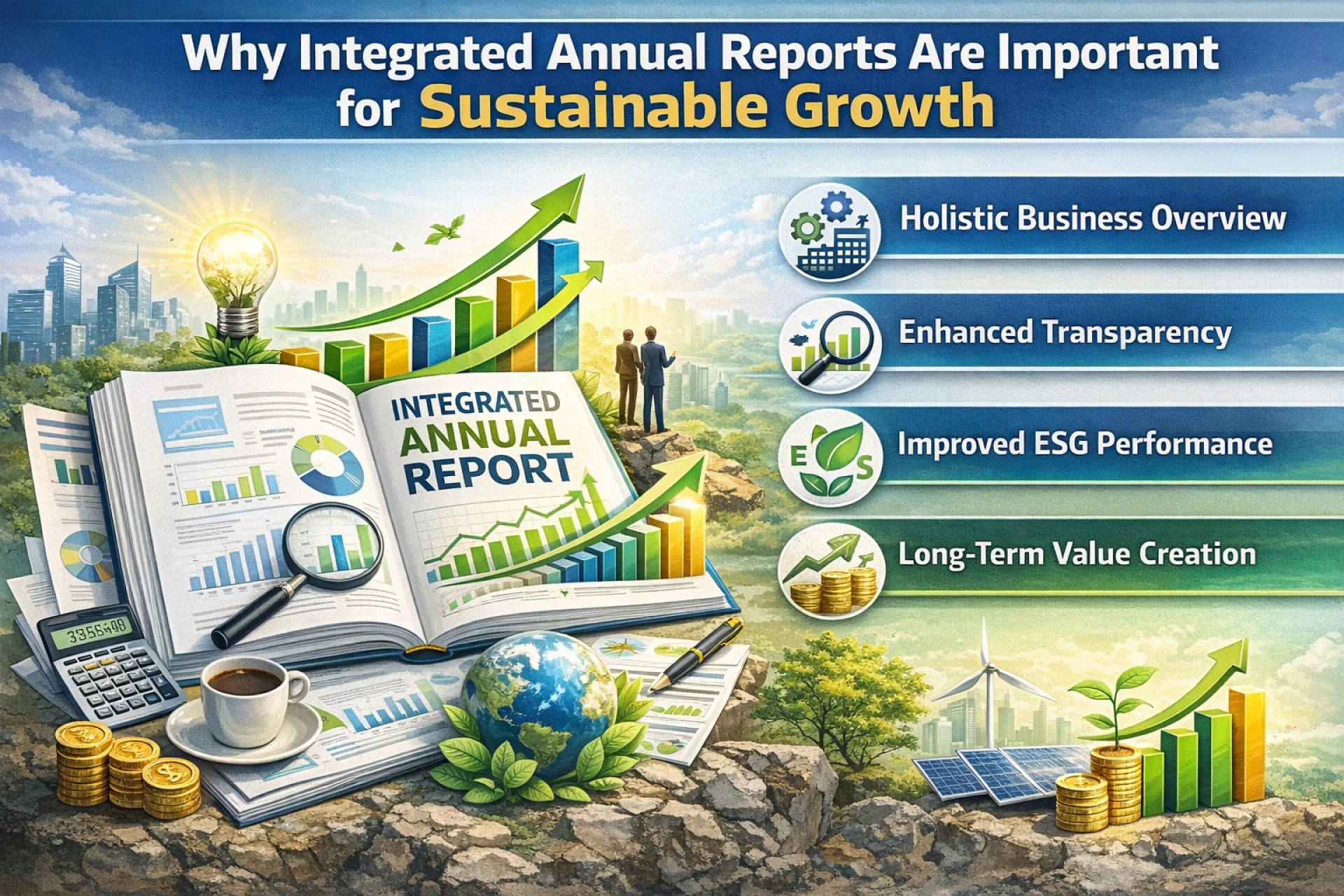
Silos are out. Companies want one report that speaks to financials, environment, governance, and strategy without overlap or contradiction. Integration aligns insights. It saves time, reduces effort, and eliminates double work. Agencies will standardise this. You'll get smoother reports where data points talk to each other. Not in isolation. That means tighter corporate report design that supports integrated thinking — for readers and preparers alike.
Sustainability Embedded, Not Added On
Sustainability sections used to feel optional. Now, they're a baseline expectation. But agencies are moving from adding them at the end to embedding them throughout. It changes the conversation. ESG isn't a page; it's a lens. The reporting will show how sustainability impacts operations, finances, hiring, and growth. Agencies that get this right will avoid greenwashing and show value with authenticity. It's what stakeholders now demand.
Interactive, Digital-First Formats
Printed reports still matter to some, but online-first is leading. Expect reports built like digital experiences. Searchable. Clickable. Scrollable. Agencies are moving to digital-first design, offering smart navigation, dynamic visuals, and content that adapts to devices. Reports will no longer be static PDFs buried in investor sections. You'll see formats where engagement matters. That's where corporate reporting agency capabilities will be tested the most.
AI-Assisted Analysis and Drafting
Not everything will be written by hand anymore. Agencies are beginning to use AI to streamline the early stages — extracting data, spotting trends, drafting frameworks. But the human eye still edits contextualises and adds nuance. This will make timelines faster and budgets tighter. It will also mean you get earlier drafts with better structure. AI will be in the background. But the voice will still feel familiar and sharp.
Real-Time or Rolling Updates
Why wait a full year? Quarterly reports are already common, but more businesses want rolling updates — modular formats that evolve. Agencies will build platforms that let companies push updates monthly or quarterly, with no need to restart from scratch. This improves transparency and builds consistency. Reports become more relevant, closer to real-time. Expect this in sectors with fast-moving variables — like tech, retail, or climate-focused industries.
Stakeholder-Specific Variants
One report doesn't work for everyone anymore. Agencies will build variations — same data, different framing — for investors, employees, or regulators. This makes reports more digestible. And more useful. You'll see summaries, visual briefs, and narrative cuts built from the same source. It avoids overloading everyone with 200 pages of PDF. It also respects the time and focus of each group. This kind of flexibility is becoming standard.
Stronger Visual-Data Integration
Expect tighter visual alignment. Data should never float alone. It needs visual anchors like infographics, charts, illustrations that clarify, not clutter. Agencies prioritise corporate report design that actually helps readers think. Design is no longer decoration. It's an interpretation. And a poor layout is no longer acceptable. The shift is already happening. Expect it to become non-negotiable.
Greater Emphasis on Assurance and Trust
With more information comes more scrutiny. Stakeholders want to know if data is verified. Assurance — external or internal — will be emphasised more. Agencies will work with audit teams to build more transparent reporting chains. There's growing demand for clarity on sources, assumptions, and verification. Expect footnotes and references to become more human, too. Trust is the currency of every corporate reporting agency.
More Collaborative Workflows with Clients
Reporting won't be a black box anymore. Clients don't want to send data and wait. Agencies will move toward shared dashboards, review tools, and real-time editing platforms. Collaboration will be smoother, faster, and less painful. It also keeps internal teams more engaged. When reports reflect how teams actually operate, they feel less artificial. More authentic. It also builds longer-term relationships. Agencies that support this approach will win.
The demands from corporate reporting are shifting. It's no longer about producing the thickest report on the table. It's about creating one that's clear, engaging, and useful to more than one type of reader. Businesses want simplicity without losing substance. They want reports that work harder, communicate better, and evolve faster. That's where a modern corporate reporting agency proves its worth.



























Sign in to leave a comment.