

Businesses are now facing stronger pressure to stay open about how they work. Traditional reports are no longer enough. These reports often show only financial performance, leaving out important information about purpose, risk, and long-term goals. Investors and stakeholders want to see a complete picture. They want companies to show how their plans affect people and help them make a profit. Many businesses find this hard. Their teams are not ready, and data remains scattered.
This creates confusion. It weakens trust. A clear and honest report builds confidence. It helps explain how value is created over time. That is where the integrated annual report becomes useful. It offers one simple document that links everything. It shares performance, goals, and values in a clear way. As 2025 comes closer, businesses must act. A delay can lead to lost trust and missed opportunities. Strong reporting builds strong relationships.
What Is Integrated Annual Reporting?
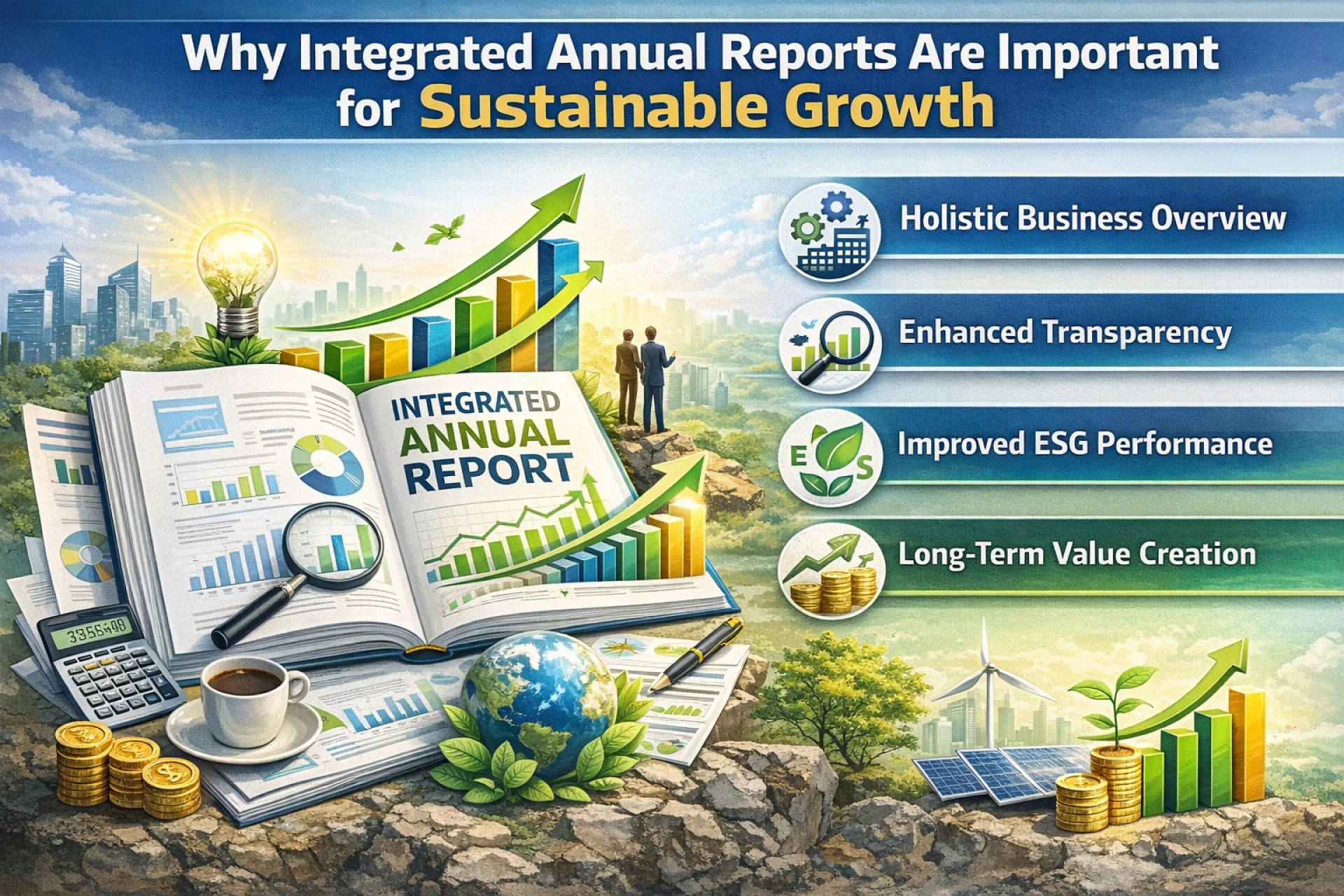
An integrated annual report is a document that combines financial and non-financial information. It shows how a company works, plans, and grows. It not only shows profit numbers. It also explains how the business manages risks, uses resources, and makes a social impact.
The report brings everything into one place. It includes details about business plans, market conditions, team efforts, and long-term goals. It also explains how business decisions affect people and the planet. It replaces old-style reports that only show money figures.
It helps decision-makers understand the full story. They can see where the business stands. They can also see where it is going. A clear report reduces doubt. It helps people trust what they see. This kind of reporting builds confidence for investors, workers, and partners. The following are the features –
- Combines profit data with social and environmental information
- Shows how plans connect with performance and future results
- Highlights the role of risk, leadership, and planning
- Offers one complete report instead of separate documents
- Helps explain how the business creates value over time
The Role of Corporate Transparency in Today’s World
Clear communication builds respect. Honest reports make businesses stronger. People want to know what a business stands for.
Builds Trust with Investors
A report that shares both performance and purpose builds confidence in the leadership team.
Connects with Stakeholders
A business earns respect when it shares full updates with its workers, partners, and communities.
Reduces Confusion
A clear report helps people understand results, actions, and future risks in one place.
Shows Accountability
Transparent reports prove the business cares about results and responsibility equally.
Benefits of Adopting Integrated Reporting
An integrated annual report does more than save time. It helps companies grow smarter. It offers key benefits across every department.
Aligns Strategy and Purpose
It links daily performance with long-term purpose. That helps leadership take smarter actions.
Shows Impact Clearly
It brings social, environmental, and governance goals into the same report. That builds clarity in planning.
Simplifies Internal Work
A single report avoids double work. It reduces repeated efforts across teams.
Improves Planning
With full data in one place, teams can track goals, issues, and progress easily.
Encourages Team Ownership
Everyone understands their role better. That builds a stronger, more focused team.
Read more : Corporate Reporting Trends: What to Expect from Agencies in the Next 5 Years
Top Integrated Annual Reporting Trends for 2025
Businesses will need to improve both content & clarity as reporting moves forward. The integrated annual report will continue to evolve with better tools and expectations.
ESG Focus Gets Sharper
In 2025, ESG data will become more detailed and clear. Companies will show how sustainability helps long-term success. ESG will no longer be a side topic. It will become part of every goal, plan, and result. Stakeholders will expect to see ESG results alongside profit numbers.
Digital Reporting Tools Rise
More companies will use digital formats. Reports will include dashboards, charts, and interactive visuals. This will help readers explore data quickly. It will also improve how reports are shared and updated. Paper-based reports will slowly fade as tech takes the lead.
Real-Time Reporting Begins
Businesses will update data more often. Annual reports may include quarterly updates or live dashboards. This helps readers track business progress without delay. Quick access to updates builds trust and supports better investment decisions.
Stakeholder-Driven Content Expands
Reports will focus more on what people care about. Investors, communities, and workers will shape the report’s focus. That means more input from external voices. Companies will answer real concerns rather than only share polished success stories.
Regulatory Pressure Grows Stronger
More regions will ask for integrated reports. Governments and global bodies will create stricter rules. Companies will need to report ESG data with care and detail. This will make compliance more complex but also more meaningful.
How These Trends Will Overcome Challenges for Businesses
Many businesses today face reporting problems. Reports stay scattered across departments. Data becomes hard to gather. Some teams avoid social and environmental data. Others fail to connect goals with actions. These habits create confusion. They also make the business look unprepared.
New trends in integrated annual report writing will help fix these problems.
- Combining profit and purpose removes confusion between teams
- Digital formats help save time, paper, and effort
- Real-time data improves planning and helps leaders respond faster
- Reports built around stakeholder needs become more useful
- Following reporting rules builds trust in local and global markets
A clear report creates shared understanding. Teams begin to work better together. Business strategy becomes easy to follow. Reporting becomes more than a task. It becomes a useful tool. It helps in planning, reviewing, and improving.
Companies that follow these new methods will work more smoothly. They will also connect better with the outside world. Reports will no longer stay hidden or unread. They will become a source of trust and action.
Why Acting Early Builds Long-Term Value
Late action in reporting creates problems. Teams stay unprepared. Reports take more time and money. Stakeholders lose interest. Delay can hurt trust, reputation, and growth.
An integrated annual report supports early planning. It brings all business data into one place. It reduces guesswork and creates better focus. Early adopters fix problems before rules change. They test tools, set formats, and train teams with care.
They do not wait for deadlines. They set the pace. That creates respect in the market. It also supports strong partnerships.
Early action helps avoid stress. It also reduces cost in the long run. Reports become easier to manage. They stay clear and useful. Businesses can measure progress with less effort. They gain full control over their reporting process.
Strong reports build strong impressions. They show a business is serious about growth and impact. They show value, not just results. Early action makes this possible. That keeps the business ahead in 2025.
Wrap up
Transparency now leads business success. People want reports that show results, impact, and action in one place. A business that hides behind numbers will fall behind. Honest reports are not an extra task. They are a smart step.
An integrated annual report brings full business value into view. It helps leaders make better decisions. It supports investor trust. It builds internal teamwork. As new trends grow stronger, businesses must keep pace. Reports will change in format, content, and goals.
Those who plan now will lead later. Trust does not wait. It grows with clear action. On that note, a strong report is the first step.





























Sign in to leave a comment.