
The paper industry, one of the world's oldest manufacturing sectors, continues to evolve through technological advancement and automation. From ancient Chinese innovations to today's high-speed production facilities, paper manufacturing has transformed into a complex industrial process requiring sophisticated material handling equipment. At the heart of modern paper mills, cranes serve as indispensable tools that enable efficient production, maintain continuous operations, and ensure worker safety across every stage of the manufacturing cycle.
Modern paper production demands precise handling of heavy materials in challenging environments characterized by high humidity, chemical exposure, and continuous 24/7 operations. Specialized cranes designed specifically for the paper industry address these unique requirements, facilitating everything from raw material processing to finished product warehousing. Understanding the crucial role these machines play reveals why they remain central to the industry's productivity and competitiveness.
1. Crane Applications in Raw Material Handling

The paper manufacturing process begins with the arrival and processing of raw materials, including wood chips, recycled paper, and chemical pulp. This initial stage requires robust material handling systems capable of managing large volumes of bulk materials efficiently.
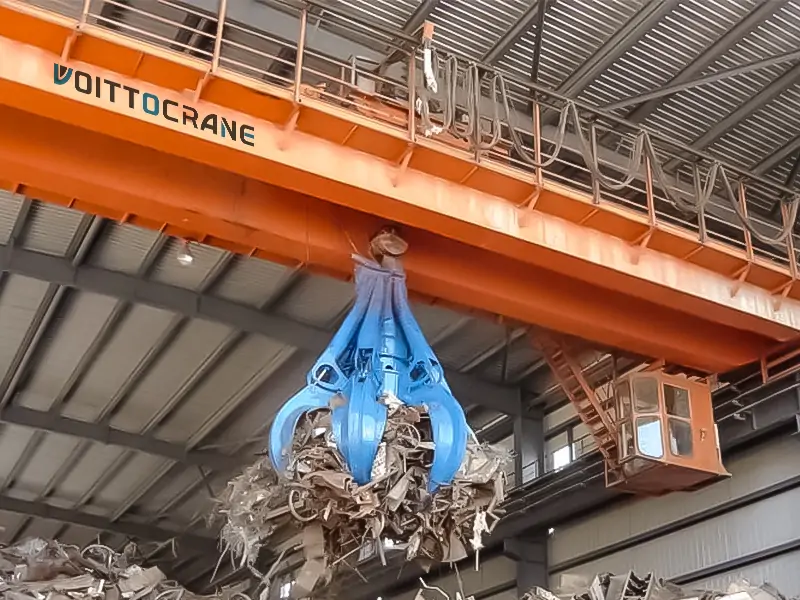
Grab Bucket Crane Systems are specifically engineered for handling loose raw materials in paper mills. These specialized overhead cranes utilize hydraulic or mechanical grab buckets to pick up, transport, and deposit wood chips, waste paper bales, and other feedstock materials. The grab mechanism provides efficient handling of irregularly shaped and varying-density materials that would be difficult to manage with standard lifting attachments.
In raw material yards and receiving areas, these cranes operate continuously, transferring materials from delivery vehicles to storage bunkers or directly to processing equipment. The robust construction of grab bucket cranes enables them to withstand the demanding duty cycles typical of paper mill operations, where material flow must remain constant to prevent production interruptions.
Corrosion-Resistant Design is essential for cranes operating in raw material areas, where exposure to moisture and organic materials creates challenging environmental conditions. Modern paper industry cranes incorporate protective coatings, sealed electrical components, and stainless steel elements in critical areas to ensure long-term reliability despite constant exposure to humidity and chemical atmospheres.
The efficiency of raw material handling directly impacts overall mill productivity. Advanced grab bucket systems can move 20-30 tons of material per cycle, maintaining the steady flow of feedstock required by modern high-capacity pulping operations. This automated material handling reduces manual labor requirements while improving safety by minimizing worker exposure to heavy equipment and bulk materials.
2. Crane Applications in Pulp Processing
Once raw materials enter the manufacturing process, they undergo chemical or mechanical pulping to break down wood fibers and prepare them for paper formation. This intermediate stage requires specialized crane systems to handle large-volume pulp bales and support complex processing equipment.

Double Girder Overhead Cranes are the workhorse equipment for pulp handling operations. These heavy-duty cranes feature twin parallel beams that provide superior load-bearing capacity and stability compared to single-beam designs. In pulp processing areas, they lift and transport massive pulp bales weighing several tons each, moving materials between digester systems, washing stations, and storage areas.
The double girder configuration offers several critical advantages in pulp handling applications. The reinforced structure supports higher capacity ratings, typically ranging from 10 to 100 tons in paper mill installations. The rigid framework ensures minimal deflection even under maximum loads, protecting delicate pulp materials from damage during transport and positioning operations.
Precise Load Control becomes particularly important when handling processed pulp. Modern overhead cranes incorporate variable frequency drive systems that enable smooth acceleration and deceleration, preventing sudden movements that could damage pulp structure or compromise quality. Sophisticated control systems allow operators to position loads with millimeter-level precision, essential when placing pulp materials into processing equipment with tight tolerances.
Environmental considerations remain paramount in pulp processing areas. The chemical pulping process involves exposure to caustic substances, high temperatures, and steam atmospheres. Cranes operating in these zones require enhanced protection systems, including heat-resistant components, chemical-resistant seals, and specialized lubrication systems designed for harsh operating conditions.
Continuous Operation Reliability is critical, as pulp processing operates around the clock to maintain economic efficiency. Modern crane systems achieve this through redundant safety systems, preventive maintenance programs, and modular component designs that enable rapid replacement of wear items during scheduled maintenance windows, minimizing production disruptions.
3. Crane Applications in Paper Machine Operations

The paper machine represents the core of any paper mill, where liquid pulp transforms into continuous sheets of finished paper through a complex sequence of dewatering, pressing, and drying operations. Supporting these massive machines requires specialized crane systems designed for both production support and maintenance activities.
Paper Machine Installation and Maintenance Cranes must handle extraordinarily heavy loads with extreme precision. Paper machines can weigh hundreds of tons and consist of precision-engineered components that must be positioned with exacting accuracy. Heavy-duty overhead cranes with capacities ranging from 50 to 200 tons are employed during machine installation, major maintenance events, and equipment upgrades.
These maintenance operations present unique challenges. Paper machine components like press rolls, dryer cylinders, and calendar stacks are not only heavy but also precisely balanced and machined to tight tolerances. Any damage during lifting or positioning can result in costly repairs and extended downtime. Modern maintenance cranes incorporate advanced load monitoring systems that continuously track weight distribution and warn operators of any imbalance or instability.
Roll Handling Systems represent another critical application within paper machine areas. Finished paper is wound onto large cores, creating rolls that can weigh 10-20 tons and measure several meters in diameter. Specialized crane attachments, including rotating spreader beams and custom gripping devices, safely handle these massive rolls during removal from winding stations and transport to finishing operations.
The paper machine environment presents significant operational challenges for crane systems. High temperatures from dryer sections, humidity from wet ends, and the constant vibration of high-speed machinery create demanding conditions. Cranes operating in these areas require robust construction, enhanced cooling systems for electrical components, and isolation mounting systems that prevent machinery vibration from affecting crane performance.
Quick-Change Tooling enables paper mills to maximize crane utilization across different tasks. A single overhead crane might handle roll removal using a specialized spreader beam in the morning, then switch to a standard hook configuration for general maintenance work in the afternoon. This versatility requires sophisticated quick-coupling systems that allow operators to change lifting attachments safely and efficiently.
4. Crane Applications in Finished Product Handling
Once paper comes off the production line, it enters the finishing and warehousing phase where cranes continue to play a vital role in maintaining efficient material flow and preparing products for shipment.
Paper Roll Handling Cranes dominate finished goods warehousing operations. These specialized overhead cranes are configured specifically for managing the unique challenges of finished paper roll handling. Unlike raw materials or intermediate products, finished paper rolls require extremely gentle handling to prevent surface damage, deformation, or contamination that would render products unsaleable.
Modern roll handling cranes incorporate specialized gripping mechanisms designed to distribute load forces evenly across the roll surface. Some systems use expanding mandrels that grip the inside core of paper rolls, while others employ clamp-style attachments that apply precisely controlled pressure to the outside diameter. The choice of attachment depends on paper grade, roll dimensions, and specific handling requirements.
European-Style Single Girder Cranes have gained popularity in finished goods areas due to their space-efficient design and enhanced operational capabilities. These cranes feature compact trolley designs and optimized headroom requirements, allowing maximum storage height utilization in warehouses. Their smooth, precise movements minimize the risk of load sway, critical when handling tall, relatively slender paper rolls that are susceptible to tipping or shifting during transport.
The finishing department often requires cranes to handle paper in various formats beyond standard rolls. Sheet-fed paper stacks, wrapped pallets of cut sheets, and specialized packaging configurations all require flexible handling capabilities. Multi-purpose overhead cranes equipped with interchangeable lifting attachments can adapt to different product formats, providing the operational flexibility modern paper mills require.
Warehouse Optimization through crane technology significantly impacts mill economics. Efficient crane operations enable higher storage density, faster order fulfillment, and reduced labor costs. Advanced warehouse management systems integrate with crane controls to optimize product placement, minimize travel distances, and coordinate multiple crane movements in facilities with several machines operating simultaneously.
5. Semi-Gantry Cranes for Outdoor and Transition Areas

Paper mills typically include outdoor storage areas, loading docks, and semi-enclosed spaces where conventional overhead cranes cannot be practically installed. Semi-gantry cranes provide material handling solutions for these transition zones.
BMH Single Beam Semi-Gantry Cranes combine the advantages of overhead and gantry crane designs. These machines feature one end traveling on an elevated runway, while the opposite end moves on ground-level rails supported by a wheeled gantry leg. This asymmetric configuration makes them ideal for loading docks where one side of the working area has building structure for runway support, while the other side opens to exterior space.
In paper mill applications, semi-gantry cranes facilitate the transfer of finished products from interior warehousing to shipping vehicles. They can span across loading docks, positioning paper rolls and palletized products directly into trucks or rail cars. This eliminates the need for intermediate handling steps, reducing damage risk and accelerating shipping operations.
Cost-Effective Coverage represents a key advantage of semi-gantry designs. Constructing elevated runway structures on both sides of a working area can be prohibitively expensive, particularly for outdoor installations requiring extensive foundations and weather protection. Semi-gantry cranes reduce infrastructure costs by utilizing existing building structures on one side while requiring only ground-level rails and a single gantry leg on the opposite side.
The flexibility of semi-gantry systems extends to their capacity for customization. Different grab devices, lifting accessories, and attachment systems can be integrated to handle various paper-making materials including pulp bales, paper rolls, and auxiliary supplies. This adaptability makes semi-gantry cranes valuable for mills with diverse product lines or changing operational requirements.
6. Safety Innovations and Environmental Adaptations
The challenging environment of paper mills has driven significant innovation in crane safety systems and protective technologies designed to ensure reliable operation and worker protection.
Moisture and Chemical Resistance stands as a primary design consideration for paper industry cranes. The paper manufacturing process inherently involves water, steam, and various chemical treatments that create corrosive atmospheres harmful to standard industrial equipment. Modern paper mill cranes incorporate comprehensive protection systems including sealed electrical enclosures, corrosion-resistant structural coatings, and specialized lubricants that maintain performance despite constant moisture exposure.
Advanced coating technologies provide multiple layers of protection. Zinc-rich primers create a sacrificial barrier that protects base metal from oxidation. Epoxy intermediate coats provide chemical resistance, while polyurethane topcoats offer UV stability and easy cleaning. This multi-layer approach significantly extends crane service life in hostile environments, reducing replacement costs and minimizing production disruptions from equipment failures.
Intelligent Safety Systems have become standard features on modern paper mill cranes. Load moment indicators continuously monitor crane loading conditions, preventing operators from exceeding safe working limits. Anti-collision systems protect against contact between multiple cranes operating in the same area, using sensors and programmable logic controllers to automatically stop crane movement when unsafe proximity is detected.
Emergency stop systems provide multiple layers of protection. Operator-accessible emergency stops allow immediate shutdown from any control position. Automatic shutdown triggers activate if sensors detect unsafe conditions like excessive load sway, over-speed travel, or approach to restricted zones. These redundant safety systems work together to protect both workers and equipment from accident scenarios.
Operator Ergonomics have received increased attention as paper mills work to reduce workplace injuries and improve productivity. Modern crane control stations feature ergonomically designed operator cabs with climate control, vibration isolation, and optimal visibility of working areas. Wireless remote control systems allow operators to position themselves at the best vantage point for each lift, improving safety and precision while reducing operator fatigue.
Environmental monitoring systems now integrate with crane operations, automatically adjusting performance parameters based on conditions. Temperature sensors can trigger enhanced cooling for electrical systems during heat waves. Humidity monitors can adjust lubrication cycles to compensate for moisture exposure. Wind sensors automatically reduce operating speeds or halt outdoor crane operations when conditions become unsafe.
7. Technological Advancements and Future Trends
The paper industry's ongoing evolution toward greater automation and efficiency continues to drive innovation in crane technology, with several emerging trends reshaping how material handling equipment supports production operations.
Automation and Smart Controls represent the most significant current development in paper mill crane systems. Semi-automated cranes can execute repetitive material handling tasks with minimal operator input, following pre-programmed paths and positioning sequences that ensure consistent, efficient operations. Sensors and cameras guide automated positioning, enabling precise placement of materials without constant operator attention.
Advanced control systems learn from operational patterns, optimizing performance over time. Machine learning algorithms analyze historical data to predict optimal travel speeds, acceleration profiles, and positioning strategies for different load types and destinations. This intelligent optimization reduces cycle times, minimizes energy consumption, and extends equipment service life through gentler operation.
Predictive Maintenance Technologies are transforming crane upkeep from reactive or scheduled approaches to condition-based strategies. Vibration sensors monitor bearing health, detecting early signs of wear before failures occur. Thermal imaging identifies overheating components. Oil analysis systems track lubrication degradation. Data from these monitoring systems feeds into predictive analytics platforms that forecast maintenance needs and automatically schedule service interventions.
The economic impact of predictive maintenance is substantial. Unplanned crane failures in paper mills can halt production lines, resulting in losses of tens of thousands of dollars per hour. By identifying potential failures before they occur, predictive systems allow maintenance to be scheduled during planned production outages, eliminating costly emergency repairs and production interruptions.
Energy Efficiency Improvements address both cost reduction and environmental sustainability goals. Variable frequency drives enable precise motor speed control, consuming power only as needed rather than running continuously at full capacity. Regenerative braking systems capture energy during lowering operations, feeding it back into the facility's electrical grid. LED lighting systems in operator cabs reduce power consumption while improving visibility.
Some advanced crane systems now incorporate energy storage technologies. Ultracapacitors or battery systems capture braking energy and reuse it for subsequent lifts, reducing overall energy consumption by 20-30% compared to conventional designs. As energy costs continue rising and environmental regulations tighten, these efficiency features become increasingly important for mill economics.
Integration with Mill-Wide Systems creates new operational capabilities through connectivity. Modern cranes communicate with warehouse management systems, production scheduling platforms, and quality control databases, enabling sophisticated coordinated operations. A roll handling crane might automatically route finished products to different storage locations based on grade specifications, production sequence data, and shipping schedules, all without operator intervention.
Digital twin technology allows mills to simulate and optimize crane operations before implementing changes. Virtual models of crane systems and facility layouts enable testing of new operating procedures, evaluation of capacity expansions, and training of operators in risk-free virtual environments before working with actual equipment.
8. Conclusion
Cranes form the essential material handling backbone of the modern paper industry, enabling efficient operations across every stage of production from raw material receipt through finished product shipment. The specialized designs, robust construction, and advanced control systems found in paper mill cranes reflect the demanding requirements of this challenging industrial environment.
As paper manufacturing continues evolving toward greater automation, sustainability, and operational efficiency, crane technology advances in parallel. Intelligent control systems, predictive maintenance capabilities, and energy-efficient designs represent the current state of the art, while emerging technologies promise even greater capabilities in the coming years.
For paper industry professionals, understanding crane capabilities, proper application, and maintenance requirements remains essential knowledge that directly impacts production efficiency, safety performance, and economic competitiveness. The substantial investments paper mills make in crane systems deliver returns through enhanced productivity, reduced downtime, and improved workplace safety.
The future of paper manufacturing will undoubtedly include increasingly sophisticated crane systems featuring greater automation, improved environmental performance, and enhanced integration with broader mill operations. As the industry navigates challenges including sustainability demands, labor shortages, and competitive pressures, advanced material handling technology provided by modern crane systems will remain a critical enabler of success.
From the continuous flow of raw materials through processing to the careful handling of finished products ready for customers, cranes silently but essentially support the paper industry's mission of converting renewable resources into products that serve countless applications in modern life. Their crucial role ensures that paper mills can operate efficiently, safely, and sustainably, meeting the world's ongoing demand for paper products.

About Paper Industry Equipment
For more information about crane applications in paper manufacturing or to discuss equipment solutions for your facility, contact specialized suppliers who can provide expert guidance on crane selection, customization, and implementation strategies tailored to the unique requirements of paper production environments.


















Sign in to leave a comment.