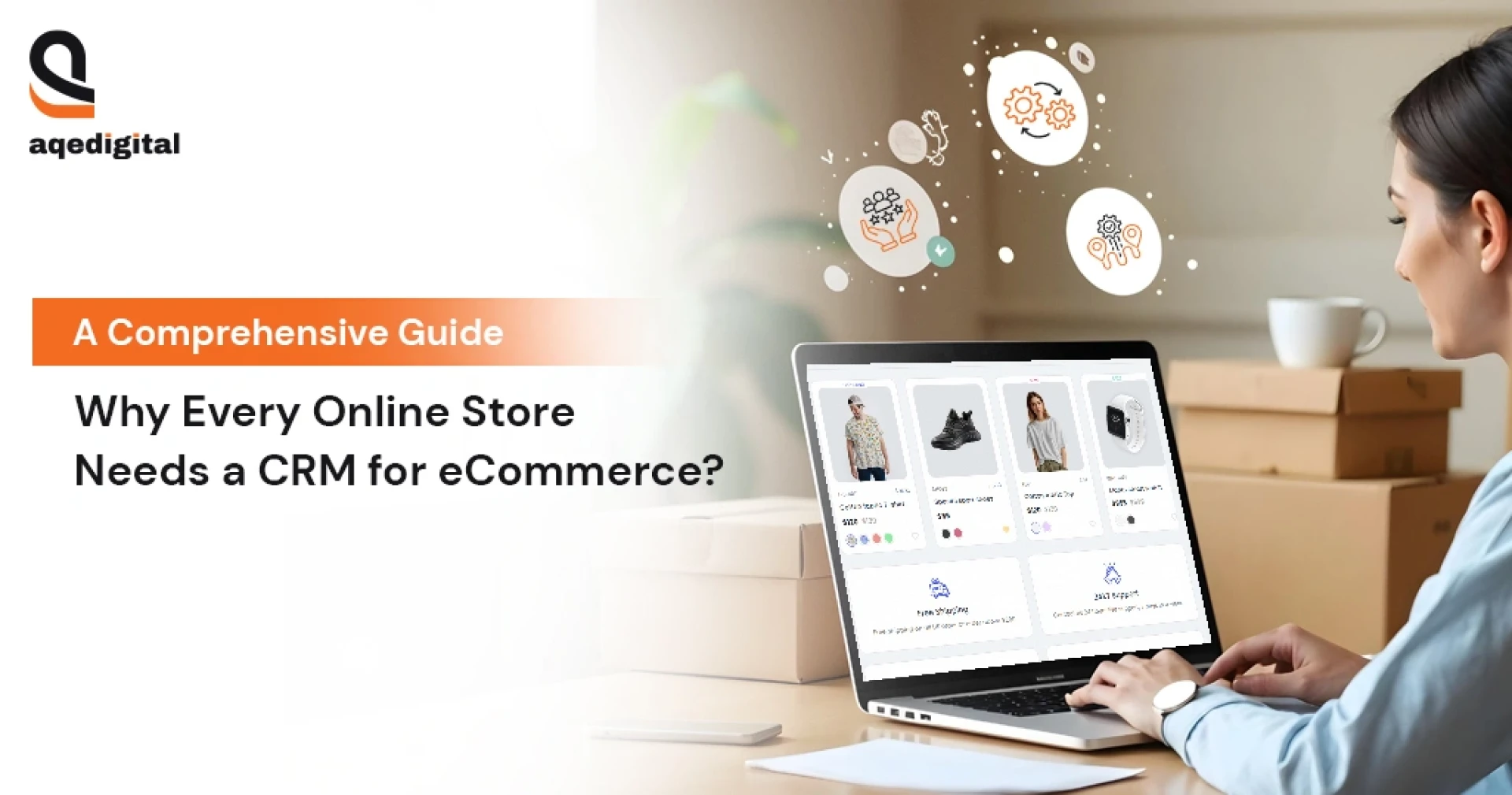

In today’s crowded eCommerce landscape, product and price alone aren’t enough. The real advantage belongs to merchants who turn anonymous visits into meaningful, profitable relationships. A modern CRM for eCommerce does exactly that: it centralizes customer signals, automates relevant outreach, and—most importantly—makes your customer experience measurable and repeatable.
The problem most stores overlook
Most online stores treat CRM as a contact list or an email tool. That’s the old way. The modern role of CRM is to act as the single source of truth for customer behavior—blending purchase history, browsing intent, support interactions, and campaign engagement into one actionable profile. Without it, your marketing is reactive, your service is disjointed, and your growth is brittle.
What a high-impact eCommerce CRM actually does
A strong CRM is not a feature set—you can buy features. It’s a capability that delivers predictable outcomes:
- Personalization at scale — Use real-time signals (cart actions, product views, past purchases) to trigger contextual messages across email, SMS, and onsite nudges.
- Automated lifecycle programs — Ship revenue-driving automations first: welcome sequences, abandoned cart recovery, post-purchase nurture, and VIP retention flows.
- Unified support experience — Helpdesk reps get full-order context instantly, reducing resolution time and increasing CSAT.
- Data-driven segmentation — Move from broad lists to audience slices based on RFM, product affinity, and behavior—so every campaign speaks to intent.
- Actionable analytics — Track lift from flows, cohort retention, and true LTV—so investments are tied to business outcomes.
Business outcomes you can measure
CRMs turn soft benefits into hard metrics: higher repeat purchase rates, longer CLTV, lower CAC, and improved conversion in remarketing channels. When implemented correctly, CRMs reduce churn from one-time buyers and increase average order value through timely cross-sell and upsell.
Quick implementation playbook (do this first)
- Clean the data — Deduplicate, normalize fields, and standardize event naming.
- Map the revenue journeys — Identify 3 automations that will move revenue quickest (welcome, cart recovery, post-purchase). Ship them.
- Integrate core systems — Connect your eCommerce platform, payments, support desk, and analytics layer.
- Instrument events — Track product view, add-to-cart, checkout started, purchase, returns, and support tickets.
- Measure & iterate — A/B test messaging, monitor cohort LTV, and expand to predictive scoring once baseline flows are profitable.
Pitfalls to avoid
- Deploying a CRM only for email blasts (low impact).
- Ignoring event quality—bad telemetry = bad decisions.
- Layering too many automations at once—start small, scale what works.
The strategic advantage
A CRM is not just a tool for marketing—it’s a structural advantage. Brands that master their customer data win repeat business, reduce reliance on paid acquisition, and turn one-off shoppers into steady revenue engines.
👉 For practical frameworks, templates, and real-world playbooks, read the full guide: CRM for eCommerce




























Sign in to leave a comment.