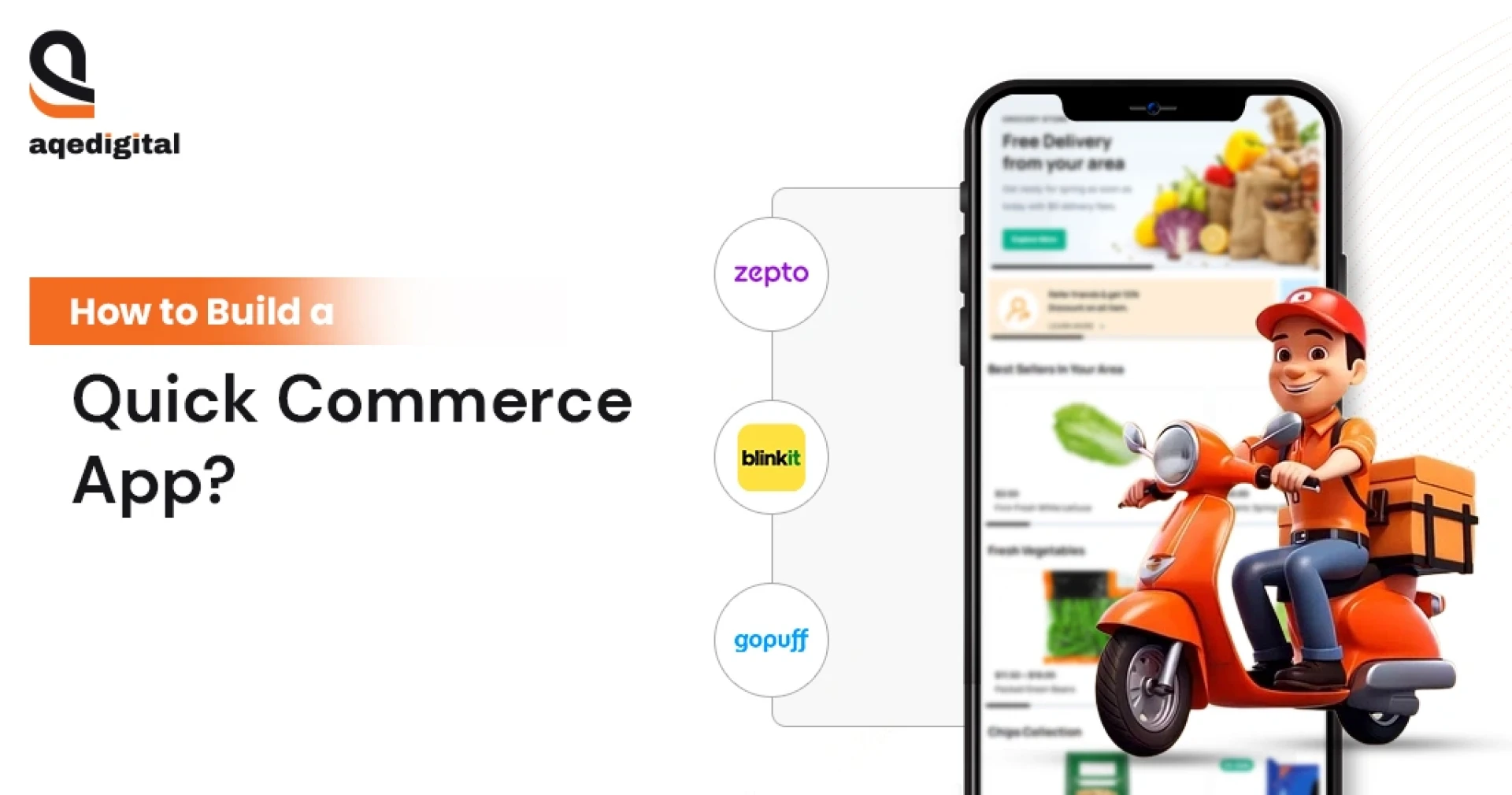

In today’s digital economy, customers don’t just want fast—they expect it. Enter the Quick Commerce App (Q-commerce), a model built on minutes-delivery for essentials like groceries, medicines, and household products.
From Blinkit in India to Gopuff in the US, Q-commerce players are reshaping retail by turning speed into a growth engine. But is it sustainable, and what can businesses learn?
👉 Dive deeper here: Quick Commerce App
What Exactly Is a Quick Commerce App?
At its core, a Quick Commerce App enables 10–30 minute delivery by combining:
- Dark stores & micro-fulfillment centers close to urban hubs.
- AI-driven logistics & routing for last-mile efficiency.
- Real-time inventory tracking to guarantee instant availability.
It’s not just faster eCommerce—it’s a new category where immediacy defines the customer experience.
Why Quick Commerce Is Growing So Fast
- The global Q-commerce market was valued at $170.80B in 2024, and is projected to exceed $330B by 2032 at ~10% CAGR (Fortune Business Insights).
- In India, the sector hit ₹64,000 crore in FY 2025, with gross order value expected to triple by FY 2028 (Times of India).
- Quick commerce already accounts for 20% of India’s eCommerce market, growing at ~50% annually (Economic Times).
Benefits of Quick Commerce Apps for Businesses
- Boosts Customer Loyalty – Reliability in speed builds trust.
- Increases Order Frequency – Smaller, more frequent orders drive repeat business.
- Competitive Differentiation – “Delivery in minutes” is a USP customers notice.
- Actionable Data – Localized inventory insights improve demand forecasting.
- Stronger Urban Reach – Dense delivery zones cut time and costs.
Real-World Examples
- India: Blinkit, Zepto, Swiggy Instamart are leading the race with hyperlocal dark store networks.
- Global: Gopuff (US), Getir (Europe), and Gorillas are redefining convenience with under-30-minute promises.
Challenges That Can’t Be Ignored
- Profitability squeeze due to high infra and delivery costs (FT).
- Scalability limits outside metros with lower density.
- Inventory risks like spoilage and demand fluctuations.
- Rising customer expectations—every delay damages brand perception.
Best Practices If You’re Building a Q-Commerce Model
- Start in high-density urban clusters.
- Stock only fast-moving SKUs in dark stores.
- Use AI for demand prediction & route optimization.
- Explore premium fees or subscriptions to offset costs.
- Ensure real-time visibility across inventory and logistics.
Why This Matters for You
Quick commerce isn’t just another retail fad. It’s a blueprint for how businesses can win in an “instant economy” where speed equals loyalty.
👉 For full frameworks, use cases, and strategies, read the detailed guide: Quick Commerce App




















Sign in to leave a comment.