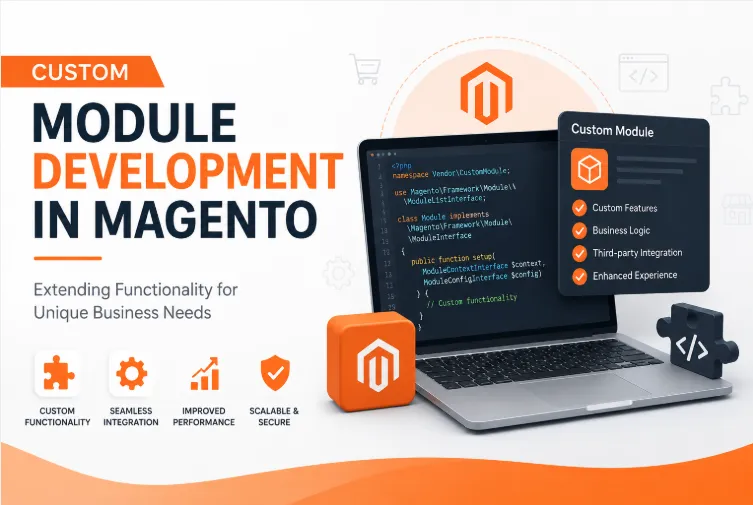

In the competitive landscape of eCommerce, providing a unique and tailored shopping experience is essential for success. While Magento offers a robust set of features out-of-the-box, there are often specific business requirements that cannot be fulfilled by standard functionality alone. This is where custom module development in Magento comes into play. In this article, we will explore the process of developing custom modules in Magento to extend functionality and meet unique business needs.
Understanding Custom Module Development:
Custom module development in Magento involves creating additional functionality or modifying existing features to align with specific business requirements. These modules can range from simple extensions to complex integrations with third-party systems, depending on the needs of the business. By developing custom modules, merchants can enhance their Magento store\'s capabilities and differentiate themselves from competitors.
Benefits of Custom Module Development:
- Tailored Solutions: Custom modules allow businesses to tailor their Magento store to meet their unique requirements. Whether it\'s adding new features, modifying existing functionality, or integrating with external systems, custom modules provide the flexibility needed to address specific business needs.
- Enhanced User Experience: By implementing custom modules, merchants can create a more engaging and intuitive shopping experience for their customers. Whether it\'s streamlining the checkout process, improving product search functionality, or implementing personalized recommendations, custom modules can enhance user satisfaction and drive conversions.
- Improved Efficiency: Custom modules can automate repetitive tasks, streamline business processes, and improve overall efficiency. By automating manual tasks such as order processing, inventory management, or customer support, businesses can save time and resources, allowing them to focus on core activities and strategic initiatives.
- Scalability: Custom modules are designed to scale with the business, allowing merchants to adapt to changing market conditions and evolving customer needs. Whether it\'s handling increased website traffic, expanding product offerings, or integrating with new sales channels, custom modules provide the flexibility needed to support growth and expansion.
Key Steps in Custom Module Development:
- Requirement Analysis: The first step in custom module development is to gather and analyze the business requirements. This involves identifying the specific functionality needed, understanding user workflows, and defining the scope of the project.
- Design and Planning: Once the requirements have been identified, the next step is to design the custom module architecture and plan the implementation strategy. This involves defining the module\'s structure, identifying dependencies, and creating a development roadmap.
- Development and Testing: With the design in place, the custom module is developed according to the specifications outlined in the design phase. This involves writing code, implementing functionality, and testing the module for bugs and errors to ensure it meets quality standards.
- Integration and Deployment: Once the custom module has been developed and tested, it is integrated into the Magento store environment. This involves deploying the module to the production server, configuring settings, and conducting final testing to ensure compatibility and functionality.
- Maintenance and Support: After deployment, ongoing maintenance and support are essential to ensure the continued performance and reliability of the custom module. This involves monitoring for issues, applying updates and patches, and providing technical support as needed.
Conclusion:
Custom module development in Magento offers businesses the flexibility to extend functionality and meet unique business needs. Whether it\'s enhancing the user experience, improving efficiency, or supporting scalability, custom modules play a crucial role in maximizing the value of the Magento platform.
For businesses looking to leverage custom module development to enhance their Magento store, Hire dedicated Magento developers can provide the expertise and support needed to successfully execute custom projects and achieve business objectives.
With the right custom modules in place, merchants can differentiate themselves in the competitive eCommerce landscape, drive customer engagement and loyalty, and ultimately, achieve greater success and profitability.




























Sign in to leave a comment.