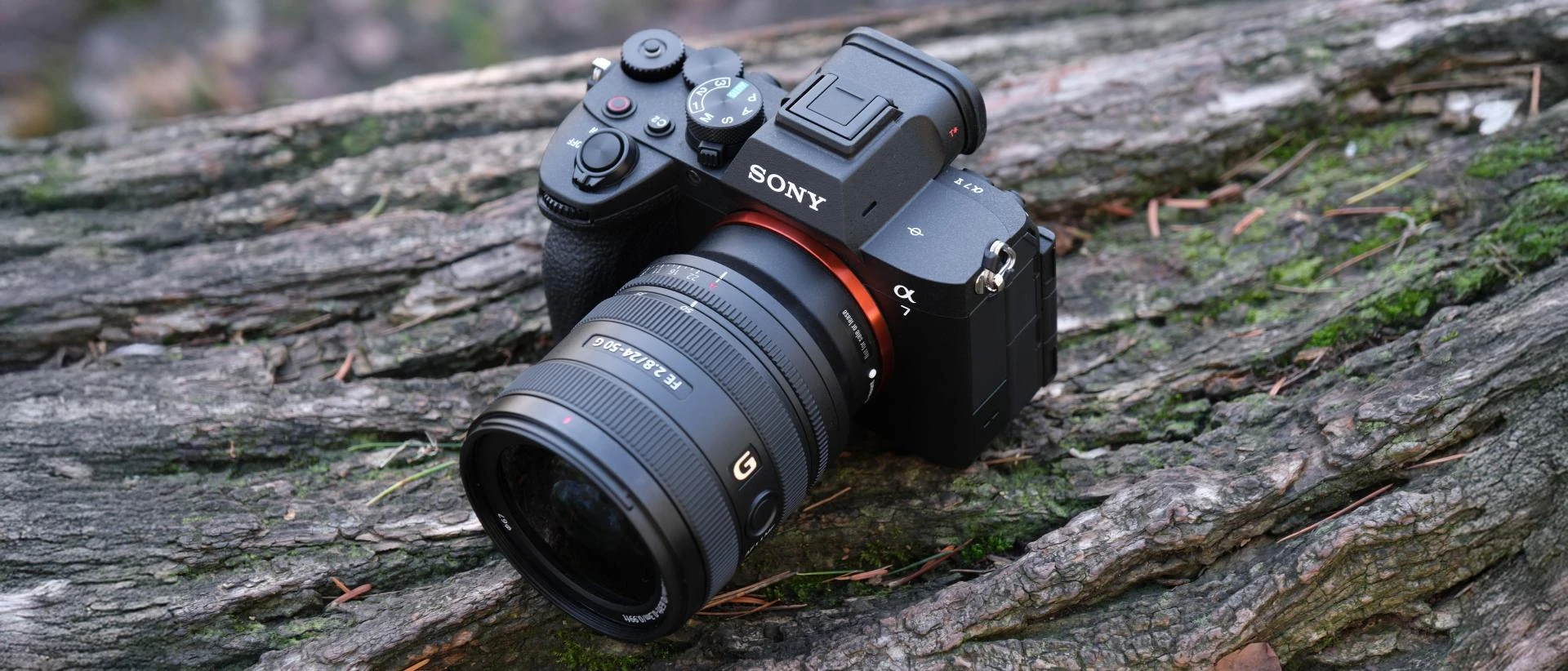

Sony A7 V Mirrorless Camera Review: The Partially Stacked Sensor Revolution
The mirrorless camera landscape has witnessed countless innovations over the past decade, but few developments have generated as much intrigue as Sony's introduction of the partially stacked sensor technology in the A7 V. This revolutionary approach represents a significant departure from traditional sensor architecture, promising to deliver a compelling balance between performance, affordability, and versatility that could reshape expectations for hybrid shooters worldwide.
Understanding the Partially Stacked Sensor Innovation
At the heart of the Sony A7 V lies a groundbreaking 33-megapixel full-frame partially stacked CMOS sensor that challenges conventional wisdom about camera sensor design. Unlike the fully stacked sensors found in flagship models such as the A1 or A9 III, which offer extraordinary speed at premium prices, or traditional back-illuminated sensors that prioritize resolution and dynamic range, the partially stacked architecture occupies a strategic middle ground that addresses the needs of a broader audience.
The engineering behind this sensor involves integrating memory circuits directly beneath a portion of the imaging surface rather than across the entire photodiode array. This selective implementation accelerates data readout speeds significantly compared to conventional sensors while maintaining production costs substantially lower than fully stacked alternatives. The result is a camera that delivers impressive performance metrics without the financial burden typically associated with cutting-edge sensor technology.
Performance Characteristics That Matter
The practical implications of the partially stacked sensor become immediately apparent when examining real-world performance metrics. The A7 V achieves continuous shooting speeds of up to 8 frames per second with full autofocus and auto-exposure tracking, which represents a meaningful improvement over its predecessor while remaining accessible to enthusiasts and working professionals who don't necessarily require the blistering 30fps capabilities of more expensive models.
Rolling shutter performance marks another area where the partially stacked architecture demonstrates tangible benefits. The accelerated readout speed substantially reduces the jello effect and skewing artifacts that plague traditional sensors when capturing fast-moving subjects or executing quick panning movements. Videographers working with gimbal rigs and documentary shooters tracking unpredictable action will appreciate how this advancement translates into cleaner footage with fewer post-production headaches.
Heat management represents yet another advantage inherent to the sensor design. The efficient data processing architecture generates less thermal buildup during extended recording sessions, allowing the A7 V to capture 4K video at 60 frames per second for significantly longer periods before thermal limitations intervene. This reliability proves invaluable for wedding videographers, event documentation specialists, and content creators who cannot afford interruptions during critical moments.
Autofocus System and Subject Recognition
Sony has equipped the A7 V with the latest iteration of their acclaimed autofocus system, leveraging artificial intelligence and machine learning algorithms to identify and track an impressive array of subjects with remarkable tenacity. The camera recognizes humans, animals, birds, insects, vehicles, and trains with sophisticated precision that borders on intuitive, maintaining focus lock even when subjects temporarily disappear behind obstacles or move through challenging lighting conditions.
The autofocus system utilizes 759 phase-detection points covering approximately 94 percent of the imaging area, ensuring that subjects positioned throughout the frame receive equal attention and accuracy. This extensive coverage proves particularly valuable when composing unconventional shots or tracking subjects that refuse to cooperate with traditional compositional guidelines. The Real-time Tracking function demonstrates impressive intelligence when following erratic movement patterns, making it an invaluable tool for sports photographers, wildlife enthusiasts, and anyone capturing spontaneous moments.
Eye autofocus operates with almost supernatural precision, locking onto subjects' eyes even when they occupy a relatively small portion of the frame or appear partially obscured. The system seamlessly transitions between eyes when subjects turn their heads and recognizes eyes through sunglasses or partial shadows with impressive reliability. Portrait photographers and documentary filmmakers will find this capability indispensable for maintaining critical sharpness where it matters most.
Video Capabilities for Modern Creators
The Sony A7 V positions itself as a formidable hybrid tool that refuses to compromise video specifications in favor of still photography prowess. The camera records 4K video at up to 60 frames per second using full sensor width without pixel binning, ensuring maximum image quality and field of view preservation. This oversampled approach delivers exceptional sharpness and detail retention that rivals dedicated cinema cameras costing significantly more.
Internal 10-bit 4:2:2 recording provides substantial flexibility for color grading workflows, allowing editors to push footage further during post-production without encountering the banding and artifacting that plagues 8-bit recordings. Support for S-Log3 and S-Cinetone picture profiles gives colorists and cinematographers access to Sony's professional color science without requiring investment in dedicated cinema camera systems.
Slow-motion enthusiasts will appreciate the 120fps recording capability at Full HD resolution, which produces smooth slow-motion sequences suitable for highlighting critical moments or adding dramatic emphasis. The combination of effective in-body stabilization and electronic stabilization modes provides remarkably steady footage even when shooting handheld, reducing reliance on external stabilization equipment for many applications.
Build Quality and Ergonomic Considerations
Sony has clearly listened to feedback from professional users regarding ergonomic refinements, and the A7 V reflects this attention through numerous thoughtful design improvements. The camera body features a deeper grip that accommodates larger hands more comfortably during extended shooting sessions, reducing fatigue and improving overall handling stability when mounting larger lenses. The intuitive placement of frequently accessed controls minimizes the need to remove your eye from the viewfinder, maintaining compositional awareness during critical moments.
The magnesium alloy construction provides robust protection against environmental challenges while maintaining a reasonable weight that balances well with professional-grade lenses. Weather sealing throughout the body and lens mount area offers confidence when working in adverse conditions, though photographers should still exercise reasonable caution during heavy precipitation or in particularly dusty environments. The camera feels substantial without becoming burdensome during all-day shooting assignments.
The electronic viewfinder presents a high-resolution 3.69-million-dot OLED display with 120fps refresh rates that virtually eliminate lag and provide an accurate preview of exposure and color balance. The articulating rear touchscreen features improved responsiveness compared to previous generations, making menu navigation and focus point selection considerably more intuitive. Dual card slots accepting both CFexpress Type A and SD UHS-II cards provide flexible storage options and reliable backup redundancy for professional workflows.
Image Quality Across the Exposure Range
The 33-megapixel resolution strikes an ideal balance for most photographers, providing sufficient detail for substantial cropping and large-format printing without generating unwieldy file sizes that burden storage systems and slow down editing workflows. The sensor delivers excellent dynamic range that preserves detail in both highlight and shadow regions, giving photographers substantial latitude for exposure recovery during post-processing.
Low-light performance proves impressive throughout the native ISO range, which extends from 100 to 51,200 with expanded settings reaching ISO 50 and 204,800. Noise remains well-controlled through ISO 6400, with usable results extending to ISO 12,800 for many applications. The sensor's efficient design and advanced processing algorithms maintain color accuracy and fine detail even when pushing sensitivity settings to accommodate challenging lighting scenarios.
Color reproduction demonstrates the refined color science that Sony has developed through years of professional camera development. Skin tones render naturally without requiring extensive adjustment, and the camera handles mixed lighting conditions with commendable grace. The various color profile options provide flexibility for photographers with specific preferences while maintaining consistency across Sony's camera lineup.
Lens Compatibility and System Integration
The Sony E-mount ecosystem offers photographers access to an extensive selection of native lenses spanning every conceivable focal length and application. From compact prime lenses optimized for portability to professional zooms delivering uncompromising optical performance, the system accommodates diverse shooting styles and creative visions. Third-party manufacturers have embraced the E-mount platform enthusiastically, expanding options further and often providing compelling alternatives at attractive price points.
For photographers building comprehensive kits, considering specialized optics like a telephoto lens becomes essential for capturing distant subjects with appropriate magnification and compression characteristics. Wide-angle enthusiasts exploring architectural photography or astrophotography applications might investigate options such as prime lenses offering fast apertures and minimal distortion characteristics. Those interested in specific focal lengths can research pricing for options including the sigma 16mm 1.4 price in pakistan to determine how various manufacturers position their offerings within the market.
The A7 V maintains excellent compatibility with older lenses through adapters, allowing photographers to leverage legacy glass from various systems while benefiting from modern autofocus and stabilization technologies. This adaptability protects existing investments and opens creative possibilities through characterful vintage optics that impart distinctive rendering qualities.
Battery Life and Power Management
Sony has made meaningful strides in power efficiency with the A7 V, and the results manifest in practical shooting scenarios that extend operational time between charges. The camera utilizes the NP-FZ100 battery that has become standard across Sony's professional mirrorless lineup, providing approximately 530 shots per charge when using the electronic viewfinder according to CIPA standards. Real-world usage typically exceeds these conservative estimates, with many photographers reporting substantially longer battery life during typical shooting sessions.
The camera supports USB Power Delivery charging and powering, enabling photographers to maintain operation indefinitely when connected to appropriate power sources. This capability proves particularly valuable for extended video recording sessions, time-lapse photography, and studio work where proximity to power outlets makes tethered operation practical. The ability to charge batteries in-camera via USB-C simplifies travel packing and reduces the number of proprietary chargers photographers must carry.
Connectivity and Modern Workflow Integration
The A7 V embraces contemporary workflow demands through comprehensive connectivity options that facilitate efficient file transfer and remote operation. Built-in Wi-Fi and Bluetooth enable seamless pairing with smartphones and tablets for wireless image transfer, remote camera control, and automatic location data embedding. The implementation proves reliable and reasonably fast for typical usage scenarios, though photographers moving large volumes of high-resolution files will still prefer wired connections for maximum transfer speeds.
The USB-C port supports high-speed data transfer and tethered shooting workflows that integrate smoothly with Adobe Lightroom and Capture One. Professional photographers working in studio environments or requiring immediate client review will appreciate the responsive tethered operation and the ability to trigger captures remotely while maintaining full camera control.
The camera features a full-size HDMI port that outputs clean 4K signals for external recording devices and professional monitoring solutions. This specification proves essential for videographers requiring extended recording times, specialized codecs, or enhanced monitoring capabilities beyond the camera's internal screen and viewfinder.
Comparing the Competition
Within the hybrid full-frame mirrorless segment, the Sony A7 V faces competition from capable alternatives including the Canon EOS R6 Mark II, Nikon Z6 III, and Panasonic Lumix S5 II. Each camera brings distinct strengths and compromises to the table, making direct comparisons somewhat nuanced depending on individual priorities and existing system investments.
The Canon R6 Mark II offers excellent autofocus performance and ergonomics that appeal to photographers transitioning from Canon's DSLR lineup. However, the A7 V delivers superior video specifications and slightly better low-light performance. The Nikon Z6 III provides robust build quality and an impressive viewfinder experience while matching much of the A7 V's performance envelope. The Panasonic S5 II emphasizes video features and offers compelling value but operates within a less mature lens ecosystem.
Sony's partially stacked sensor gives the A7 V a distinctive technical advantage that manifests in measurably faster readout speeds and reduced rolling shutter compared to competitors utilizing traditional sensor architectures. This differentiation becomes increasingly important as hybrid shooting workflows become standard rather than exceptional among professional photographers and serious enthusiasts.
Who Should Consider the Sony A7 V
The Sony A7 V targets hybrid shooters who refuse to choose between exceptional still photography capabilities and professional video features. Wedding photographers splitting their time between capturing decisive moments and recording ceremony highlights will find the camera exceptionally well-suited to their demanding workflows. Content creators producing both static imagery for social platforms and video content for YouTube or commercial clients will appreciate the seamless transition between capture modes.
Wildlife and sports photographers who occasionally venture into video documentation will benefit from the autofocus performance and continuous shooting speeds without paying the premium associated with specialized sports cameras. Event photographers covering corporate functions, concerts, and festivals will value the reliable autofocus, excellent low-light performance, and flexible video options that expand their service offerings.
Enthusiast photographers serious about advancing their craft will find the A7 V provides room for growth without overwhelming them with unnecessary complexity. The camera delivers professional capabilities while maintaining approachability for photographers still developing their technical skills and creative vision.
Long-Term Value and System Considerations
Investing in any camera system extends beyond the immediate body purchase to encompass lenses, accessories, and long-term upgrade paths. Sony's commitment to the E-mount platform across multiple product generations provides confidence that current investments will remain relevant as future bodies introduce incremental improvements. The extensive lens selection and robust third-party support ensure photographers can build comprehensive kits tailored to their specific needs without encountering frustrating gaps in the system.
The A7 V's partially stacked sensor represents more than a temporary technological curiosity. It signals Sony's strategic direction toward making advanced sensor technologies accessible to broader audiences without compromising performance in meaningful ways. Photographers purchasing this camera today can anticipate several years of productive use before technological advancement justifies consideration of replacement options.
The strong resale market for Sony cameras provides additional financial security for photographers who upgrade equipment regularly. Well-maintained bodies retain substantial value, and the active used market facilitates selling previous equipment to fund new purchases without absorbing devastating depreciation costs.
Final Assessment and Recommendations
The Sony A7 V represents a thoughtful evolution in mirrorless camera design that prioritizes practical performance improvements over specification sheet bragging rights. The partially stacked sensor delivers tangible benefits that enhance real-world shooting experiences without inflating the price to levels that exclude enthusiastic photographers from accessing advanced technology. The balanced feature set addresses hybrid shooting demands comprehensively while maintaining focus on the fundamental qualities that determine whether a camera succeeds or fails during actual assignments.
Image quality remains excellent throughout the exposure range, with particular strength in low-light scenarios that challenge lesser cameras. The autofocus system performs with impressive reliability across diverse shooting situations, maintaining focus lock with tenacity that inspires confidence during unpredictable moments. Video capabilities satisfy demanding professional standards while remaining accessible to photographers expanding their skill sets into motion capture.
Build quality and ergonomics reflect Sony's maturation as a camera manufacturer, with refinements that acknowledge feedback from professional users who depend on their equipment during challenging assignments. The camera feels substantial and confidence-inspiring without becoming burdensome during extended shooting sessions. Battery life meets professional standards, and connectivity options accommodate contemporary workflows efficiently.
For photographers seeking a versatile tool capable of handling diverse assignments with consistent excellence, the Sony A7 V deserves serious consideration. It occupies a strategic position within Sony's lineup that addresses genuine needs rather than creating artificial market segmentation. The partially stacked sensor technology demonstrates meaningful innovation that enhances performance in practical ways rather than pursuing technological advancement for its own sake.
Conclusion
Sony's A7 V mirrorless camera establishes new expectations for what hybrid shooters should demand from their primary creative tools. The partially stacked sensor innovation proves that technological advancement need not come exclusively at premium prices or through compromise. This camera delivers professional capabilities across both still photography and video capture while remaining financially accessible to serious enthusiasts and working professionals building sustainable businesses.
The combination of reliable autofocus, excellent image quality, robust video specifications, and thoughtful ergonomic design creates a comprehensive package that succeeds across diverse shooting scenarios. Whether documenting weddings, creating content for digital platforms, pursuing wildlife photography, or exploring personal creative projects, the A7 V provides the performance foundation necessary for producing exceptional results consistently.
As mirrorless camera technology continues evolving at a remarkable pace, the A7 V represents a significant milestone that balances innovation with practicality. It demonstrates Sony's understanding that photographers value reliability and versatility as much as cutting-edge specifications. For those seeking a camera that grows with their skills and adapts to changing creative demands, the Sony A7 V offers compelling value that extends well beyond its initial purchase price.


























Sign in to leave a comment.