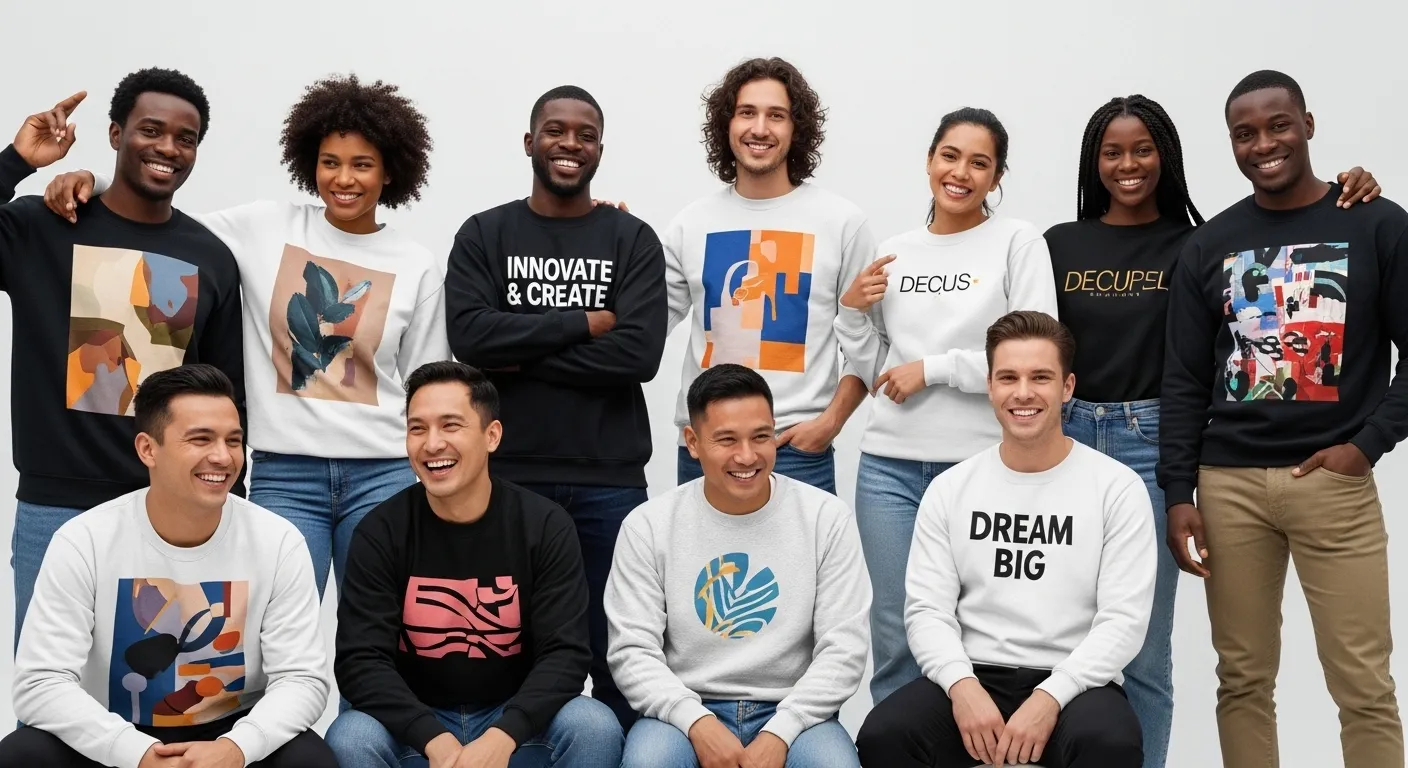

What Are Custom Printed Sweatshirts?
Custom printed sweatshirts are personalised garments featuring logos, graphics, artwork, text, branding, or promotional designs applied through professional printing technologies.
A custom sweatshirt combines comfort, durability, and visual communication within a single garment. Businesses, educational institutions, sports clubs, charities, event organisers, and fashion brands use customised sweatshirts to display unique identities and branded messaging.
Common sweatshirt styles include:
- Crew neck sweatshirts
- Oversized sweatshirts
- Heavyweight sweatshirts
- Raglan sleeve sweatshirts
- Performance sweatshirts
Examples include company logo sweatshirts, university society sweatshirts, event merchandise sweatshirts, team apparel sweatshirts, and fashion graphic sweatshirts.
Why Custom Sweatshirts Are Popular
Custom sweatshirts provide long-term wearability and large decoration areas for branding and personalisation.
Unlike lightweight garments, sweatshirts offer enhanced insulation and durability. The garment structure provides multiple print locations suitable for logos, graphics, slogans, and promotional messages.
Standard decoration locations include:
- Left chest area
- Centre chest area
- Full front panel
- Full back panel
- Sleeve sections
These areas support detailed artwork and visible branding elements.
How Custom Printed Sweatshirts Are Produced
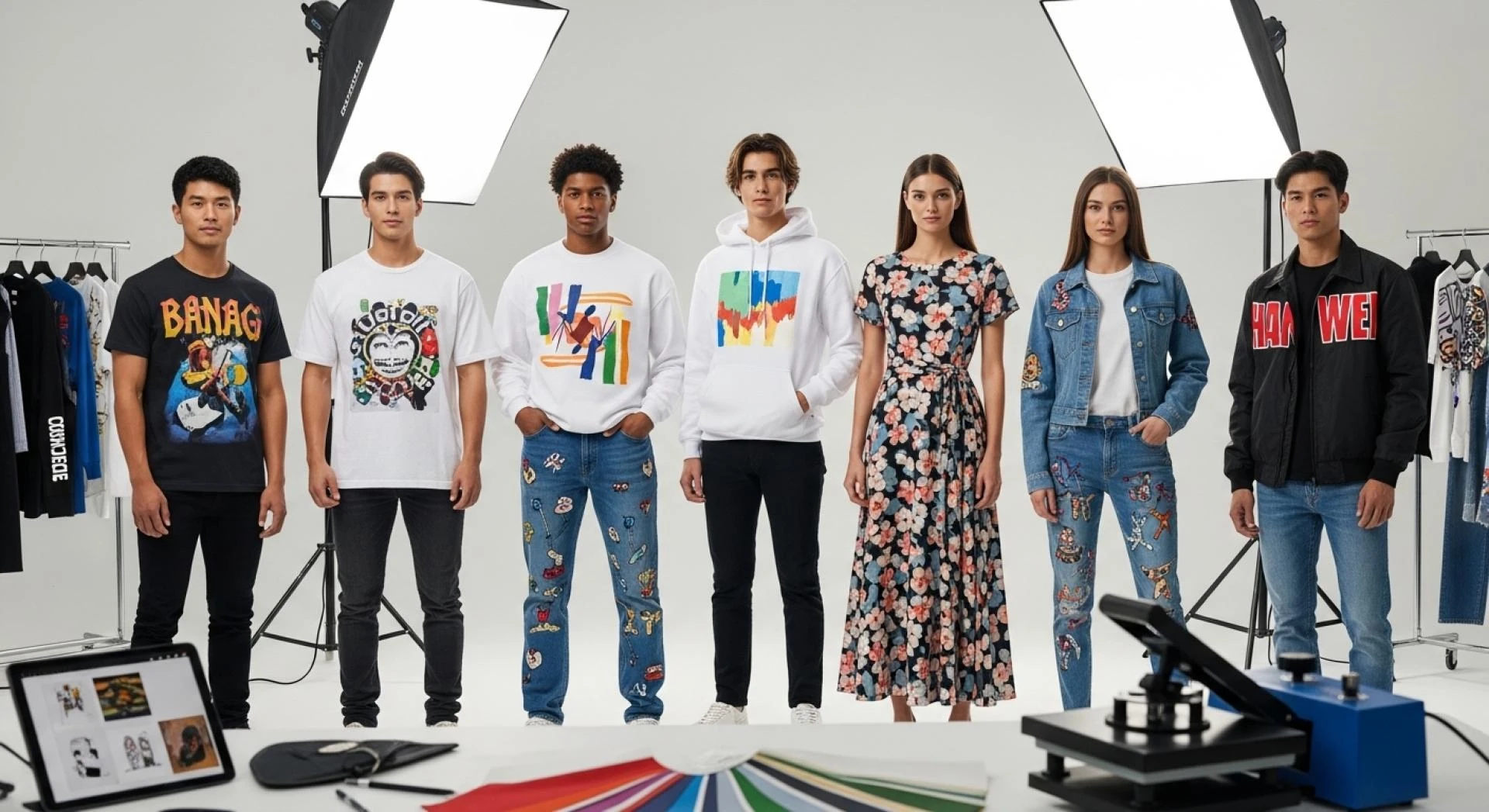
Professional sweatshirt printing applies designs through specialised decoration methods selected according to garment type and order volume.
Screen Printing
Screen printing transfers ink through mesh screens directly onto sweatshirt fabric.
This method remains widely used for medium and large production runs because it produces consistent results.
Key advantages include:
- Strong colour coverage
- Long-lasting durability
- Efficient bulk production
- Consistent print quality
Orders exceeding 50 garments frequently utilise screen printing technology.
Direct-to-Garment (DTG) Printing
DTG printing applies digital artwork directly onto sweatshirt fabric using textile printers.
The process reproduces complex graphics, photographs, gradients, and multi-colour artwork with precision.
DTG printing supports:
- Small quantity orders
- Individual customisation
- Detailed illustrations
- Full-colour graphics
Direct-to-Film (DTF) Printing
DTF printing transfers designs from specialised film onto garments through heat application.
The process accommodates cotton, polyester, and blended fabrics while maintaining colour accuracy.
Heat Transfer Printing
Heat transfer printing applies pre-produced graphics using controlled temperature and pressure.
The method commonly produces personalised names, event apparel, and short-run promotional garments.
Fabric Types Used for Custom Sweatshirts
Fabric composition determines comfort, print quality, garment weight, and durability.
Cotton Sweatshirts
Cotton sweatshirts provide excellent print compatibility and soft texture.
Common sweatshirt fabric weights include:
- 280 GSM cotton
- 300 GSM cotton
- 350 GSM cotton
- 400 GSM cotton
Higher GSM values indicate denser fabric construction.
Polyester Sweatshirts
Polyester sweatshirts provide moisture management and colour retention.
Athletic organisations and performance apparel brands frequently utilise polyester garments.
Cotton-Polyester Blend Sweatshirts
Blended fabrics combine cotton comfort with polyester durability.
A common composition consists of 80% cotton and 20% polyester.
Who Uses Custom Printed Sweatshirts?
Custom sweatshirts support branding, identification, merchandising, and promotional activities across multiple industries.
Businesses
Businesses use customised sweatshirts to create consistent employee branding.
Examples include:
- Retail staff uniforms
- Warehouse apparel
- Trade exhibition clothing
- Corporate event garments
Educational Institutions
Schools, colleges, and universities use personalised sweatshirts to represent student groups and academic achievements.
Examples include:
- Graduation sweatshirts
- Society sweatshirts
- Club apparel
- Student merchandise
Sports Organisations
Sports teams use custom sweatshirts for athletes, coaches, and supporters.
Personalised designs often include team names, sponsor logos, and player identification.
Fashion Brands
Clothing brands create retail collections using custom sweatshirt designs.
Popular design elements include:
- Graphic artwork
- Typography prints
- Brand logos
- Limited-edition graphics
Benefits of Custom Printed Sweatshirts
Custom sweatshirts combine branding visibility with long-term garment usability.
Key advantages include:
- Strong brand recognition
- Large printable surfaces
- Extended garment lifespan
- Broad size availability
- Seasonal versatility
- Professional appearance
Unlike disposable promotional materials, sweatshirts provide repeated visibility through regular use.
Common Sweatshirt Customisation Options
Modern sweatshirt printing supports multiple personalisation methods and design placements.
Frequently requested customisation features include:
- Company logos
- Employee names
- Team numbers
- Event branding
- Promotional slogans
- Graphic artwork
Examples include embroidered chest logos, sleeve graphics, oversized back prints, and front-centre artwork.
Standard Sweatshirt Print Dimensions
Professional printing accommodates multiple print sizes depending on design objectives.
| Print Position | Typical Size |
|---|---|
| Left Chest | 8–12 cm |
| Centre Chest | 25–30 cm |
| Full Front | 30–35 cm |
| Full Back | 30–40 cm |
| Sleeve Print | 8–12 cm |
Large-format printing supports detailed branding and promotional graphics.
Sustainability in Sweatshirt Production
Modern sweatshirt manufacturing increasingly incorporates environmentally responsible materials and production methods.
Common sustainability initiatives include:
- Organic cotton fabrics
- Recycled polyester fibres
- Water-based inks
- Reduced-waste production systems
These approaches support resource efficiency while maintaining garment performance standards.
How Custom Sweatshirts Support Branding
Custom sweatshirts function as wearable branding assets that display company identity in public and professional environments.
Employees, customers, event participants, and supporters extend brand visibility through everyday garment use.
Common branding elements include:
- Company logos
- Website addresses
- Brand colours
- Campaign messages
- Social media identifiers
At Taq Inc., premium printed clothing combines high-quality garment construction with professional customisation. Taqinc.co.uk provides personalised sweatshirt printing solutions for businesses, organisations, educational institutions, and fashion brands throughout the UK.
Statistics About Custom Apparel
Custom apparel remains one of the largest categories within the promotional products industry.
Industry data consistently identifies sweatshirts among the most frequently customised outerwear garments due to their large decoration areas, extended wear seasons, and suitability for corporate, educational, and retail applications.
Factors Affecting Sweatshirt Print Quality
Print quality depends on artwork preparation, fabric composition, printing technology, and curing procedures.
Critical quality factors include:
- High-resolution artwork files
- Fabric-compatible inks
- Accurate colour management
- Professional curing temperatures
- Quality-controlled finishing
These variables influence print durability, colour consistency, and wash performance.

Conclusion
Custom printed sweatshirts provide personalised apparel solutions for branding, merchandising, events, education, sports, and retail fashion.
Professional printing methods, including screen printing, DTG printing, DTF printing, and heat transfer printing, support detailed customisation across cotton, polyester, and blended fabrics. Businesses, schools, charities, sports organisations, and clothing brands continue to utilise customised sweatshirts because they combine visibility, comfort, durability, and professional presentation.
The combination of customisation, practicality, and long-term wearability makes personalised sweatshirts a widely used garment within modern apparel and branding industries.
FAQ Section
What are custom printed sweatshirts?
Custom printed sweatshirts are personalised garments featuring logos, graphics, text, branding, or artwork applied through professional printing technologies.
How are custom sweatshirts printed?
Custom sweatshirts are produced using screen printing, Direct-to-Garment printing, Direct-to-Film printing, and heat transfer printing methods.
Why do businesses use custom sweatshirts?
Businesses use customised sweatshirts to improve employee identification, strengthen brand visibility, and create consistent workplace apparel.
What fabrics are commonly used for sweatshirt printing?
Cotton, polyester, and cotton-polyester blends are the most commonly used sweatshirt fabrics.
How long do sweatshirt prints last?
Professionally printed sweatshirt designs maintain appearance through dozens of wash cycles when appropriate production methods are used.
What customisation options are available for sweatshirts?
Common options include logos, names, artwork, team numbers, promotional slogans, and embroidered branding.
Why are custom sweatshirts popular?
Custom sweatshirts combine comfort, branding visibility, durability, and versatile everyday wear within a single garment.
























Sign in to leave a comment.