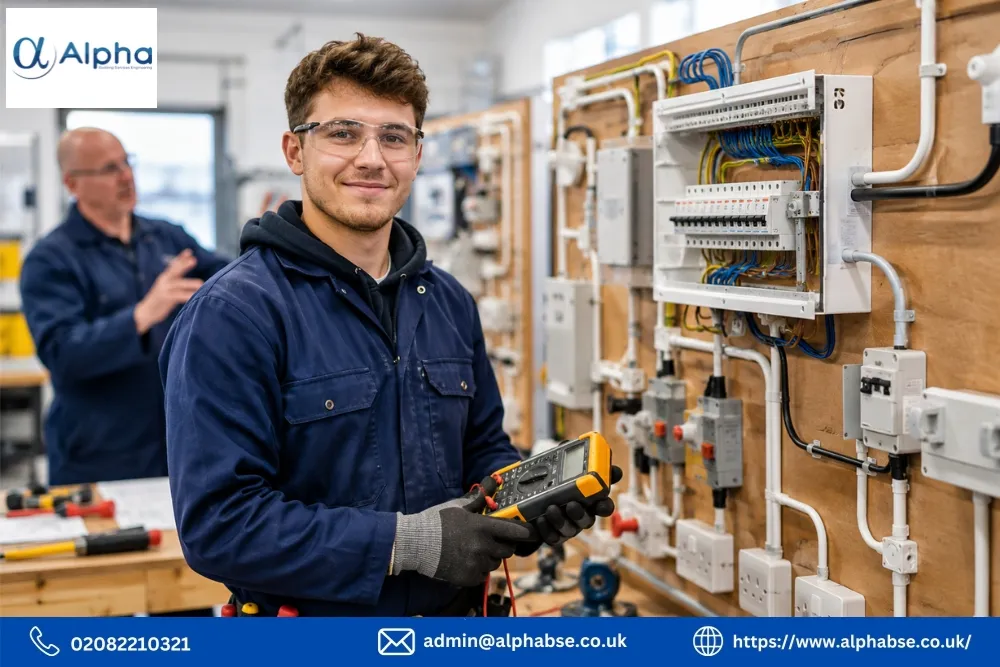

Searching for "electrical training courses near me" usually means one of two things: you're starting from scratch and want to become a qualified electrician, or you already work in the trade and need to top up your qualifications — perhaps the 18th Edition wiring regulations, an NVQ, or a specific certificate your employer or local authority now requires.
Either way, the UK electrical training market is crowded. Colleges, private training centres, and online providers all claim to offer "the fastest route" or "guaranteed job placement," and it's genuinely hard to tell which of them will actually get you qualified to work legally and safely. This guide walks through how UK electrical qualifications actually fit together, what to check before you enrol anywhere, and how to find a course near you that's worth the money.
How Electrical Qualifications Work in the UK
Before comparing local providers, it helps to understand the qualification structure, because course adverts often skip this part.
The Two Main Routes
- Apprenticeship route (traditional path) This combines paid on-the-job training with college attendance, usually over three to four years, leading to an NVQ Level 3 in Electrical Installation plus the AM2 assessment. Most local colleges run this alongside an employer, and you apply through the government's apprenticeship service or directly with local electrical contractors who are recruiting.
- Fast-track route (private training providers) Aimed at career changers, this typically covers Level 2 and Level 3 diplomas, the 18th Edition (BS 7671), and inspection and testing (2391), often over several months rather than years. It's faster on paper, but it does not include the "on-site experience hours" that NVQ assessment requires — you'll usually need a separate route (often called an ECS Gold Card portfolio route) to prove competence afterwards. Neither route is automatically better. The apprenticeship builds real site hours as you go; the fast-track path gets classroom knowledge sorted quickly but leaves the practical logbook to sort out later. Anyone advertising a course that promises to make you a "fully qualified electrician in 12 weeks" with no further steps is being misleading — that's not how UK certification works, and it's worth being wary of any provider who suggests otherwise.
Key Qualifications to Look Out For
| Qualification | What it covers | Typical duration | Who it's for |
|---|---|---|---|
| Level 2 Diploma in Electrical Installation | Basic wiring, safety, regulations | 6–12 months (part-time) | Complete beginners |
| Level 3 Diploma in Electrical Installation | Advanced installation, fault-finding, design | 1–2 years (part-time) or part of an apprenticeship | Progressing tradespeople |
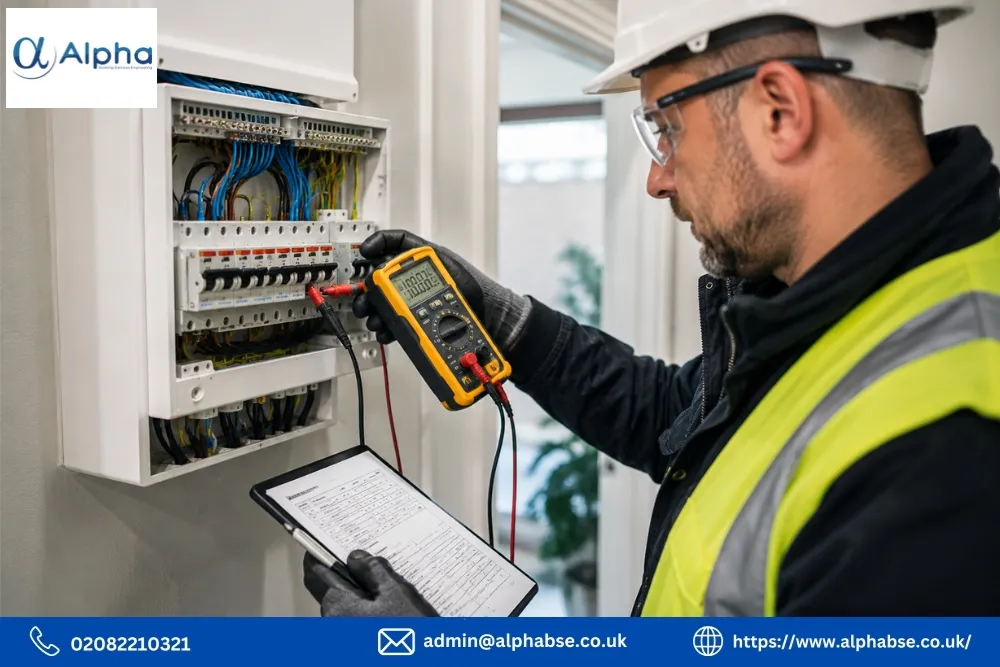
| 18th Edition (BS 7671) | Current UK wiring regulations | 3–5 days | Anyone working on UK electrical installations |
| 2391 Inspection & Testing | Testing and certifying installations | 5–10 days | Electricians moving into testing/EICR work |
| NVQ Level 3 | On-site competence assessment | Ongoing, portfolio-based | Those needing an ECS Gold Card |
| AM2 / AM2S | Practical end-point assessment | 2–3 days | Final step before full qualification |
If a course near you doesn't map onto one of these recognised qualifications, ask what it actually leads to before paying anything.
What to Check Before Booking a Local Course
1. Awarding Body and Accreditation
Legitimate electrical courses are accredited by bodies such as City & Guilds, EAL, or NOCN. Check the provider's website for the exact qualification code, then search for it on the awarding body's own database. This single step filters out a large share of low-quality private colleges.
2. Whether It Leads to NAPIT, NICEIC, or ECS Registration
If your goal is to work as a self-employed electrician or register with a competent person scheme (NICEIC, NAPIT, ELECSA), ask the training centre directly whether their course pathway is recognised by these bodies. Some short courses are useful CPD but won't count toward registration on their own.
3. Practical Workshop Time, Not Just Classroom Hours
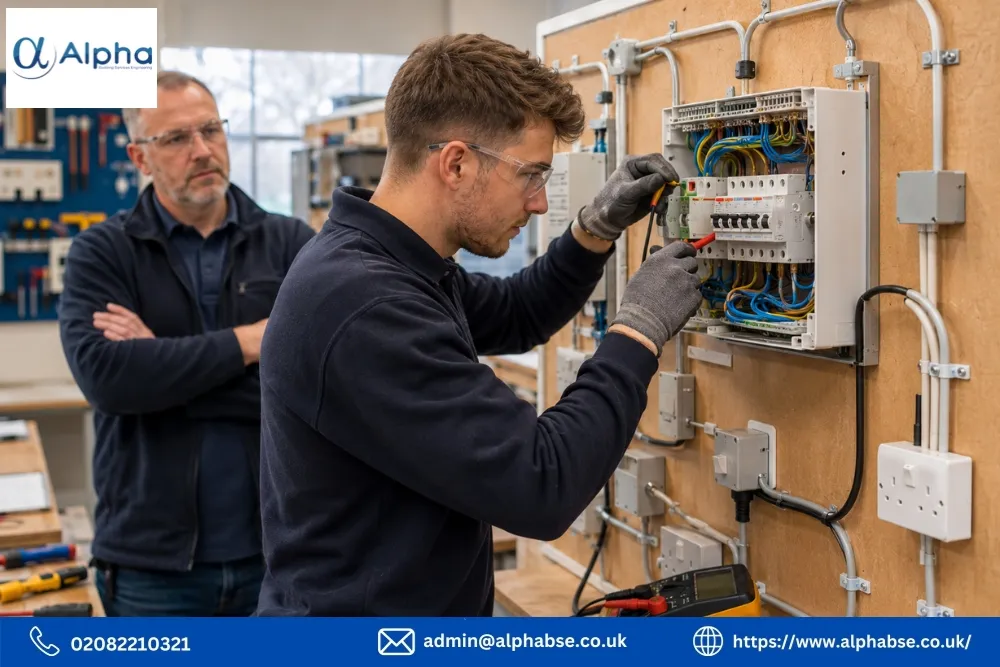
Electrical work is physical and hands-on. A course that's heavy on theory but light on live practical sessions — wiring boards, consumer units, testing equipment — won't prepare you properly for site work or the AM2 assessment. Ask how many hours are workshop-based versus lecture-based.
4. Class Sizes and Equipment Access
Smaller local training centres often let you spend more time on the actual test rigs and equipment, rather than queuing behind a dozen other learners. If you're comparing two centres nearby, ask directly about student-to-tutor ratios and how many rigs are available per session.
5. Funding Options
Depending on your age, employment status, and where you live in the UK, you may be eligible for:
- An Advanced Learner Loan (for Level 3 and above)
- Local council adult education funding
- Employer-sponsored training if you're already working in construction or facilities
- Apprenticeship funding if you're under 25 or your employer runs an apprenticeship levy scheme
It's worth asking your local college's admissions office directly rather than relying on a private provider's marketing page, since eligibility rules vary by region.
Finding Providers Near You
A general search will surface a mix of colleges, national training chains, and small independent centres. To narrow it down sensibly:
- Search using your specific qualification target (e.g. "Level 3 electrical installation course [your town]") rather than a vague phrase — this returns more relevant, locally accredited options.
- Check Ofsted reports for FE colleges, which are public and give a genuine picture of teaching quality.
- Look at recent Google reviews specifically mentioning pass rates, tutor support, and equipment condition, rather than generic five-star ratings with no detail.
- Contact two or three centres and ask the same set of questions (accreditation, practical hours, funding, progression route) so you can compare answers directly rather than judging on price alone.
A Realistic Look at Costs
Private fast-track packages covering Level 2, Level 3, 18th Edition, and 2391 together commonly range from roughly £3,000 to £7,000, depending on region and whether accommodation is included for residential blocks. College-based part-time diplomas are usually cheaper per module but spread the cost over a longer period, often with loan funding available. Apprenticeships are the lowest-cost entry route since you're paid a wage while training, though earnings during the apprenticeship years are lower than a qualified electrician's rate.
Be cautious of unusually cheap all-in-one packages — check exactly which qualifications and assessment fees (including the AM2, which is a separate cost) are actually included before comparing price against a fuller package elsewhere.
Key Takeaways
- UK electrical qualifications follow a defined structure (Level 2 → Level 3 → NVQ/AM2 → registration); no course can shortcut around this legally.
- Apprenticeships build practical site hours as you go; fast-track private courses front-load classroom learning but usually require a separate portfolio route afterwards.
- Always verify accreditation with the awarding body directly, not just the provider's own marketing.
- Ask about practical workshop hours, class sizes, and equipment access before enrolling.
- Compare funding options through your local college or council before paying full private-provider prices.
- Get assessment fees (like the AM2) confirmed separately, since these are often excluded from advertised course prices.
Frequently Asked Questions
Q: Can I become a fully qualified electrician through a short course alone?
A: No. Short private courses can get you through the Level 2, Level 3, and 18th Edition theory quickly, but full qualification also requires an NVQ portfolio of practical site work and the AM2 assessment. Anyone claiming a short course alone makes you "fully qualified" is not describing the actual UK process.
Q: Is an apprenticeship better than a private fast-track course?
A: It depends on your circumstances. Apprenticeships suit school leavers or those able to earn while training over several years. Fast-track courses suit career changers who need to compress the classroom side of training and can arrange the practical portfolio separately, often through their employer.
Q: How do I check if a local training centre is legitimate?
A: Confirm the exact qualification code with the awarding body (City & Guilds, EAL, or NOCN), check for Ofsted reports if it's a college, and ask directly whether the course leads to NICEIC, NAPIT, or ECS registration if that's your end goal.
Q: What's the difference between the 18th Edition and 2391 qualifications?
A: The 18th Edition covers the current UK wiring regulations (BS 7671) that all electricians need to know. The 2391 is a separate, more advanced qualification specifically for inspecting and testing electrical installations, typically taken by electricians moving into EICR and periodic testing work.
Q: Do I need to complete training near me, or can I study online?
A: The theory elements (regulations, calculations, some diploma units) can often be studied online or in a hybrid format. The practical and testing elements cannot — these require in-person workshop time with real equipment, which is why location still matters for at least part of your training.



























Sign in to leave a comment.