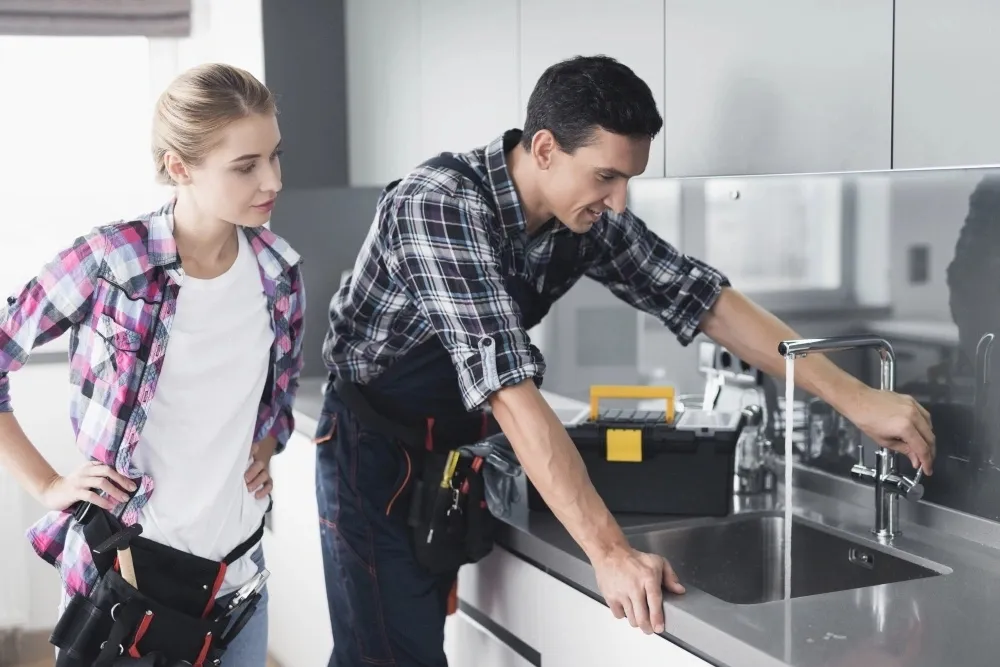

Plumbing appeals to people who want practical, hands-on work that pays well without needing a degree. You're solving physical problems — a burst pipe, a broken boiler, a bathroom that needs fitting — and you can see the results of your work by the end of the day. That's rare in a lot of modern jobs.
There's also genuine job security behind it. Every building with running water needs someone to install and maintain the pipework, and the UK has an ageing plumbing workforce alongside ongoing demand for new housing and heating upgrades (including the shift toward heat pumps as gas boilers are phased down). Fewer young people are entering the trade than are retiring out of it, which keeps demand — and rates — reasonably strong in most parts of the country.
This guide covers the realistic path from "never held a wrench" to fully qualified, registered plumber: what to study, how long it takes, what it costs, what you'll earn, and where the pitfalls are.
What Does a Plumber Actually Do?
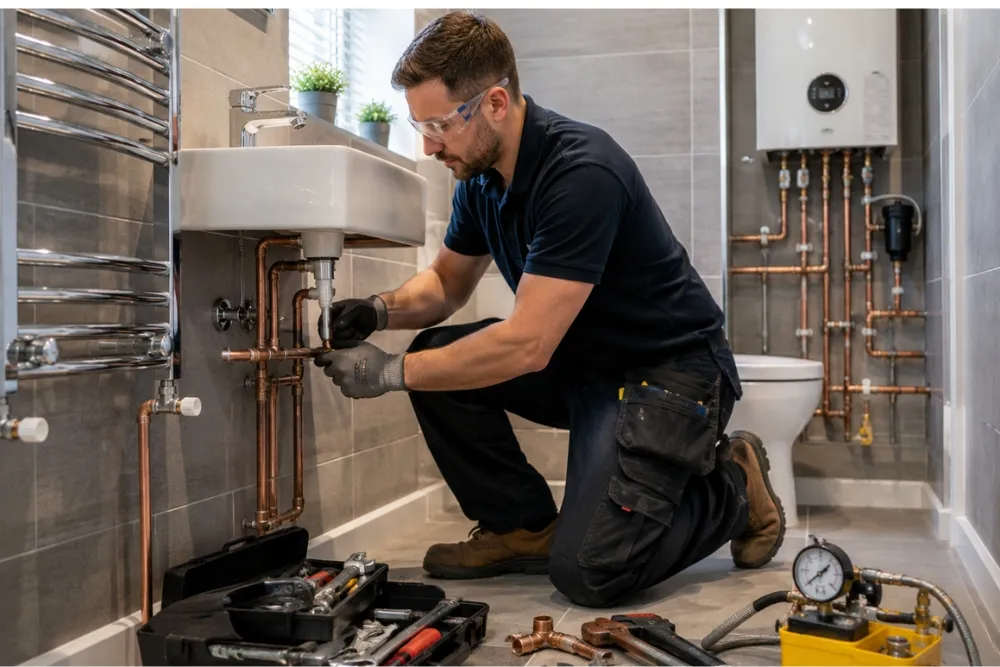
Before committing to training, it helps to know what the job covers day to day. Plumbers work across:
- Installation — fitting bathrooms, kitchens, boilers, central heating systems, and water supply pipework in new builds and renovations
- Maintenance and servicing — annual boiler checks, system flushing, and general upkeep
- Repairs — leaks, blockages, faulty valves, broken heating systems
- Gas work (if Gas Safe registered) — boiler installation, servicing, and repair
- Compliance and testing — pressure testing, water regulations compliance, and safety certification
Many plumbers specialise over time — some focus purely on bathroom fitting, others move into commercial or industrial pipework, and many add gas or renewable heating qualifications to widen the jobs they can take on.
Routes Into Plumbing: Choosing Your Path
There are three realistic routes into the trade in the UK, and the right one depends on your age, current situation, and how much time you can dedicate.
Route 1: Apprenticeship (Best for School Leavers and Career Changers Under 25)
An apprenticeship is generally regarded as the strongest route because you're paid to train and you get supervised, on-the-job experience alongside formal qualifications — exactly what employers want to see.
How it works:
- You apply for an apprenticeship vacancy with a plumbing firm (via Find an Apprenticeship or through a local college's employer partnerships)
- You typically need GCSEs in English and Maths (grade 4/C or above), though some employers are flexible if you show aptitude
- Training runs alongside paid work — usually 3 to 4 years
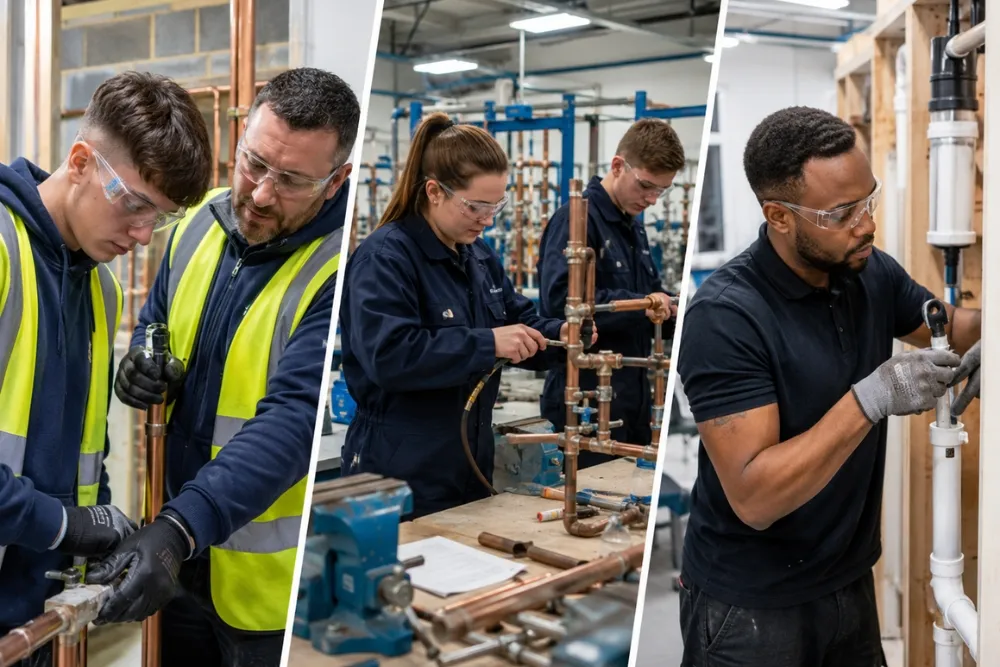
- You'll work towards a Level 2 and Level 3 Diploma in Plumbing and Domestic Heating (or the newer Plumbing and Domestic Heating Technician apprenticeship standard)
What you'll earn while training: Apprentice wages start at the National Minimum Wage for apprentices (reviewed annually — check current rates on GOV.UK), rising as you progress. Many employers pay above the minimum once you're contributing real value on-site.
Why this route works well: You graduate with real site experience, a qualification, and often a job offer from the company that trained you. Employers trust apprentice-trained plumbers because they've already proven themselves on live jobs, not just in a workshop.
Route 2: Full-Time College Course (Best If You Can't Secure an Apprenticeship Straight Away)
If you can't find an apprenticeship placement immediately, or you'd rather get the classroom-based qualifications first, a college course is a solid alternative.
How it works:
- Enrol in a Level 2 Diploma in Plumbing Studies, followed by a Level 3 Diploma, at a local further education college
- Full-time study typically takes around 2 years to reach Level 3
- You'll need practical work experience alongside your studies to become genuinely employable — most colleges help arrange placements
The catch: A college qualification alone doesn't make you job-ready. Employers want to see logged practical hours and real-world problem-solving, not just classroom assessments. You'll usually still need to find work experience or a junior mate/labourer position to build up hands-on hours before you can work unsupervised.
Route 3: Fast-Track Adult Courses (Best for Career Changers Over 25)
These are private, intensive courses aimed at adults switching careers, often lasting anywhere from a few weeks to several months.
Important reality check: Fast-track courses can give you a foundation, but they are widely viewed with more scepticism by employers and by bodies like Gas Safe compared to apprenticeships or full college diplomas, because they involve far less supervised practical experience. If you go this route, expect to need a longer period working under a qualified plumber afterwards before you can operate independently — and check that any course you pay for leads to a recognised, Ofqual-regulated qualification (such as an NVQ or a City & Guilds diploma), not just a certificate of attendance.
Before paying for any fast-track course, verify it's accredited by checking the Ofqual Register of Regulated Qualifications and confirm it includes an assessed practical competence element (an NVQ or equivalent), not classroom theory alone.
Qualifications You'll Actually Need

The NVQ matters more than people expect. It's the practical competence assessment that proves — through on-site evidence — that you can actually do the job to a professional standard, not just that you've passed exams. Most serious employers and letting agents will ask whether you hold an NVQ, not just a diploma.
Do You Need Gas Safe Registration?
Only if you plan to work on gas appliances (boilers, gas fires, gas cookers). Plenty of plumbers work purely on water systems, bathrooms, and unvented heating without ever touching gas — but Gas Safe registration significantly widens your earning potential because boiler installation and servicing is consistently in demand.
To register, you'll need to complete Gas Safety courses (such as CCN1 for domestic gas installation) after your core plumbing qualification, then pass Gas Safe assessments. It's an additional cost and time investment, but most established plumbers view it as worthwhile within the first few years of their career.
How Much Does Plumbing Training Cost?
Costs vary considerably depending on route:
- Apprenticeship: Free to you — the employer and government fund the training, and you're paid a wage throughout
- College Level 2 + 3 Diploma (self-funded): Roughly £3,000–£7,000 total, though many colleges offer funded places for eligible learners (age, benefits status, or prior qualifications can affect eligibility — check with your local college)
- Fast-track adult courses: Typically £3,000–£10,000+ depending on provider and course length, with some offering finance plans
- Additional Gas Safe training: Often an extra £1,500–£3,000 on top of core plumbing qualifications
If cost is a barrier, an apprenticeship is worth pursuing seriously before considering paid alternatives — it removes the financial burden almost entirely and tends to lead to stronger long-term employment outcomes.
How Long Does It Take to Become a Fully Qualified Plumber?
- Apprenticeship: 3–4 years to become a fully qualified, NVQ-assessed plumber
- College route: Around 2 years for Level 2 and 3 diplomas, plus additional time (often 1–2 years) gaining supervised work experience to complete your NVQ
- Fast-track route: A few months of initial training, followed by an extended period (commonly 1–2 years) working under supervision before you're genuinely independent
Regardless of route, expect the realistic timeline to full independent, qualified status to sit somewhere between 2 and 4 years. Anyone promising you'll be fully qualified and job-ready in a matter of weeks is being optimistic at best.
What Does a Plumber Earn in the UK?
Earnings depend heavily on experience, location, self-employment status, and specialisation (gas work typically pays more).
- Apprentice: National Minimum Wage for apprentices, rising with experience
- Newly qualified (employed): Roughly £22,000–£28,000 a year
- Experienced employed plumber: Roughly £28,000–£38,000 a year
- Self-employed plumber: Highly variable — many established self-employed plumbers earn £35,000–£55,000+ a year, with top earners in high-demand areas (particularly London and the South East) earning considerably more
- Gas Safe registered plumbers: Generally command higher rates due to boiler installation and servicing demand
Self-employment tends to offer the highest earning ceiling, but it comes with the added responsibilities of running a business — invoicing, insurance, van costs, tools, and finding your own work.
Skills That Matter Beyond the Qualification
Formal training gets you in the door, but the plumbers who build strong reputations (and therefore steady, well-paying work) tend to share a few traits:
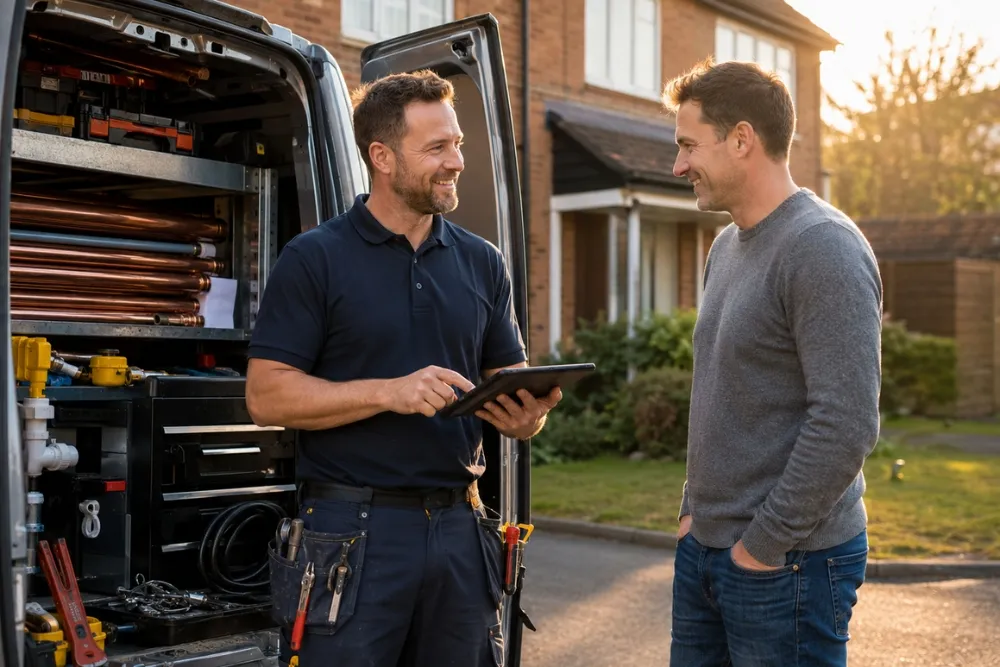
- Problem-solving under pressure — diagnosing a fault correctly the first time saves both you and the customer money
- Clear communication — explaining what's wrong and what it'll cost, in plain language, builds trust and repeat business
- Reliability and timekeeping — turning up when you say you will is, honestly, one of the biggest differentiators in trades
- Physical fitness — the job involves lifting, crouching, and working in confined spaces
- Basic business sense (for the self-employed) — pricing jobs correctly, managing cash flow, and staying on top of invoicing
Common Mistakes People Make When Entering the Trade
- Choosing an unaccredited fast-track course without checking it leads to a recognised NVQ or diploma
- Skipping the NVQ and assuming a diploma alone is enough — many employers and clients will ask specifically about NVQ status
- Underestimating the value of an apprenticeship in favour of a quicker but more expensive private course
- Going self-employed too early, before building enough experience, contacts, and confidence to manage a client base and business admin
- Ignoring Gas Safe registration if boiler work is where the steady money is in their local area
Key Takeaways
- Apprenticeships are generally the strongest route — paid training, real site experience, and a recognised qualification at the end
- Full-time college courses work well if you can't secure an apprenticeship, but expect to need extra work experience to complete your NVQ
- Fast-track adult courses can work for career changers but require careful checking for accreditation and extra supervised time afterwards
- Realistic timeline to full qualification: 2–4 years, depending on route
- Gas Safe registration significantly boosts earning potential but is a separate, additional qualification
- Self-employed plumbers generally have the highest earning ceiling, but it comes with business responsibilities
In Short
Becoming a plumber in the UK is a realistic, achievable career change or first career for most people, provided you go into it with a clear sense of the timeline and the qualifications that actually matter — namely the NVQ, not just a diploma. An apprenticeship remains the most reliable route for most people, particularly school leavers and younger career changers, while college and fast-track courses suit those who need more flexibility, provided the course is properly accredited.
Frequently Asked Questions
Q: Do I need GCSEs to become a plumber?
A: Most apprenticeships ask for GCSEs in English and Maths (grade 4/C or above), though some employers will consider candidates without these if they can demonstrate aptitude, often via a college pre-apprenticeship course.
Q: Can I become a plumber without a college qualification?
A: Not realistically as a legitimate, employable tradesperson. You need at least a Level 2 (ideally Level 3) diploma and an NVQ to demonstrate assessed practical competence, regardless of which route you take to get there.
Q: Is plumbing a good career in the UK right now?
A: Yes, largely because demand consistently outpaces the number of newly qualified plumbers entering the trade, particularly for those who also hold Gas Safe registration or renewable heating qualifications.
Q: How physically demanding is plumbing work?
A: Moderately to highly demanding — expect lifting, working in tight spaces (under sinks, in lofts, under floors), and being on your feet for most of the day.
Q: Can women train as plumbers?
A: Yes. Plumbing remains male-dominated, but women are increasingly entering the trade, and several UK training providers and organisations run initiatives specifically to support women into construction and trade careers.
Q: Do I need my own van and tools to start out?
A: Not while employed or during an apprenticeship — most employers provide tools and a van. You'll typically only need your own kit once you go self-employed.


























Sign in to leave a comment.