

Whether you are thinking about starting a career as an electrician, looking to pick up a specialist qualification, or simply need to renew your 18th Edition wiring regulations certificate, finding the right electrical training close to home can feel confusing.
There are dozens of providers, several qualification bodies, multiple course types, and a series of 2026 regulatory deadlines that affect what training you may now legally need. This guide cuts through that noise.
It covers every main type of electrical training course available in the UK, explains who each one is designed for, gives you realistic costs and timescales, and shows you exactly how to find a reputable accredited provider in your area.
What Type of Electrical Training Course Do You Actually Need?
Before searching for providers, it helps to understand the landscape. Electrical training in the UK broadly falls into five categories.
1. Entry-Level Courses (Complete Beginners)
If you have no prior electrical experience, your starting point is a City & Guilds Level 1 or Level 2 Diploma in Electrical Installations.
The Level 1 introduces fundamental principles: electrical science, basic safety, and how building services fit together. The Level 2 (City & Guilds 2365) takes you deeper into circuit design, wiring methods, and safe isolation. Both combine classroom learning with practical workshop sessions.
These are not fast-track shortcuts. They form the genuine foundation of your knowledge before you move on to more advanced qualifications.
Who this is for: Anyone starting from scratch with no previous electrical background.
2. The Main Qualification Pathway (Level 2 to Gold Card)
For those pursuing a career as a fully qualified electrician, the recognised pathway in the UK involves four linked stages:
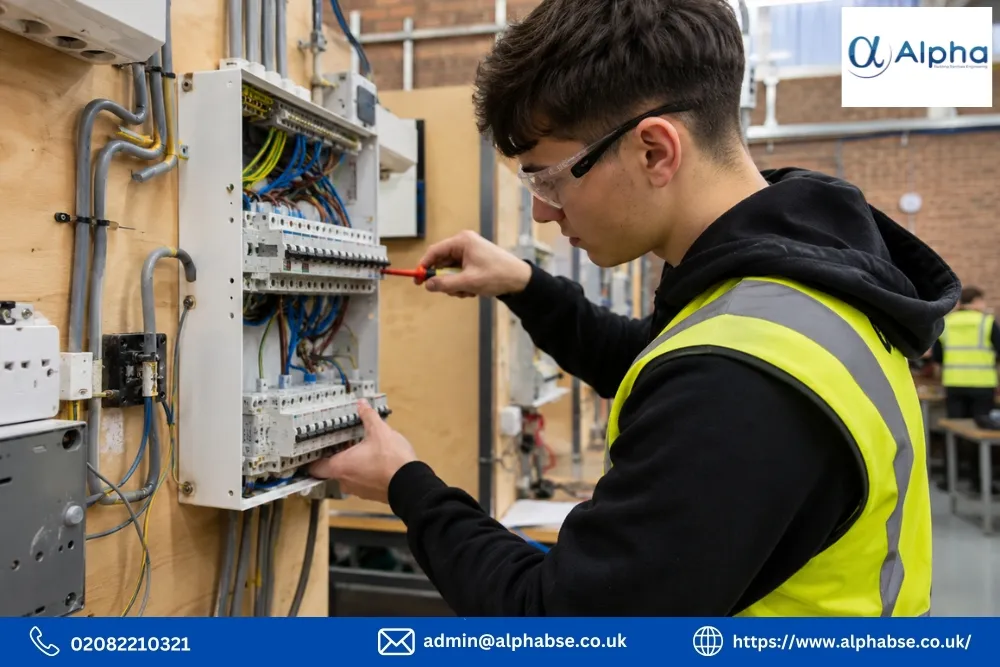
Stage 1 — Level 2 Diploma in Electrical Installations
Covers fundamental electrical principles, safety practices, and practical installation work. Delivered at an approved training centre, typically over several months.
Stage 2 — Level 3 Diploma in Electrical Installations
Builds on Level 2, covering more advanced circuit design, BS 7671 application, fault diagnosis, and inspection and testing principles. This is the classroom component of your qualification.
Stage 3 — NVQ Level 3 in Electrotechnical Services
This is a workplace-assessed qualification. An NVQ assessor observes you working on real installations and reviews a portfolio of evidence you compile over time. It cannot be completed purely in a classroom.
Stage 4 — AM2 Practical Assessment
The Achievement Measurement 2 (AM2) is a three-day independent practical examination administered by NET (National Electrotechnical Training). Candidates receive project specifications and must design, install, test, certify, and present electrical installations meeting BS 7671 requirements within strict time limits. Assessment fees for 2025–2026 are £1,200 to £1,300 depending on the version (AM2S for apprenticeship completers, AM2E for experienced workers).
Stage 5 — ECS Gold Card
On passing the AM2 and completing the NVQ, you can apply for the ECS (Electrotechnical Certification Scheme) Gold Card. An ECS application requires paying a standard online card fee of £57.00 and a mandatory health, safety and environmental test costing £49.00 plus VAT. The Gold Card is the recognised proof of competence required by most employers and construction sites across the UK.
Total pathway cost: A complete package covering the ECS Gold Card route — including NVQ Level 3, AM2, and assessments — requires a total investment of approximately £8,000 to £8,800.
3. The 18th Edition Wiring Regulations (BS 7671)
The 18th Edition course is one of the most commonly searched electrical qualifications in the UK, and for good reason. It covers the national standard for all electrical installations and is a legal requirement for anyone carrying out electrical work professionally.
The two qualifications every UK electrician needs to keep current are the 18th Edition (which now covers Amendment 4, published in 2026) and the 2391 Inspection and Testing qualification.
Who needs it: Qualified or near-qualified electricians. Most providers require a Level 2 or Level 3 foundation before enrolling.
Duration: Typically 3 to 5 days of study followed by a City & Guilds multiple-choice exam.
Cost: Approximately £400 to £600 for the course and exam.
Important 2026 update: BS 7671 Amendment 4 has been published this year, with a particular focus on battery storage and power safety systems. If you hold an older version of the 18th Edition, check with your competent person scheme whether a refresher is required.
4. Inspection and Testing (City and Guilds 2391)
The 2391 series of qualifications covers the inspection, testing, and certification of electrical installations. This is the qualification that allows you to issue Electrical Installation Certificates and Electrical Installation Condition Reports (EICRs).
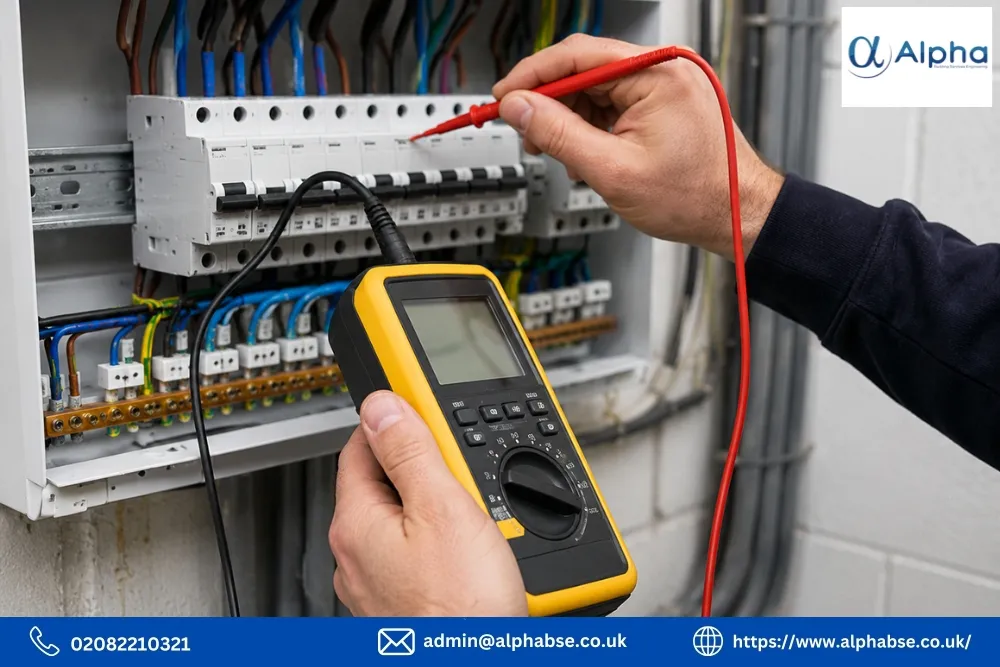
There are three main units:
- 2391-50: Covers initial verification of new electrical installations
- 2391-51: Covers periodic inspection, testing, and certification of existing installations
- 2391-52: The combined qualification covering both
Critical 2026 change: From 1 October 2026, anyone conducting periodic inspection and testing (EICRs) must hold an individual, formal Level 3 qualification alongside two years of recorded experience. Relying on a firm's Qualified Supervisor is no longer sufficient.
Working without the correct qualification after October 2026 could result in loss of registration and inability to self-certify work.
If you currently carry out EICRs without a Level 3 qualification, this affects you directly. Course places are filling quickly as the deadline approaches.
5. Specialist and Green Skills Courses
The fastest-growing area of electrical training in the UK right now covers renewable energy and electric vehicle (EV) infrastructure. The industry is no longer just looking for electricians — it is looking for qualified electricians with specialist skills.
The three main specialist areas, each requiring its own Level 3 award, are:
EV Charging Equipment Installation — City & Guilds 2921
Duration: 2 days. Typical cost: £270–£370 (excluding VAT). Prerequisite: Level 3 electrical qualification or equivalent.
Solar Photovoltaic (PV) Systems — City & Guilds 2922
Duration: 3–4 days. Typical cost: £680–£850 (excluding VAT). Prerequisite: Level 3 electrical qualification.
Electrical Energy Storage Systems (Battery Storage) — City & Guilds 2923
This covers battery storage systems, which are increasingly installed alongside solar PV in domestic and commercial properties.
Critical 2026 deadline: Every employed person undertaking specific high-risk or low-carbon work — including PAYE staff, CIS subcontractors, agency workers, and self-employed sole traders — must hold their own relevant Level 3 qualification. This applies to EV, solar PV, and battery storage work. Short manufacturer courses (such as one-day Pod Point or Wallbox training) do not satisfy this requirement.
6. Short Courses and Compliance Training
Not every electrical training need requires a multi-month qualification pathway. Several shorter courses serve specific roles:
PAT Testing (Portable Appliance Testing)
A one-day City & Guilds accredited course covering in-service inspection and testing of electrical equipment. Open to electricians, facilities managers, and landlords. Useful for workplaces with legal obligations to maintain electrical equipment.
Basic Electrical Safety Awareness
A half-day to one-day course aimed at non-electricians working in environments where they may encounter electrical hazards. Often delivered on-site or online.
Part P Building Regulations
Covers domestic electrical safety compliance and can serve as a route into self-certifying domestic work without a separate building control sign-off. It is a complement to the 18th Edition, not a replacement for a full qualification pathway.
Safe Isolation
A practical short course covering the correct procedure for safely isolating electrical circuits before work begins. Essential for anyone working near live systems.
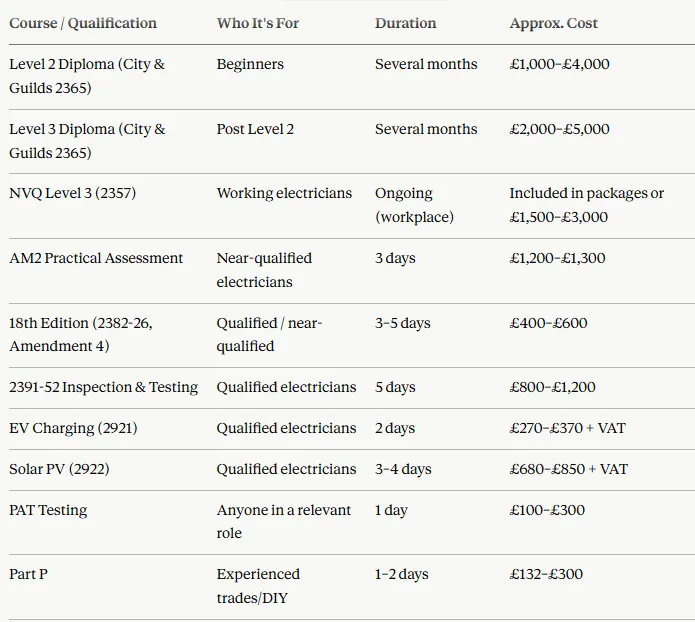
Qualification Route Comparison Table
How to Find Accredited Electrical Training Courses Near You
Geography matters for practical training. You need a workshop with real electrical rigs, physical circuit boards, and trained assessors on hand. The following approaches will help you locate a quality provider close to home.
Search the Government's National Careers Service Course Finder
The UK government's National Careers Service at nationalcareers.service.gov.uk/find-a-course allows you to search for accredited courses by postcode. Filter by subject and qualification level to find local providers. This is a reliable starting point because it only lists regulated qualifications.
Check the City & Guilds Approved Centre Finder
City & Guilds is the most widely recognised awarding body for electrical qualifications in the UK. Their website includes a centre search tool that lists approved training providers by location. Any centre on this list has been verified to meet City & Guilds quality standards.
Use the EAL Centre Locator
EAL (Excellence Achievement & Learning) is a specialist awarding body for engineering, manufacturing, and technical qualifications, including electrical installation. Their approved centres are an alternative to City & Guilds providers and deliver equivalent qualifications.
Contact Your Local FE College
Further education colleges often deliver electrical installation diplomas at Level 2 and Level 3, sometimes at lower cost than private training centres. Some FE colleges offer the Level 3 City & Guilds 2365 Diploma under the government's Free Courses for Jobs scheme for eligible adults — covering tuition costs entirely for those earning below £25,750 or without a Level 3 qualification already.
Ring the construction or engineering department directly, as courses are often not prominently listed on college websites.
Look for Skills Bootcamps in Your Region
Skills Bootcamps are government-funded short courses designed to get people into work quickly. Several providers run electrical-focused bootcamps covering foundation skills, 18th Edition, and in some cases inspection and testing. Availability varies by region.
Ask About Hybrid Learning Options
Many training providers now offer hybrid delivery, where theory is completed online and practical sessions are attended in person. This model allows learners to complete all theory modules from home and only travel to the training centre for practical sessions — typically five to seven days for Level 2 and eight to nine days for Level 3. This can widen your options beyond your immediate local area.
What to Check Before Booking Any Electrical Training Course
Choosing a provider requires more than reading a website. Here are the things worth verifying before you pay any money.
- Accreditation: Confirm the provider is an approved centre with City & Guilds, EAL, NICEIC, or another Ofqual-recognised awarding body. This is non-negotiable. Training from an unaccredited centre may not be accepted by employers, competent person schemes, or the JIB for ECS card applications.
- Qualification type: Make sure you understand whether you are enrolling for a knowledge qualification (the diploma) or a competence qualification (the NVQ). Many beginners mistake one for the other. The diploma alone does not qualify you to work as an electrician.
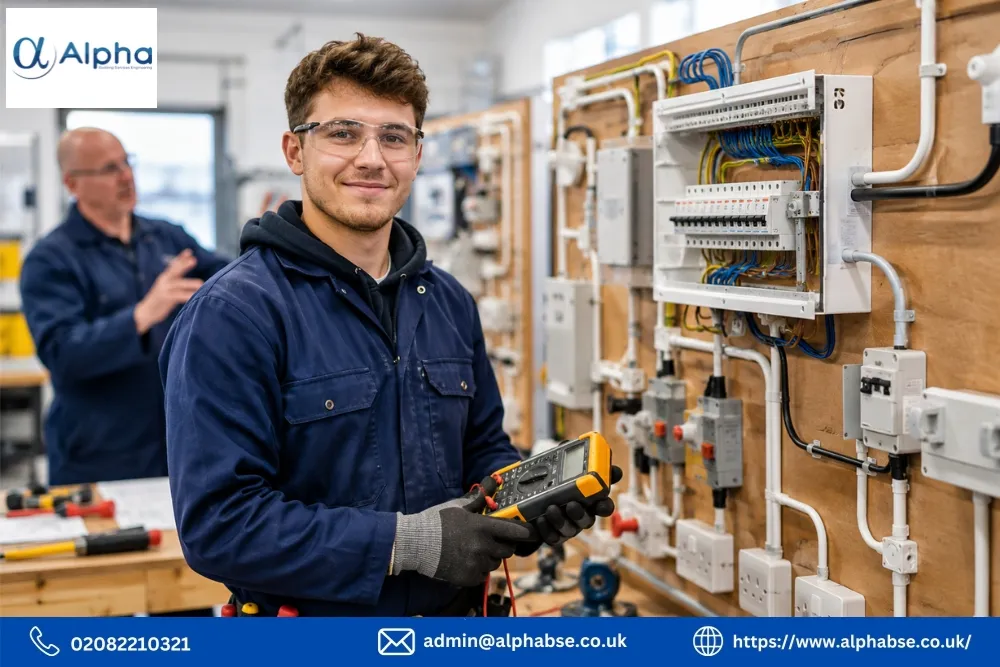
- Class size: Small class sizes matter for practical training. Larger groups mean less time at the rigs and less one-to-one feedback from assessors.
- Realistic timescales: Some providers advertise becoming a "fully qualified electrician in 5–6 weeks." Fast-track providers can deliver the Level 2 and Level 3 Diplomas in 5–16 weeks through intensive block courses, but these represent only the classroom component of electrician training. Full qualification, including NVQ and AM2, takes considerably longer.
- NVQ placement support: If you enrol in the diploma route, ask the provider explicitly how they help learners secure NVQ placement. The NVQ requires real-site employment or supervised site access. Without this, you can complete the diplomas and find yourself stuck.
- Trainer credentials: Ask whether your tutors hold current industry qualifications, including the latest 18th Edition. Instructors working from outdated knowledge can pass on inaccurate guidance.
- Funding options: Ask about Advanced Learner Loans, Free Courses for Jobs eligibility, and Skills Bootcamp funding before assuming you need to pay in full up front.
Career Paths After Electrical Training
Completing your electrical qualifications opens several distinct directions.
- Domestic Electrician: Domestic installers handle household rewires, consumer unit upgrades, lighting circuits, and socket additions. Joining a competent person scheme such as NICEIC or NAPIT allows you to self-certify domestic work without notifying building control separately.
- Commercial Electrician: Commercial work covers offices, retail units, schools, and similar buildings. It typically requires a broader understanding of three-phase supplies, larger distribution boards, and more complex cable management.
- Industrial Electrician: Industrial roles involve manufacturing plants, data centres, and large infrastructure. Higher voltages, motor controls, and more complex fault-finding are involved.
- Inspection and Testing Specialist: With a 2391 qualification and a Level 3 background, you can carry out EICRs for landlords, housing associations, and local authorities. Demand for this work is strong and growing.
- Renewable Energy Specialist: Areas like EV charging, solar PV, battery storage, and fire alarm systems are governed by additional UK standards and guidance, not just general electrical regulations. That is why extra training is required to remain compliant and work within your competence. Specialists in these areas consistently attract premium rates.
- Earning Potential: Qualified electricians in the UK earn approximately £35,000 per year on average. Domestic installers earn £28,000–£32,000. Industrial electricians and specialists earn over £40,000. Specialists in renewable energy, data centre installations, and commercial projects consistently command the highest rates.
Funding Your Electrical Training
The full cost of training to become a qualified electrician can feel significant. However, several funding routes exist that most people are unaware of.
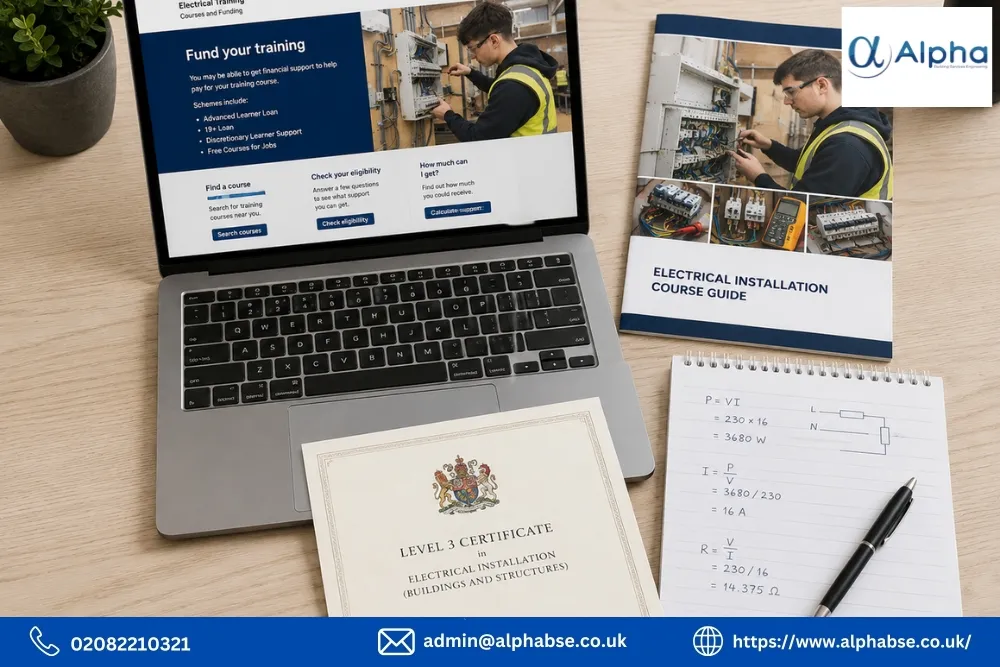
- Free Courses for Jobs (England): The Department for Education's flagship skills initiative funds over 400 Level 3 qualifications, including the City & Guilds 2365 Level 3 Diploma in Electrical Installations, for eligible adults — those earning below £25,750 or who do not already hold a Level 3 qualification.
- Adult Education Budget (AEB): The AEB funds Level 2 qualifications for eligible adults in England. If you need to start at Level 2, this may cover your tuition costs.
- Advanced Learner Loans: Government-backed loans for learners aged 19 and over covering courses at Level 3 and above. Repayment only begins once earnings exceed a set threshold, similar to student loans.
- Skills Bootcamp Funding: Skills Bootcamps are fully funded for eligible learners and can cover short, focused electrical training programmes.
- Apprenticeship Levy: If you secure an employer who has apprenticeship levy funds available, they can fund your training entirely through the levy system. This route combines paid employment with structured training.
- Important caveat: Free courses typically fund the diploma component only. The NVQ, AM2 assessment, and ECS card application remain learner-funded in most cases, adding £2,500–£4,500 to the total cost even when tuition itself is funded. Make sure you plan for the full pathway cost, not just the course fee.
Key Deadlines to Be Aware of in 2026
Several regulatory changes took effect this year that directly affect which training you may legally need.
- October 2026 — EICR and Periodic Inspection: From 1 October 2026, every person individually carrying out EICRs must hold a formal Level 3 qualification and two years of recorded experience. If you currently work under a Qualified Supervisor covering your firm's inspection work, this arrangement will no longer be sufficient.
- October 2026 — Low-Carbon Technology Installations: Every individual installer working on EV charge points, solar PV systems, or battery storage must hold a relevant Level 3 specialist award in that technology. This applies to all employed persons, including subcontractors.
- BS 7671 Amendment 4 — 18th Edition Update: The current 18th Edition Wiring Regulations course (2382-26) now covers Amendment 4, published in 2026, with a particular focus on battery storage and power safety. If you trained on an earlier version, check whether your competent person scheme requires an update.
Major training providers report high demand in the lead-up to the October 2026 deadline. Some centres are already booking three months in advance for 2391 Inspection and Testing courses. If any of these deadlines affect you, act soon rather than waiting.
Key Takeaways
- The right electrical training course depends entirely on your current experience level and your career goal — there is no single course that fits everyone.
- The full qualification pathway to ECS Gold Card takes three to four years and includes diplomas, NVQ Level 3, and the AM2 practical assessment.
- The 18th Edition (BS 7671) is a mandatory requirement for all practising electricians in the UK, now updated to Amendment 4 (2026).
- Inspection and Testing qualification (2391) is required for anyone issuing EICRs, and individual Level 3 holding is now mandatory from October 2026.
- Specialist qualifications for EV charging, solar PV, and battery storage are now individually required for each installer — not just one per firm — from October 2026.
- Accredited providers must be approved by City & Guilds, EAL, or another Ofqual-recognised body. Always verify accreditation before booking.
- Funding options including Free Courses for Jobs, Advanced Learner Loans, and Skills Bootcamps can reduce or eliminate upfront course costs, but rarely cover the full pathway.
- Training places for 2391 and specialist courses are filling quickly ahead of the October 2026 deadline. Book early if you need these qualifications.
Frequently Asked Questions (FAQs)
Q: Can I become a fully qualified electrician without an apprenticeship?
A: Yes. Private training routes allow you to complete City & Guilds diplomas, NVQ Level 3, the 18th Edition, and the AM2 independently. This is often faster for career changers and adults who cannot take a three-to-four-year pay reduction while working as an apprentice.
Q: How long does it take to become a qualified electrician in the UK?
A: The full pathway from Level 2 to ECS Gold Card typically takes between three and four years, depending on how quickly you progress through the NVQ workplace assessment stage. Fast-track diploma courses can compress the classroom component to a matter of weeks, but the NVQ and AM2 take additional time regardless.
Q: Is the 18th Edition the same as the wiring regulations qualification?
A: Yes. The 18th Edition refers to BS 7671, the UK standard for electrical installations. The City & Guilds 2382-26 qualification demonstrates your knowledge of this standard. Amendment 4, published in 2026, is the most current version.
Q: What is the ECS Gold Card and do I need one?
A: The ECS Gold Card is the industry-recognised proof that you are a qualified electrician in the UK. Most major contractors, construction sites, and housing developers require it. It is issued by the Joint Industry Board (JIB) on completion of your NVQ Level 3, AM2, and 18th Edition, alongside a health, safety, and environmental test.
Q: What is the difference between City and Guilds and EAL qualifications?
A: Both are Ofqual-regulated awarding bodies for electrical qualifications. City & Guilds is more widely known. EAL is a specialist engineering and technical awarding body. Qualifications from both are accepted by most employers and competent person schemes. Check with your intended employer or scheme before enrolling if you are unsure.
Q: Can I do electrical training online?
A: Theory components of many qualifications can now be delivered online or through blended learning. However, the practical elements — workshop training, NVQ site assessments, and the AM2 — must be completed in person. Any provider claiming you can become a fully qualified electrician entirely online is not giving you accurate information.
Q: I'm already a qualified electrician. Do I need to do any new training?
A: Possibly, yes — particularly if you carry out EICRs or work with EV charging, solar PV, or battery storage. The October 2026 regulatory changes require individual Level 3 qualifications in these areas. Additionally, if your 18th Edition is more than five years old, your competent person scheme may require a refresher to remain registered.
Q: What does PAT testing training involve?
A: PAT testing (Portable Appliance Testing) is a one-day course covering the inspection and in-service testing of electrical equipment. It is not a full electrical qualification but is required for anyone carrying out PAT testing as a job role, including facilities managers and those managing rental properties.




























Sign in to leave a comment.