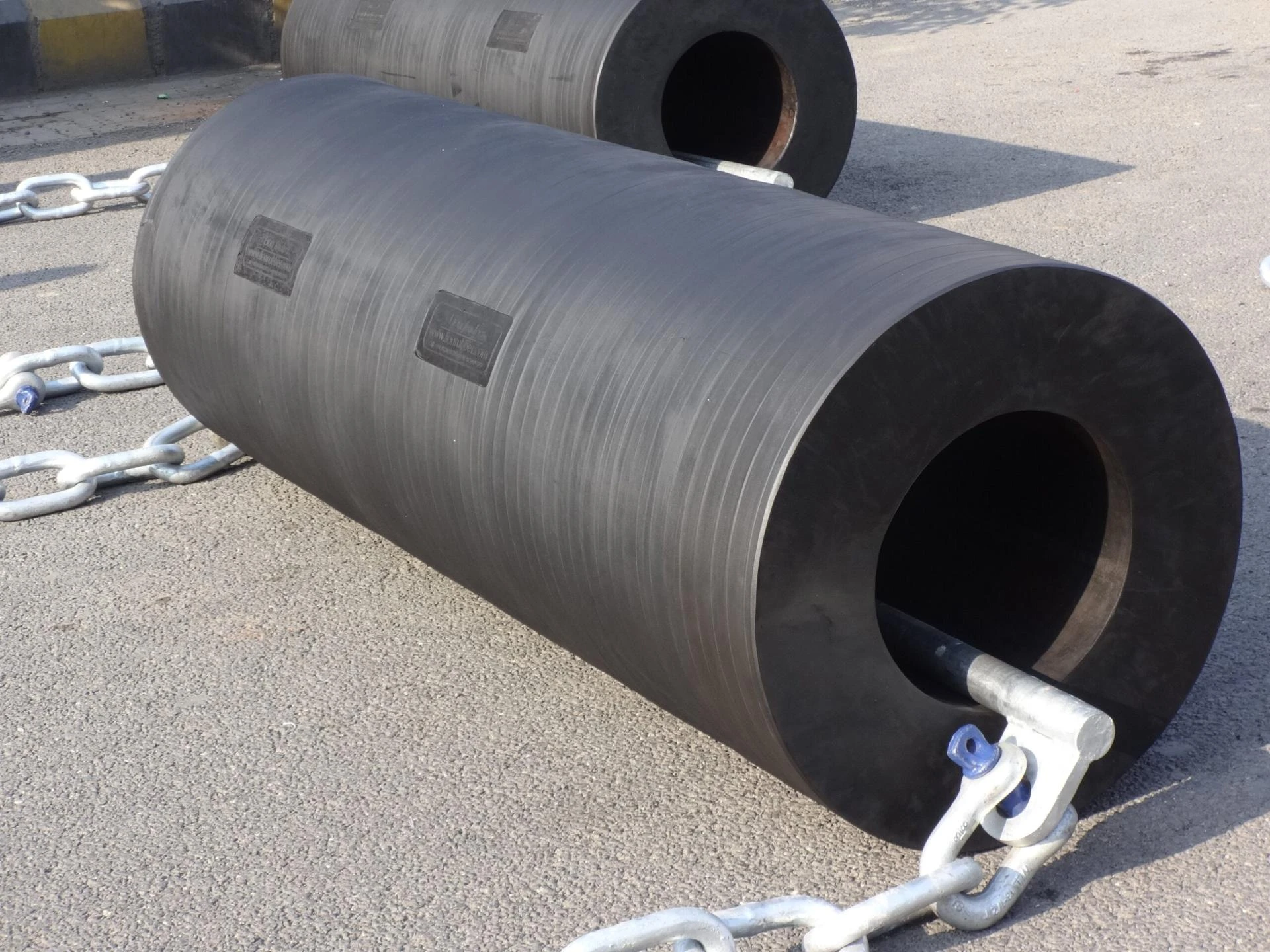

Safe and controlled docking is one of the most critical aspects of marine operations. Whether it’s commercial ports, tug-assisted berthing, or industrial jetties, vessels require reliable impact absorption to prevent structural damage. This is where cylindrical fender systems continue to prove their value across marine environments.
Designed for simplicity and performance, cylindrical fenders are widely used for their ability to absorb high-energy impacts while maintaining structural stability. Their proven design makes them a dependable choice for ports and marine operators seeking long-term protection without complex installation requirements.
Why Cylindrical Fender Designs Remain Industry Standard
Marine docking conditions are unpredictable. Tidal variations, vessel sizes, and berthing angles create constant stress on quay walls and ship hulls. Fender systems must be robust enough to handle these variables consistently.
Cylindrical rubber fenders offer uniform energy absorption along their entire length. This design reduces localized stress and distributes impact forces evenly, helping to protect both the vessel and the docking structure. Their shape allows them to perform reliably even under repeated compression.
Versatility Across Marine Applications
One of the key advantages of cylindrical fenders is their adaptability. These systems are suitable for a wide range of applications, from small jetties to large commercial ports.
Cylindrical boat fenders are commonly used for:
- Tugboats and service vessels
- General cargo and bulk terminals
- Industrial berths and river ports
- Temporary or floating docking installations
Their versatility allows operators to standardize fender systems across multiple docking points.
Built to Handle Heavy Impact Conditions
Marine environments place extreme demands on fender systems. Saltwater exposure, temperature variations, and continuous mechanical stress require materials that can perform consistently over time.
High-quality cylindrical rubber fenders are manufactured using resilient elastomer compounds designed to withstand abrasion, weathering, and compression fatigue. This durability ensures reliable energy absorption even after years of heavy use.
Simple Installation, Reliable Performance
Complex systems often increase installation time and maintenance requirements. Cylindrical fenders are valued for their straightforward design, which allows for easy mounting on quay walls, dolphins, or vessel sides.
Well-installed cylindrical fenders provide consistent performance with minimal maintenance. Their simple geometry also makes inspection easier, helping port authorities identify wear or damage early and plan timely replacements.
Energy Absorption Without Excessive Reaction Force
An effective fender must strike the right balance between energy absorption and reaction force. Excessive reaction can transfer stress to vessel hulls or docking structures, increasing the risk of damage.
Cylindrical rubber fenders are engineered to absorb significant berthing energy while maintaining controlled reaction forces. This balance is particularly important for tug-assisted operations, where controlled contact is essential for safe maneuvering.
Cost-Effective Protection for Long-Term Operations
Marine infrastructure investments are long-term by nature. Fender systems must deliver value not just at installation, but over their entire service life.
By choosing cylindrical boat fenders, operators benefit from:
- Long service life under heavy-duty conditions
- Lower maintenance and replacement costs
- Consistent performance across multiple vessel types
This makes cylindrical fenders a practical choice for ports seeking reliable protection without excessive lifecycle costs.
Supporting Safer Berthing in High-Traffic Areas
Busy ports and terminals experience frequent docking cycles. Fender systems in these environments must handle repeated impacts without performance degradation.
Cylindrical rubber fenders are particularly effective in high-traffic berths, where durability and repeatability matter most. Their ability to perform consistently under continuous use helps reduce operational risk and downtime.
Design Flexibility for Different Docking Configurations
No two berthing locations are exactly the same. Fender systems must accommodate variations in vessel size, hull geometry, and docking alignment.
Thanks to their adaptable mounting options, cylindrical fenders can be installed horizontally, vertically, or in angled configurations. This flexibility allows marine engineers to design docking solutions tailored to specific operational requirements.
Proven Protection Backed by Practical Engineering
Marine safety relies on systems that perform reliably under pressure. Cylindrical fenders continue to be trusted because they combine mechanical simplicity with proven energy absorption capability.
Their widespread adoption across global ports highlights their effectiveness in protecting assets, vessels, and infrastructure in demanding marine conditions.
Engineered for Marine Environments That Demand Reliability
Cylindrical fender systems remain a cornerstone of safe marine docking. Their durability, performance consistency, and adaptability make them a dependable solution for a wide range of applications.
At Lion Rubber, we manufacture high-performance cylindrical rubber fenders designed to meet the rigorous demands of marine and port operations. Our solutions deliver dependable protection, long service life, and practical engineering—helping operators safeguard vessels and infrastructure with confidence.



























Sign in to leave a comment.