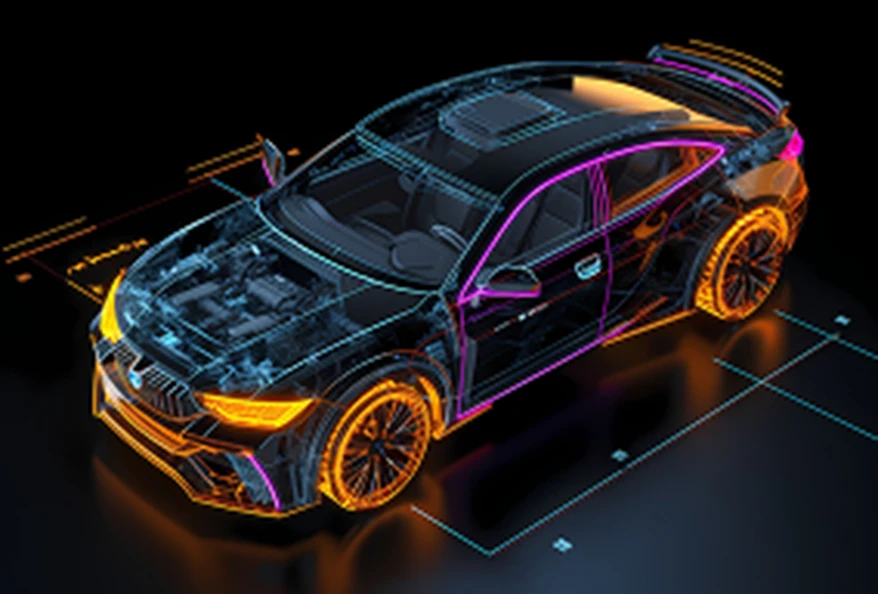

If your vehicle could tell a story about every mile it moves, what would it display? The fact is, current cars already whisper realities about performance, driver habits, and system health. The trick is to hear adequately.
Every modern vehicle is a data factory on wheels. From acceleration practices to battery fitness, cars today yield data every second. But data alone doesn’t build intelligence. The real power lies in how it’s gathered, analyzed, and applied. Here, automotive data aggregation changes the game for next-generation mobility, a process that turns those whispers into clear directions, not noise. It collects raw telemetry, normalizes formats, and hands engineers usable signals that power smarter decisions.
Understanding what makes a smarter vehicle
Think of an AI-defined vehicle as a student who keeps practicing after school. It learns from each trip, refines its model of the world, and improves its decisions. But learning only works when the training material is high quality. Aggregated telemetry and event logs give AI the examples it needs to detect road hazards, optimize battery use, and tune driver assistance features.
Why connected systems matter in everyday operations
When a car can talk to the cloud, it gets smarter in ways a standalone car cannot. Connected automotive solutions let fleets share lessons across vehicles. One car detects a faulty sensor, the cloud learns a pattern, and every other car benefits. For OEMs, this means fewer recalls, better performance over time, and a direct line from field data to engineering fixes.
What software-first vehicles change about development
The software-defined vehicle changes the game by treating cars like platforms. New features are shipped as code, not hardware swaps. That means your roadmap can iterate faster, and teams can A/B test new experiences in the field. When data pipelines are tight, software updates are informed by what actually happens on real roads, not just in lab runs.
Turning raw signals into preventative care
Nobody likes a breakdown in the middle of a trip. Advanced vehicle diagnostic systems take streamed sensor data and turn it into early warnings. By analyzing patterns across many vehicles, engineers can spot degradation long before it becomes a failure. The consequence is less downtime, lower warranty costs, and happier drivers.
Why the vehicle’s internal wiring is so important
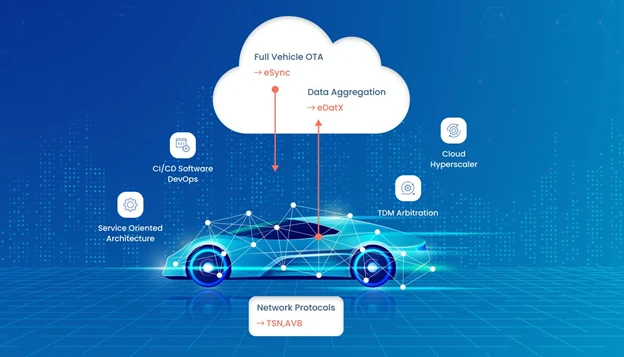
All this intelligence depends on how well components talk to one another. The in-vehicle network is the nervous system of the car, shuttling sensor values and control messages between ECUs. Excelfore’s synchronization and routing tools make sure those messages do not get lost in transit, so features that rely on tight timing and low latency behave predictably.
Updating at scale without the service bay
Imagine sending a software fix to millions of cars from your laptop. That is the promise of automotive OTA workflows. Securely delivering updates reduces recall complexity and lets automakers patch vulnerabilities quickly. It also enables continuous improvement by delivering new capabilities to customers without a physical visit.
Keeping vehicles evolving with secure updates
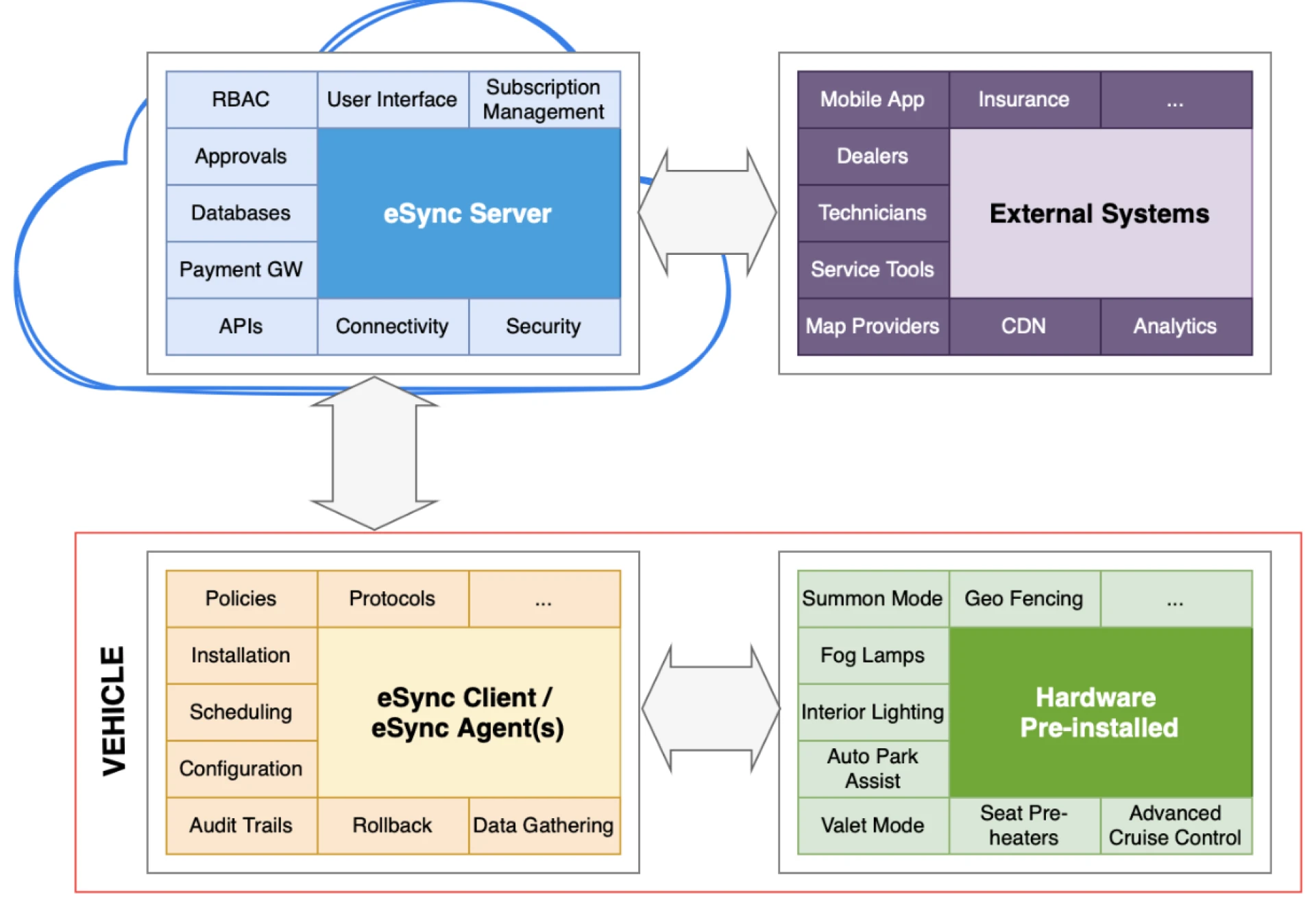
A single OTA software updates campaign can fix a security issue, improve a driver assist model, or enable a new cabin feature. But the process must be reliable. Excelfore’s eSync and update management patterns handle version dependencies, rollback strategies, and verification, so updates enhance the fleet instead of introducing risk.
Making data aggregation work for your teams
Collecting data is not the finish line. Aggregation must create context, link events to software versions, and allow engineers to ask the right questions. Excelfore focuses on building end-to-end pipelines that feed analytics, model training, and operational dashboards. That lets product teams iterate faster and service teams act smarter.
The practical payoff for your roadmap
If you are an OEM or Tier 1 thinking about next year’s roadmap, the conversation should start with data quality and pipelines. When telemetry, diagnostics, and update telemetry flow into a single fabric, you can prioritize features that deliver real value to drivers and fleets. That reduces risk and shortens time to market.
Ready to turn data into an advantage
Data without action is noise. Aggregated, trustworthy data turns noise into predictable outcomes and continuous improvement.
Excelfore helps manufacturers make that shift, from raw signals to production-ready intelligence. If you want vehicles that learn faster, update safely, and stay reliable on the road, let’s talk.
Discover how automotive data aggregation can power smarter, safer, and more adaptive vehicles.


























Sign in to leave a comment.