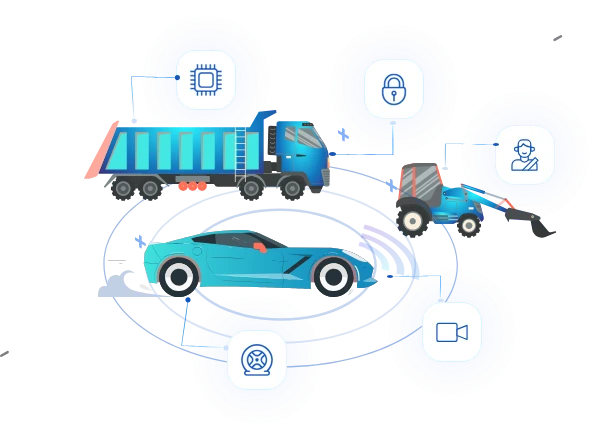

Construction and agricultural vehicles are no longer just powerful machines—they are becoming intelligent systems. The transition to Software Defined Vehicle (SDV) technology is revolutionizing how equipment operates, adapts, and evolves.
Backed by cloud integration, programmable features, real-time diagnostics, over-the-air capabilities, and increasing levels of AI, SDVs are making machinery smarter, safer, and more productive - from remotely driven earth movers to autonomous tractors, the machines of today’s construction and agricultural industries are experiencing a revolution—powered not by heavier engines or more significant hydraulics but by more creative software.
This transition to Software Defined Vehicles (SDVs) allows equipment to be more intelligent, flexible, and future-ready. With software evolving as the backbone of contemporary machinery, OEMs and fleet operators are discovering new ways to upgrade performance, improve uptime, and unlock feature flexibility—all without ever setting foot in a service center.
Here's how software-defined vehicle technology is rewriting the rulebook for off-highway vehicles:
1. Increasing Software Content: Intelligence Is the New Horsepower
The average construction and agriculture vehicle now has more software-driven features than ever before, controlling everything from transmission, engine and braking behavior to diagnostics, navigation, and attachments. Much of a machine's "personality" is now shaped by its software.
This increasing software content allows manufacturers to:
● Standardize platforms across multiple models
● Add new capabilities to their platforms
● Simplify maintenance through real-time digital diagnostics
It's no longer only about what's under the hood—but also what's written in the code.
2. OEM-Initiated OTA Updates: Improving Equipment from Afar
With traditional machinery, upgrades meant downtime, technician visits, and often manual interventions. Now, over-the-air (OTA) updates let OEMs remotely push enhancements, bug fixes, or regulatory patches straight to equipment—anytime, anywhere.
These updates can:
● Improve performance and reliability
● Extend product life cycles
● Ensure regulatory compliance without disruptions
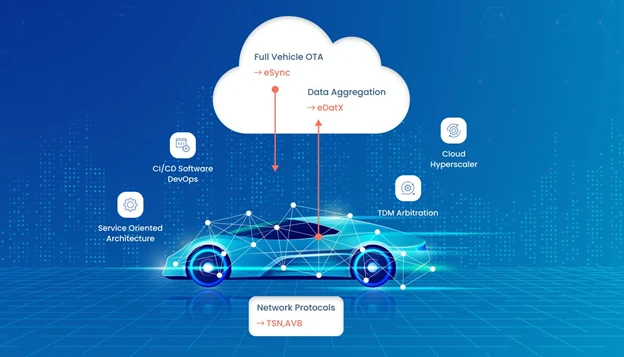
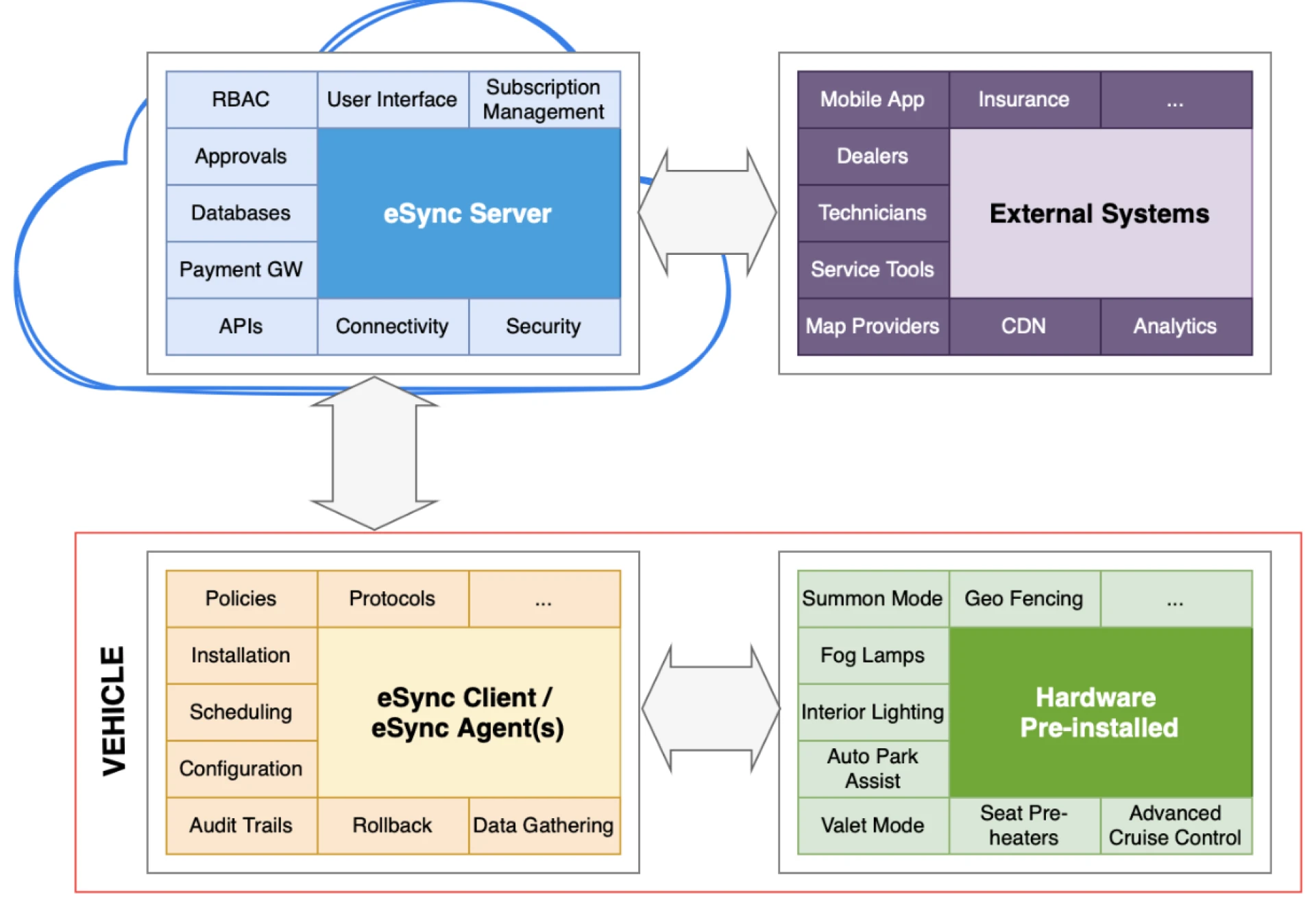
Excelfore solutions enable centralized management of these updates, allowing manufacturers to keep their entire fleet optimized from a single dashboard—securely, efficiently, and without taking machines out of operation.
3. Owner/Operator-Initiated OTA Updates: custom features, on demand
Sometimes, it's not about fixing; it's about customizing.
Software-defined vehicles empower owners and operators to unlock new features or modes of operation on demand. Need enhanced traction control for a wet site or a new GPS mapping function for a larger field? Activate it with a secure OTA update.
This approach delivers:
● Flexibility to respond to real-time job site demands
● Better cost control with feature-based pricing
● Operational agility and higher asset utilization without added hardware complexity
It's about giving operators the power to get more out of their machines—without waiting for factory upgrades or field visits.
4. Infrastructure for OTA on Demand: Built to Scale, Designed for the field
A rock-solid technical foundation powers all this flexibility. The Excelfore OTA infrastructure is engineered specifically for the rugged and remote environments that construction and agriculture demand.
Key enablers include:
● Delta Compression – Reduces data volume by sending only changes, making updates faster and lighter on bandwidth
● Cloud-native architecture – Ensures scalability across fleets of all sizes
● Robust security protocols – Safeguards every update from tampering or failure
● Real-time diagnostics integration – Lets updates happen in sync with equipment performance data
This isn't just an upgrade—it's a more innovative way to manage every stage of the equipment lifecycle.
The Bottom Line
Software-defined vehicle technology turns construction and agricultural equipment into platforms for continuous improvement, deeper insight, and real-time control. Whether you're an OEM looking to expand the market opportunities for your fleet or an operator needing more innovative tools on-site, SDVs offer the edge you need.
At the center of it all is Excelfore, which provides the connected infrastructure, OTA capabilities, and smart diagnostics that make this transformation real, reliable, and scalable.
Ready to power smarter, more adaptable machines?
About the Author: Excelfore, a pioneer in automotive data management solutions, provides innovative software platforms for connected vehicles. With a focus on scalability, security, and interoperability, Excelfore enables seamless integration of advanced technologies in the automotive ecosystem. From data management to over-the-air updates, Excelfore solutions empower automakers and Tier-1 suppliers to deliver cutting-edge connected vehicle experiences.























Sign in to leave a comment.