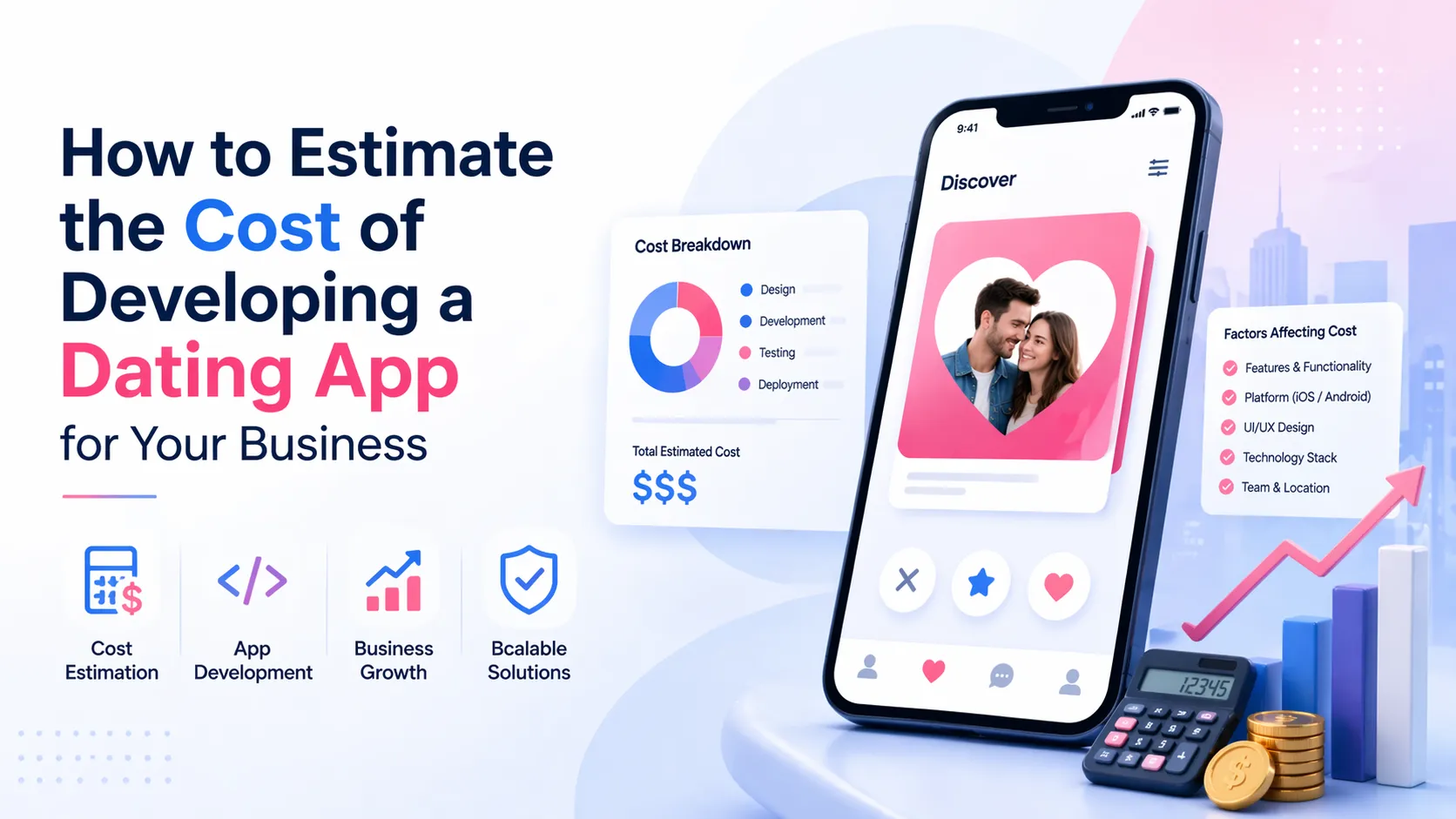

Most dating apps do not fail because of ideas. They fail because the budget was guessed, and the guess turns into delays, rework, and rushed releases.
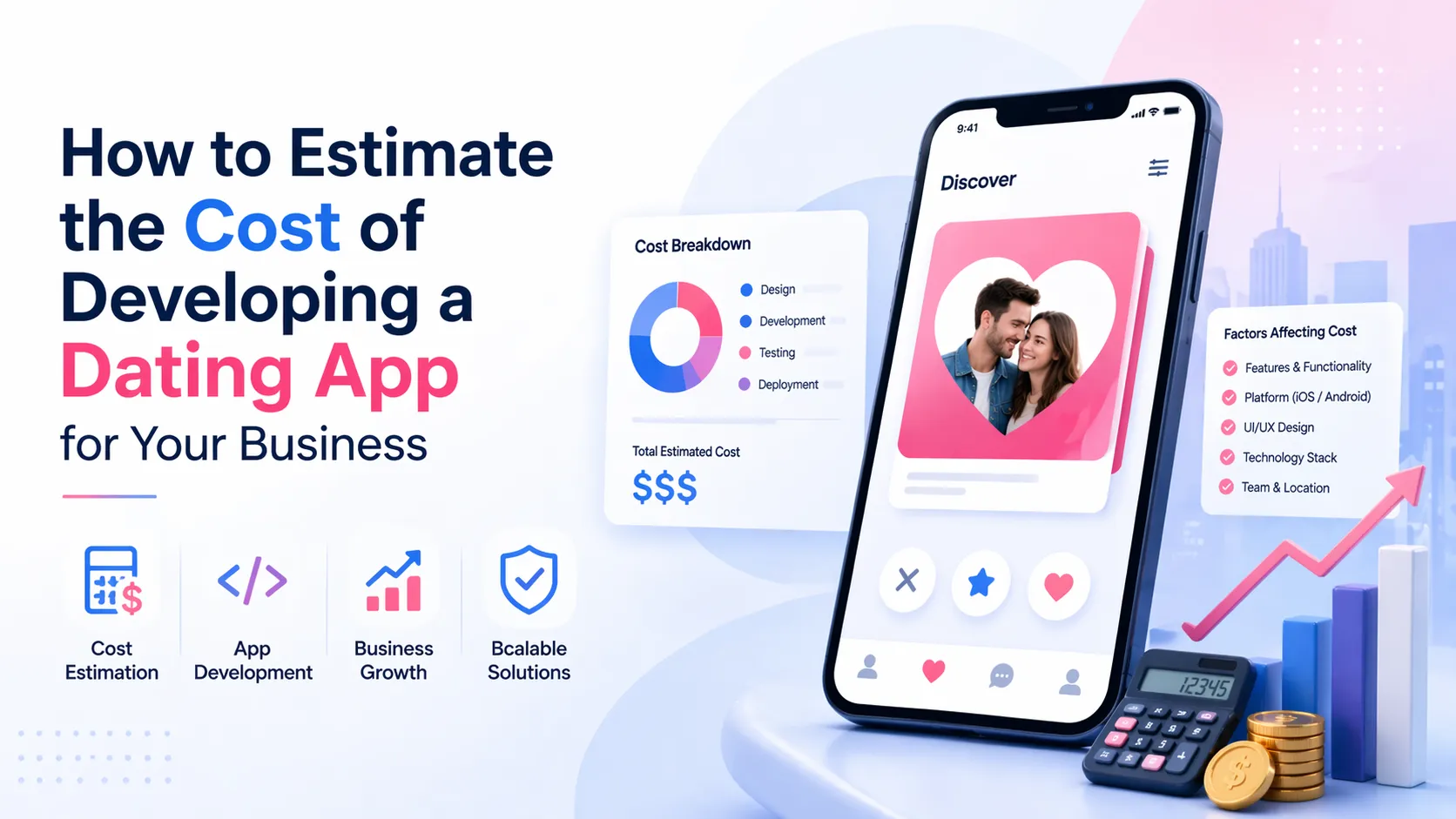
The market is still big and still moving. The dating app market made $6.18 billion in 2024, and the broader online dating market was valued at about $9.60 billion in 2025, which keeps pulling in new products and new niches. (Business of Apps) Also, 37% of US adults have used an online dating site or app at some point, and 7% say they are currently using one.
So, if you are building for a startup bet or an enterprise portfolio, the biggest win is simple. Estimate the dating app development cost with real inputs, not vibes.
Now let us break the estimate into simple, measurable parts.
What Drives Dating App Development Cost and Why Estimates Vary
Every budget comes down to a few drivers, even if two apps look similar on the surface. The reason estimates vary is not because people cannot count hours. It is because product choices change the amount of work, the risk, and the amount of testing needed before launch.
Your App Type Changes the Price
Different dating apps ask for different systems under the hood. That shifts dating app development quickly.
Common app types include:
- Niche dating for faith, location, or specific communities
- Swipe based matching with fast discovery
- Serious relationship focused flows with deeper profiles
- Community first products that prioritize groups and events
- Premium first products built around subscriptions and upsells
A niche product can be cheaper to start because it has a tight audience and a simple feature set. But some niches need stronger safety controls from day one, which can push the dating app development cost up again.
The Three Cost Levers You Control
You can usually control these three levers without hurting quality.
- Scope
What you ship now versus later. A smaller MVP lowers dating app development cost, and it also makes estimating easier.
- Speed
Short deadlines often mean more people, more coordination, and more QA cycles.
- Quality bar
Security, performance, moderation, and edge case handling are not optional in dating. A higher bar increases cost, but it protects your brand.
Once you know what moves cost, you can estimate in a way investors and finance teams trust.
Dating App Development Cost Ranges by Complexity with Quick Benchmarks
Before you get into line item estimates, it helps to anchor on realistic ranges. Dating app development cost depends on your team model, region, the maturity of your product requirements, and how strict your launch timeline is.
If you are asking, how much does it cost to build a dating app, the honest answer is, it depends on how close you are to enterprise grade expectations on day one.
Typical Cost Range Snapshot
| App Level | Best For | Typical Features | Estimated Range USD |
| MVP | Validate idea fast | login, profiles, basic match, chat | 25k to 60k |
| Mid Scale | Early growth | better search, subscriptions, moderation | 60k to 150k |
| Enterprise Grade | Scale plus compliance | advanced security, analytics, automation | 150k to 300k plus |
A practical benchmark many teams use is that enterprise grade apps often start around 150k plus and can go beyond 300k, depending on integrations and compliance needs.
Next, we will price the exact features that usually eat the budget.
Feature-by-Feature Cost Breakdown for A Dating App Core to Advanced
Features are where estimates get real. The cleanest way to forecast dating app development cost is to group features by launch stage, and then price each group with a clear definition of done.
A helpful mindset is this. Do not estimate features as ideas. Estimate them as complete flows, including backend, UI, testing, and admin tools.
Core MVP Features Must Have
These features usually define a workable MVP. They keep dating app development cost under control because they avoid complex add-ons.
- Onboarding with phone or email, plus OTP
Cost impact: medium, because identity flows create edge cases.
- Profile creation with photos, prompts, preferences
Cost impact: low to medium, depends on media rules.
- Discovery feed, swipe or list
Cost impact: medium, because it ties to performance and ranking.
- Match logic with basic rules
Cost impact: medium, especially if you store preferences and exclusions.
- One to one chat
Cost impact: medium, because real time delivery and offline sync matter.
- Safety basics, block and report and a simple moderation queue
Cost impact: medium, because it needs admin support.
- Admin panel basics
Cost impact: medium, and it saves you money later.
If your team asks, how much does it cost to create a dating app, the MVP answer is usually about choosing these flows, keeping them simple, and validating quickly.
Growth Features Common Next Step
Growth features raise dating app development cost, but they also unlock revenue and retention.
- Filters and advanced search
- Push notifications
- Subscription plans monthly and yearly
- In app purchases like boosts and super likes
- Basic analytics events for funnels and retention
This is also the point where many teams start asking, how much does it cost to make a dating app that can monetize. Payments and subscription handling often add work because of store rules and renewal edge cases.
Advanced Features High-Cost High Value
These features often separate a basic dating product from a market leader. They also raise the dating app development cost the fastest.
- Video profiles or short reels
- Voice notes and richer media sharing
- AI assisted profile tips or matching, with privacy controls
- Location features for nearby discovery
- Anti fraud signals like device checks and behavior flags
- Live moderation support and escalation flows
Features Vs Cost Impact
| Feature | Cost Impact | Why |
| Real time chat | Medium | backend, scaling, delivery, sync |
| Video | High | storage, streaming, moderation |
| Payments | Medium | compliance, store rules, edge cases |
| AI features | Medium to high | data safety, testing, quality checks |
Features are only half the story. The tech choices decide your long term spend.
Tech Stack Choices That Change Cost and Timeline
Tech decisions do not just change build time. They change operating cost, release speed, and how painful the next version will be. This is why dating app development cost can look cheap up front, then get expensive later.
iOS, Android, Or Both
You have three common paths.
- Native apps for iOS and Android
- Cross platform for shared code and faster MVP
- Start with one platform, then expand
Cross-platform can reduce early dating app development cost when you need speed and shared UI. Native can be safer for performance heavy media, deep OS features, and smoother animations.
If your audience is US heavy and you are an enterprise team, you may choose a flagship platform first, then scale to both once metrics prove demand.
One note, if you are building a premium experience with tight performance goals, teams often treat iOS app development as a first-class priority early on, then mirror the experience on Android.
Backend And Real Time Infrastructure
Most dating apps depend on a strong backend from day one.
- APIs for profiles, matching, subscriptions, and moderation
- Database design for preferences, matches, and chat history
- Real time messaging layer for chat delivery
- File storage for images and video
- Queues for notifications and moderation jobs
Even if the UI looks simple, these services set a baseline for dating app development cost because they must be reliable and secure.
Third Party Tools That Save Time But Add Monthly Spend
Third party tools often reduce build time, but they add recurring costs.
- SMS and OTP provider
- Push notifications service
- Analytics
- Payments
- Moderation tooling for images and reports
This is a tradeoff. They can lower development hours, but they increase your monthly budget. Now let us convert stack decisions into real dollars by looking at team models.
Team Model and Location the Hidden Multiplier
This is where two estimates can differ by a lot. Team model changes how you pay, how you manage risk, and how fast you can adjust scope.
Three Common Build Models
- In house team
Good for long term control. Higher fixed cost.
- Agency partner
Faster start. Clear delivery process if you pick well.
- Hybrid
Core product and decisions in house, delivery support outside.
Many founders also compare a local vendor versus a global team. That is fine, but remember to price in communication, overlap hours, and QA standards. Dating app development cost is not only hourly rate, it is output quality per week.
Cost Drivers Inside the Team
These are common line items that influence price.
- Product manager versus no PM
- Design depth and iteration count
- QA testing coverage across devices
- DevOps and release management for stable launches
Who You Need for A Solid Dating App Launch
| Role | Needed For | Typical Involvement |
| Product | scope, priorities | part time to full |
| Design | UX flows, UI | heavy early |
| Mobile dev | app build | full |
| Backend dev | APIs, chat, data | full |
| QA | test cycles | steady |
| DevOps | infra plus release | part time |
Next, we will cover the costs most teams forget until it is too late.
Costs People Miss Compliance Safety and Ongoing Operations
When teams underestimate dating app development cost, it is usually because they forget safety, policy rules, and ongoing operations. Dating is sensitive. Users expect privacy and fast support when something goes wrong.
Privacy And Data Protection
You will likely need:
- Consent flows and clear privacy choices
- Data retention rules and delete account flows
- Location data handling with care
- Secure storage for media uploads
Building these early is cheaper than patching them later. It also reduces legal and brand risk.
App Store Readiness and Policy Risks
Store policies can force last minute changes.
- Content rules and reporting requirements
- Subscription and payment rules
- Age gating and restricted content handling
If you launch without these basics, you risk rejection or forced updates. That can increase dating app development cost after you thought you were done.
Trust And Safety Budget
You need real workflows, not just a report button.
- Moderation queue with statuses and notes
- Response targets for urgent reports
- Fraud prevention basics like rate limits and device signals
Maintenance And Updates Monthly Budgeting
Post launch costs are real.
- Bug fixes and monitoring
- OS updates and device support
- Feature iteration based on analytics
- Cloud and third party service costs
With the full cost picture in mind, here is a simple estimating method you can reuse.
Step-By-Step Method to Estimate Your Dating App Budget
If you want a clean estimate, use a repeatable method. This keeps dating app development cost explainable to finance, leadership, and investors.
Step 1 Define Your MVP In One Page
Write a one page MVP brief with:
- Target audience and core niche
- Core user action, like match then chat
- Monetization plan, subscription or purchases
- Non negotiables, safety and privacy
This one page keeps scope in check, and it stops the estimate from expanding every week.
Step 2 Break Work into Modules
Estimate modules, not random features.
- Mobile App development
- Backend Services
- Admin Panel
- Design
- QA
- Launch Support
Now each module has a rough size. It makes dating app development cost easier to track as scope changes.
Step 3 Assign Time Ranges Not Just Costs
Use ranges because uncertainty is real.
- Weeks per module
- Risk buffer of 15 to 25 percent for unknowns
- Extra buffer for store review and fixes
Step 4 Pick A Pricing Model
Match the pricing model to your clarity level.
- Fixed scope, best when requirements are stable
- Time and materials, best when you are iterating
- Dedicated team, best for long roadmaps
Estimation Worksheet Simple
| Module | Must Have | Complexity | Time Range | Notes |
| Profiles | Yes | Low to med | 2 to 4 weeks | photos plus prompts |
| Matching | Yes | Med | 3 to 6 weeks | rules first |
| Chat | Yes | Med | 3 to 6 weeks | real time delivery |
If you want a faster shortcut, use these sample budgets as reference points.
Sample Budgets Startup MVP Vs Enterprise Launch
These examples help teams answer cost questions quickly without getting lost.
Startup MVP Example Lean
Included:
- onboarding with OTP
- profiles with photos and prompts
- discovery feed
- basic matching
- chat
- block and report
- admin panel basics
Delayed:
- video profiles
- advanced AI features
- complex gamification
- deep personalization beyond basic rules
Typical range:
- 25k to 60k
Typical timeline:
- 8 to 14 weeks, depending on team size
This is often the quickest path if you are testing product market fit and you need a clean read on retention.
Enterprise Example Scale Ready
Included:
- everything in MVP, plus stronger moderation tooling
- subscriptions, purchase flows, and analytics events
- stronger security and audit trails
- performance work for scale and spikes
- integration readiness, if you have internal systems
Typical range:
- 150k to 300k plus
Typical timeline:
- 4 to 7 months, depending on compliance, approvals, and integrations
This is where dating app development cost becomes less about building screens, and more about building a safe system that can scale.
Before you decide, check these questions to avoid expensive rebuilds.
Cost-Saving Decisions That Do Not Hurt Quality
You can reduce dating app development cost without shipping something fragile. These moves usually help both startups and enterprises.
- Start with one platform if timeline is tight, then expand
- Build rules based matching first, then improve ranking later
- Use proven services for OTP, payments, and analytics
- Keep the first release small but polished, not wide and messy
- Invest early in safety basics, block, report, and moderation queue
- Treat performance as a feature, especially for media heavy flows
People will also ask the same cost questions on Google. Let us answer them clearly.
Conclusion
Estimating a dating app is not about guessing one big number. It is about breaking work into modules, choosing the right launch scope, and pricing risk honestly. When you do that, dating app development cost becomes a controllable plan, not a surprise.
If you are planning How to Create Dating Apps like Tinder or similar app, start with the MVP flows, add safety early, and delay expensive extras until retention proves demand.
Strong UI UX Design decisions also reduce rework because users understand the product faster. And if you are still asking how much does it cost to build a dating app, the most reliable answer is the one backed by your scope, your team model, and real testing time.
FAQs About Dating App Development Cost
1) How much does it cost to build a dating app for iOS and Android?
For most businesses, the cost to build a dating app for iOS and Android lands in three common ranges based on complexity:
- MVP: $25,000 to $60,000 (profiles, discovery, basic matching, chat)
- Mid-scale: $60,000 to $150,000 (subscriptions, better search, moderation tools)
- Enterprise-grade: $150,000 to $300,000+ (advanced security, analytics, automation, scale)
Building both platforms at the same time usually increases the budget because you are paying for two app builds, more QA across devices, and two release pipelines. A smart approach is to launch an MVP on one platform first, validate retention and monetization, then expand to the second platform with fewer surprises.
2) How much does it cost to make a dating app with chat and subscriptions?
If your app includes real-time chat + subscriptions, your budget often shifts from MVP to mid-scale because both features add backend and testing work.
Here is what increases cost:
- Chat: real-time messaging, offline sync, delivery reliability, spam protection, and media sharing rules
- Subscriptions: App Store and Google Play billing flows, renewals, cancellations, refunds, regional pricing, and edge cases
In many real-world builds, a dating app with chat and subscriptions typically falls around $60,000 to $150,000, depending on how advanced the chat is (read receipts, typing indicators, media, voice notes) and how complex monetization gets (tiers, boosts, bundles, promo pricing).
3) How much does it cost to create a dating app like Tinder?
When people ask this, they usually mean “swipe + matches + chat.” But the real cost comes from everything around swipe.
A Tinder-style build cost depends on:
- Discovery and ranking logic: who shows up, in what order, and why
- Trust and safety: reporting, blocking, moderation queues, anti-fraud checks
- Monetization: subscriptions, boosts, super likes, limits, paywalls
- Scale needs: fast performance when usage grows and profiles increase
If you only build the core swipe MVP, you might stay in the $25,000 to $60,000 range. If you want real personalization, safety systems, and monetization like mature platforms, the cost commonly moves into $60,000 to $150,000 or $150,000+ for enterprise-level scale and compliance.
4) What is the monthly cost to run a dating app?
Monthly cost depends on users, media usage, and how strict your safety requirements are. Most apps have two types of ongoing costs:
Fixed baseline costs (start immediately):
- Cloud hosting and database
- Push notifications
- Monitoring and logging
- Basic maintenance and bug fixes
Usage-based costs (grow with users):
- SMS OTP verification
- Image and video storage
- Real-time messaging traffic
- Content moderation tooling
- Customer support and abuse handling
A lean MVP might run in the low hundreds to a few thousand dollars per month, while a growing app with heavy media and strong moderation can move into several thousand to tens of thousands per month. The key driver is almost always media + messaging + moderation volume.
5) What features increase dating app development cost the most?
The features that raise cost fastest are the ones that add heavy backend work, safety risk, or media processing.
Top cost drivers:
- Video profiles and video chat: storage, streaming, upload reliability, and moderation requirements
- Advanced moderation: review queues, escalation flows, SLAs, and audit trails
- AI-driven matching or profile scoring: data handling, testing, safety checks, and monitoring
- Complex payments and bundles: subscriptions, boosts, promo offers, refunds, and store rule compliance
- Location-based features: privacy controls, accuracy, and performance tuning
If you want to control budget, ship these features in phases. Start with safety basics, then add higher-cost features after you confirm traction.
6) How long does dating app development usually take?
A realistic timeline depends on scope, team size, and how many platforms you launch on. Most dating apps fall into these timelines:
- MVP: 8 to 14 weeks (core features, basic admin panel, basic safety)
- Mid-scale product: 3 to 5 months (subscriptions, better moderation, analytics, stronger testing)
- Enterprise-grade: 5 to 8+ months (compliance, advanced security, automation, integrations, scale testing)
Timelines slip when teams underestimate:
- App Store and Play Store review cycles
- Edge case testing for chat and payments
- Safety and moderation workflows
- Performance tuning for discovery feeds
If speed matters, the best shortcut is not cutting features blindly. It is defining a clean MVP and reducing rework.
7) What is the safest MVP feature set for a dating app?
A safe MVP is not just profiles and chat. It includes basic protection tools so users can control their experience and you can respond to issues.
Safest MVP feature set:
- Profiles with verified onboarding (email or phone OTP)
- Discovery and matching with simple rules
- One-to-one chat with basic anti-spam controls
- Block and report in profiles and chat
- A moderation queue in the admin panel (review, action, notes)
- Basic privacy controls (hide profile, limit visibility, delete account)
This safety-first MVP lowers legal risk, reduces abuse, and protects your brand early. It also saves money long-term because retrofitting safety features later usually costs more.




















Sign in to leave a comment.